

Get quote
Get Free Consultation!
We are ready to answer right now! free consultation.
Road work rarely depends on one machine. A repair crew may need a loader to handle aggregate, a dumper to move material along the work line, a roller to compact the surface and a backhoe loader for trenching or drainage preparation. A road construction machinery supplier should help buyers connect those machines into a work sequence before model names are discussed.
MEGA’s product range includes wheel loaders, site dumpers, road rollers, backhoe loaders, concrete pumps and self loading concrete mixers. The homepage presents wheel loader payload focus from 1 to 5 tons, while the products page includes MG936 and MG958 loader directions, MG60DA site dumper, MGY10H double drum road roller and WZ30-25 backhoe loader. These product families can support road maintenance, small infrastructure work and site preparation when selected around the actual route.
The buyer’s first task is to describe the road job. Is the crew building a base, repairing asphalt, moving material along a narrow line, preparing drainage, or producing concrete for curbs and pads? Each answer changes the package. A supplier that treats every road order as a loader sale may miss the compaction, movement or concrete step that controls the project.
Road projects move in a line. Material is brought in, spread, shaped, compacted and sometimes supported by concrete or drainage work. Machines should be selected around that movement. A loader may be excellent at a stockpile, but it may not be the best machine for repeated trips along a narrow work line. A roller may be essential after spreading, but it does not solve material supply. A backhoe loader may be needed before surface work begins.
MEGA buyers can start by dividing the work line into three questions: how material reaches the site, how it moves along the route and how the surface is finished. Once these questions are clear, loader, dumper, roller and backhoe decisions become much easier to compare.
Wheel loaders are often the first machine road buyers discuss because aggregate, soil and road base material must be loaded quickly. MEGA’s 1 to 5 ton loader range allows different site scales to be reviewed. MG936-type routes can support daily loading tasks, while larger loader directions may fit bigger stockpiles and repeated truck cycles. Compact routes can support narrower access or smaller maintenance sites.
The buyer should explain truck height, stockpile size, material density and turning width. A loader that works well in a wide yard may become inefficient on a narrow roadside. A road construction machinery supplier should ask for this information before recommending payload or bucket direction.
A site dumper such as MG60DA belongs in the discussion when material must move repeatedly along a short or narrow route. If a loader leaves the stockpile for every small trip, the loading cycle can slow down. A dumper can move aggregate, soil or jobsite material between fixed points while the loader stays closer to loading work.
For rural roads, inner construction routes or maintenance zones, this separation can matter. The buyer should describe route length, slope, ground condition and loading method. The dumper should be chosen because the movement pattern is repetitive enough to justify it.
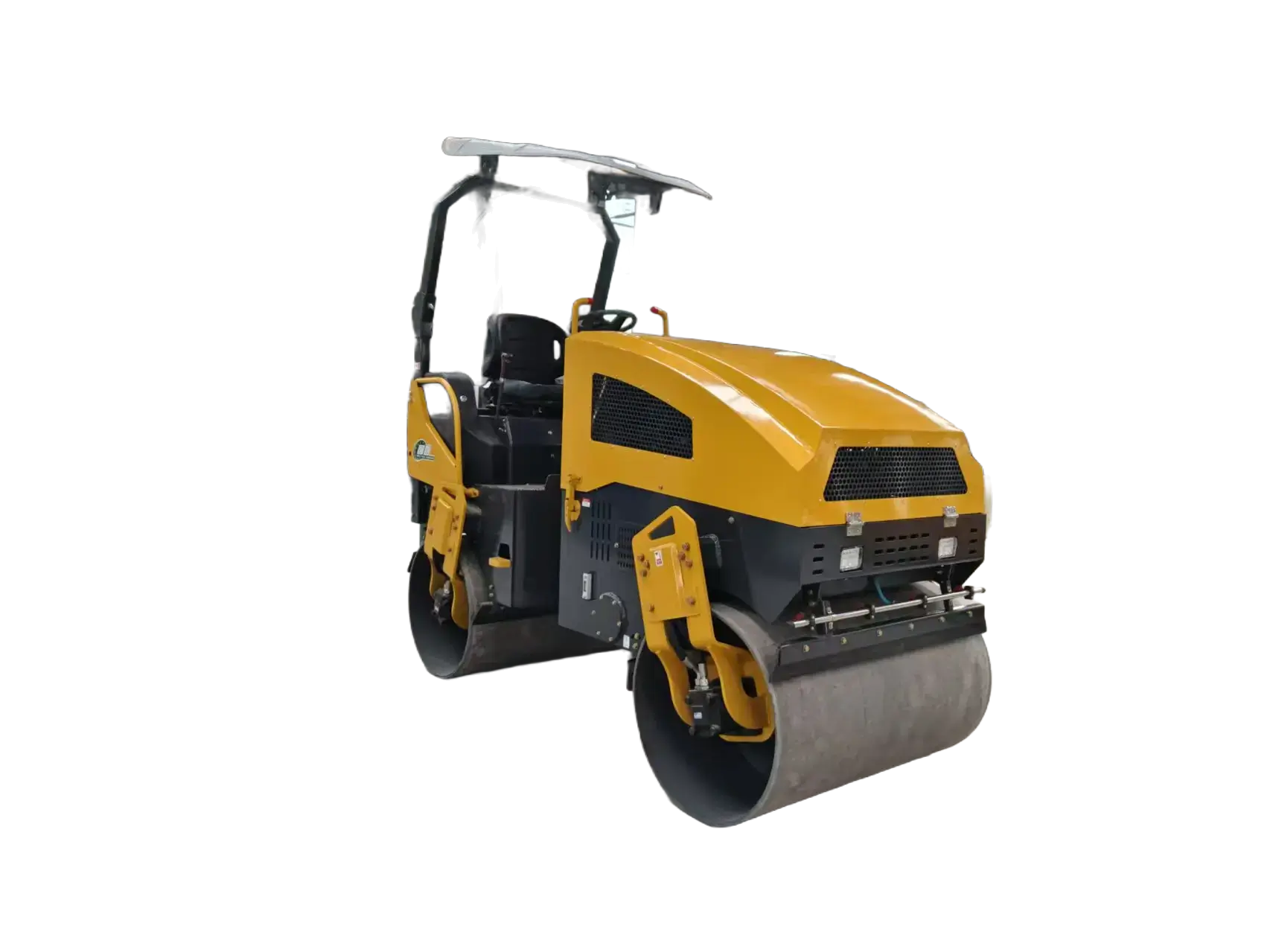
A road roller does not replace the loader or dumper. It answers the compaction step. MEGA lists MGY10H double drum road roller as a compact roller direction. Roadbuilding guidance commonly treats compaction as a key step for stable asphalt or soil surfaces, so buyers should plan roller use early rather than as a late add-on.
The buyer should state whether the work is asphalt repair, road shoulder work, base preparation or small compaction around a site. A compact roller may be practical for smaller patches and maintenance tasks, while larger road projects may require a different route. The supplier should connect roller selection to the surface and working width.
| Road work step | MEGA machine direction | Buyer question |
| Aggregate loading | MG936, MG958 or matching wheel loader route | How much material moves per cycle and what loading height is required? |
| Material shuttling | MG60DA site dumper route | Is the road section narrow or repetitive enough for a dumper? |
| Surface finishing | MGY10H double drum road roller route | Is the surface asphalt repair, soil base or compact maintenance work? |
| Drainage and utility preparation | WZ30-25 backhoe loader route | Will the crew dig, trench or load in the same road zone? |
| Concrete support work | Self loading mixer or HBTS30-10-48R pump route | Are curbs, pads or drainage structures part of the road job? |
Many road buyers focus on loaders and rollers, then later discover that drainage, curbs, foundations or utility work require additional equipment. MEGA’s backhoe loader and concrete equipment routes can support these cases when the project includes trenching, pipe work, concrete pads or roadside structures. The supplier should ask whether the road job includes more than surface material.
A WZ30-25 backhoe loader route may fit projects where digging and loading both occur. A self loading mixer may fit remote concrete work where small structures or pads are poured away from ready-mix supply. A concrete pump such as HBTS30-10-48R may become relevant if concrete must be placed beyond direct discharge. These machines should enter the plan only when the road job requires them.
Road repair often exposes drainage or utility questions. A backhoe loader such as WZ30-25 can support trenching, loading and small earthmoving work. It may be useful when the project does not justify separate excavating and loading machines but still needs both digging and material handling. The buyer should explain trench depth, loading task and site width before adding a backhoe loader to the package.
This is different from loader selection. A wheel loader can move material quickly, but it does not replace the digging function of a backhoe loader. A road construction machinery supplier should keep those roles clear.
Concrete equipment should be discussed when the road project includes curbs, drainage structures, small slabs or support pads. MEGA’s self loading mixer range covers mobile concrete production, while HBTS30-10-48R concrete pump supports placement where direct discharge is difficult. The buyer should explain whether concrete work is occasional support or a major part of the project.
If concrete work is occasional and access is simple, a smaller mixer route may be enough. If concrete is frequent or the placement point changes, a higher-output self loading mixer or pump discussion may be needed. The supplier should not add concrete equipment unless the work sequence calls for it.
Road conditions can change the best equipment route. Narrow rural roads, open yard roads, asphalt patches, base preparation and municipal repair zones do not create the same machine needs. A buyer should describe surface type, access, traffic control limits, material source and the expected daily distance of work. This information changes loader size, dumper usefulness and roller direction.
A road construction machinery supplier should help the buyer avoid oversizing. A large loader may look productive but struggle with access. A roller may be too small for a large base project or too large for a patch repair. A dumper may be unnecessary if material movement is not repetitive. Selection should come from the route, not from the largest available model.
Small road maintenance teams often need maneuverability more than heavy capacity. A compact loader route, a site dumper and a compact roller may fit a narrow work zone better than larger equipment. The buyer should consider where each machine parks, turns and waits while the crew works. Equipment that blocks the route can slow the job even if its capacity looks attractive.
For distributors, this scenario can become a practical sales package: loader for aggregate, dumper for short movement and roller for finishing. The package is easy to explain because each machine has a visible job in the road line.
When the road project includes repeated truck loading or a larger stockpile, the loader route becomes more important. MG958 or another higher-payload direction may be discussed if the site has enough working room. The buyer should still confirm truck access, stockpile face, dump height and cycle distance. Without those details, a higher-payload loader can become less efficient than expected.
Before shipment, the buyer should prepare a short work note for each machine. The loader note explains material and loading task. The dumper note explains route and movement pattern. The roller note explains surface and compaction role. The backhoe note explains trenching and loading needs. The concrete equipment note explains production, travel and placement. This note helps the receiving team understand why each machine was ordered.
MEGA’s product range can support the note because it separates loaders, concrete equipment, transport and handling, and road equipment. The buyer can use those groups to structure the file. The result is a road machinery order that reads like a project plan rather than a random list of machines.
A buyer does not need to solve every future road project in one order. The first package should remove the bottleneck in the current road job. If loading is the delay, start with the loader decision. If material shuttling slows the crew, add the dumper discussion. If surface finishing is the risk, review the roller. If drainage or concrete support exists, bring in backhoe or concrete equipment. This sequence keeps the order practical.
Compare the MEGA construction machinery product range, the wheel loader supplier guide, and the mixed machinery supplier guide when building a road equipment package. The project scenes page can help buyers review multi-machine site context.
Road buyers should also decide whether the project is a maintenance route or a production route. Maintenance routes often value compact movement, quick setup and machines that can work without blocking the entire road. Production routes may value higher loader capacity, stronger material flow and a more planned compaction sequence. The supplier should not use the same recommendation for both situations.
A distributor selling road machinery can build two clear product stories from this difference. One story is compact maintenance: loader, dumper and compact roller for smaller road sections. The other is heavier material handling: larger loader route, dumper support and backhoe or concrete equipment if the road project includes drainage or structures. This keeps the sales conversation close to the buyer’s work instead of drifting into a general equipment list.
Before approval, the buyer should also check whether the road crew can transport and stage the machines safely around the work zone. A compact roller or dumper may be easier to position than a larger machine where traffic control or site space is limited.
