

Get quote
Get Free Consultation!
We are ready to answer right now! free consultation.
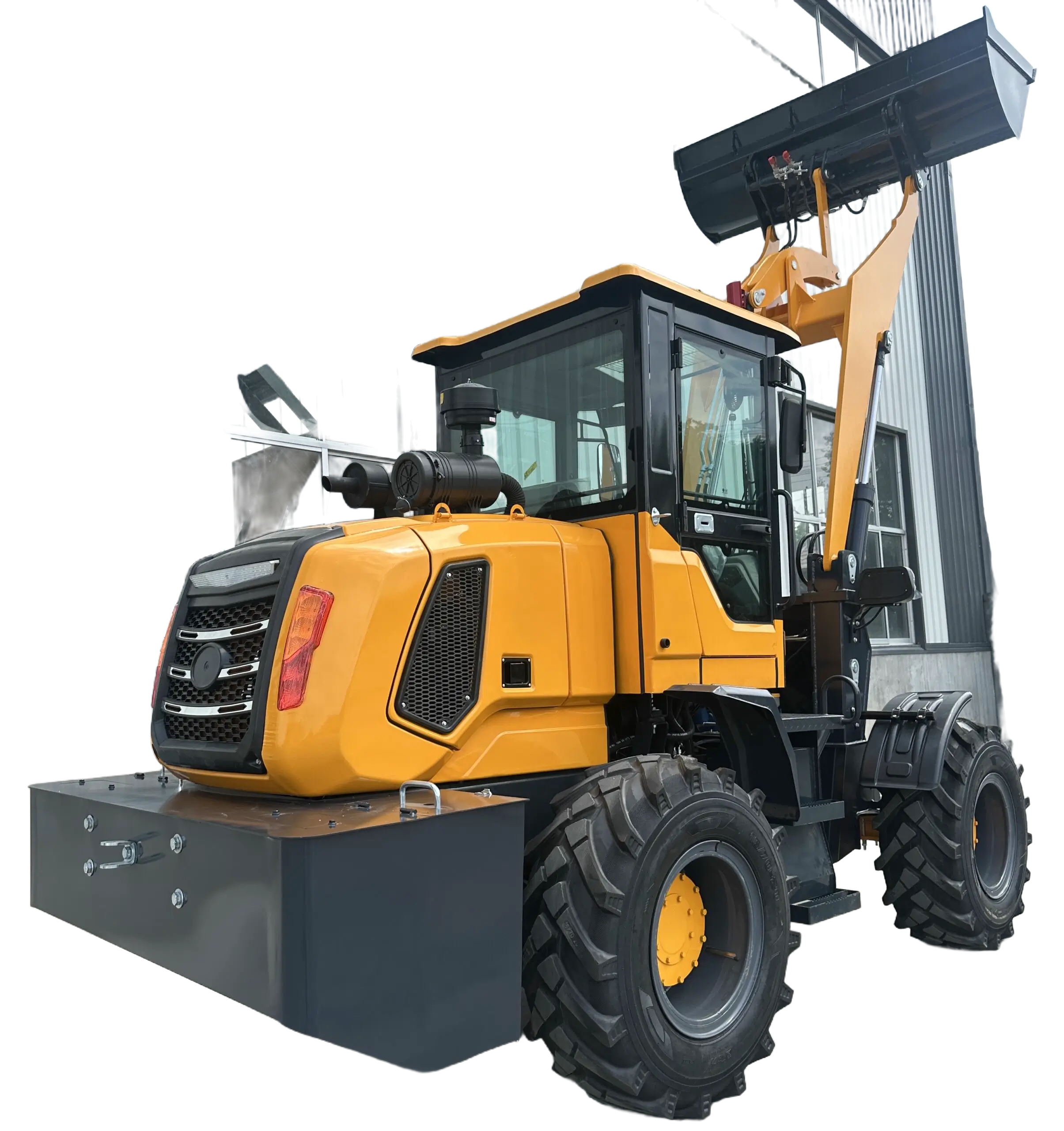
Contractors rarely buy construction equipment as isolated machines. A road crew may need a wheel loader for aggregate, a site dumper for short-distance hauling, a roller for compaction, and concrete equipment for foundations or drainage work. A construction machinery supplier is useful only when the product range can be reviewed against that full site flow, not just against one attractive model photo.
MEGA is positioned for this mixed-equipment decision. The visible product range includes wheel loaders, self loading concrete mixer trucks, concrete pumps, backhoe loaders, site dumpers, all-terrain forklifts and road rollers. The homepage presents wheel loader payload focus from 1 to 5 tons and self loading mixer output from 0.5 to 6.5 m3, while the product page lists model families such as MG936, MG958, TL16, WZ30-25, MG60DA, MG3580, MGY10H and HBTS30-10-48R.
The first question for a real buyer is not simply which machine is cheapest. It is whether the supplier can help separate the machines that should do loading, mixing, transport, lifting, digging and compaction. When those jobs are separated early, the buyer can avoid ordering one large machine for work that should be handled by two smaller, more practical units.
Mixed construction sites move through stages. Loose material arrives, machines load it, concrete is prepared or delivered, ground is shaped, and the surface is compacted or finished. A supplier with several product families can help the buyer map those stages before model selection begins. This is especially important for distributors who stock machines for several customer types rather than for one known project.
On the MEGA site, the wheel loader line is presented as the main focus, while concrete, transport and road equipment complete the supply picture. That matters because a wheel loader may be the most visible machine in a yard, but it does not solve concrete production, trenching, pallet movement or asphalt repair by itself. A stronger order starts by assigning each machine a clear job.
Wheel loaders sit near the center of many procurement plans because they move sand, gravel, soil and construction material quickly. MEGA shows a 1 to 5 ton loader payload range, including compact and higher-payload routes. Smaller loader choices can fit farms, narrow yards and light construction tasks. Larger wheel loader options make more sense when trucks, stockpiles and repeated bucket cycles are part of the daily work.
A buyer should describe the material density, working ground, turning space and loading height before asking for a loader model. Industry buying guidance often warns that bucket volume should not be treated separately from safe operating weight and machine stability. For MEGA equipment selection, this means the 1 ton, 2 ton and higher-payload loader routes should be judged against the real site, not only against the desire for a bigger bucket.
Self loading concrete mixers are useful when the site needs concrete production close to the work area. MEGA lists a 0.5 to 6.5 m3 self loading mixer output range, and the product page names mixer families such as CMT500C, MG1000, MG1500, MG2500, MG4000B, MG6500C and MG7500C. The correct choice depends on daily concrete demand, travel distance inside the site and whether the buyer needs frequent smaller batches or larger cycles.
For a remote building site, the buyer may not want to depend completely on outside ready-mix delivery. A self loading mixer can combine loading, mixing, transport and discharge in one route. That does not make every mixer suitable for every job. Tight roads, limited water supply, operator experience and batch frequency should be discussed before the machine is confirmed.
Concrete preparation is only one part of the concrete workflow. MEGA lists HBTS30-10-48R as a trailer-mounted concrete pump, while the transport and handling section includes MG60DA site dumper and MG3580 all-terrain forklift. These machines answer different site problems. A pump helps when concrete must reach a slab, foundation or work point away from the mixer. A dumper handles repeated short material trips. An all-terrain forklift supports pallet and site logistics on outdoor ground.
A procurement manager should ask where material stops moving smoothly. If pallets and bagged material are waiting at the gate, a forklift route may be more useful than another loader. If aggregate shuttles repeatedly between nearby points, a dumper may reduce loader travel. If concrete must be placed beyond direct access, a pump should be discussed before the mixer order is finalized.
| Site task | MEGA product direction | Selection question to settle first |
| Aggregate and soil loading | 1-5 ton wheel loaders such as compact, MG936 or higher-payload routes | What material density, dump height and working width will the loader face every day? |
| Mobile concrete preparation | Self loading mixers from small to higher-output ranges | How much concrete is needed per cycle, and how far does the mixer travel on site? |
| Concrete delivery to the work point | HBTS30-10-48R concrete pump or pumping route | What pumping distance, height and placement rhythm must the equipment support? |
| Short-distance material transport | MG60DA site dumper or matching dumper family | Is the route repetitive enough to justify a dumper instead of using the loader for every trip? |
| Outdoor pallet and material handling | MG3580 all-terrain forklift or handling equipment | Will the machine work on uneven ground with heavy pallets or site materials? |
A construction machinery supplier should make the buyer more certain before money moves. MEGA’s site gives several useful signals: the company states it was founded in 2015, operates a 20,000 sqm production base, has 5 standardized workshops and has 80+ staff across production and support. These facts are useful because mixed-equipment orders need production coordination, model matching and after-sales communication, not only a single sales sheet.
For an overseas buyer, the supplier conversation should move from product interest to order evidence. The buyer can ask for machine photos, model sheets, loading dimensions, basic spare parts discussion, inspection points and packaging direction. The goal is not to make the supplier promise every detail before the project is clear. The goal is to see whether the supplier can answer with machine-specific information rather than vague assurances.
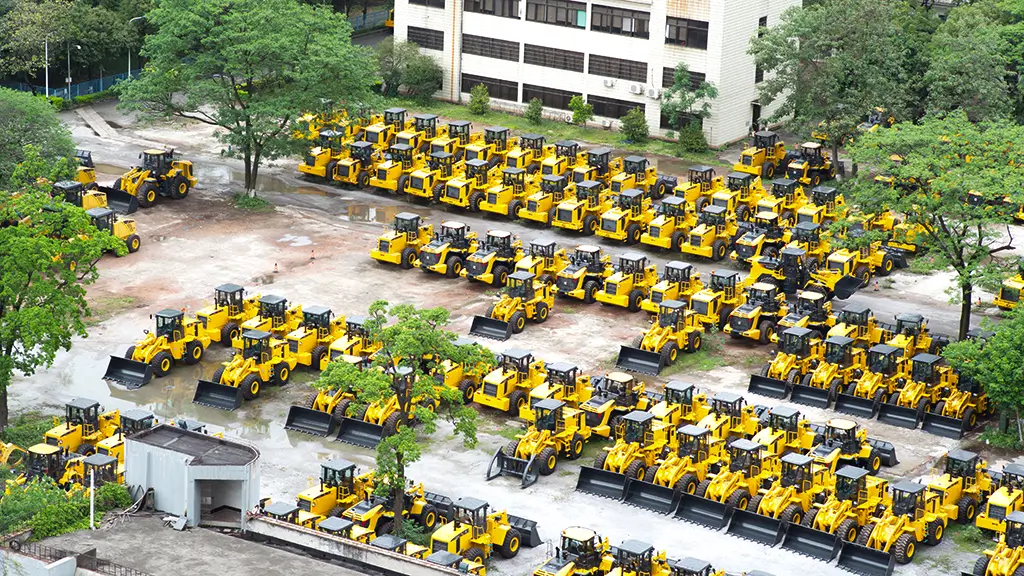
Factory scale does not automatically prove product fit, but it gives a buyer a starting point for repeat-order confidence. MEGA’s visible factory pages show assembly, workshop, factory exterior and equipment lineup scenes. For a distributor, these scenes matter because stocking wheel loaders, mixers and site equipment requires consistency across batches and the ability to keep model names, photos and product details aligned.
A buyer comparing suppliers should request current photos for the exact product family being ordered. A factory exterior image is useful for company identity, while assembly or yard images are more useful for machine readiness. When the order includes loaders and concrete equipment together, the buyer should ask the supplier to separate photos by model family so the sales file does not become confusing after shipment.
The MEGA product page already separates equipment into concrete equipment, loading and earthmoving, transport and handling, and road and agriculture. That structure is helpful for a distributor because the sales team can build a stocking plan by customer type. A yard and farm customer may look first at compact loaders and forklifts. A municipal or road customer may compare loaders, rollers and dumpers. A building contractor may begin with self loading mixers, concrete pumps and backhoe loaders.
Distributor stocking should not mix all machines under one broad label. The buyer should keep model families clear: MG936 as a 2 ton wheel loader direction, TL16 as a 1 ton telescopic loader direction, WZ30-25 as a backhoe loader direction, MG60DA as a dumper direction, MG3580 as an all-terrain forklift direction and MGY10H as a compact double drum roller direction. This makes future quotations easier to understand.
One of the most common procurement mistakes is stretching a machine into work it was not chosen to do. A wheel loader can load aggregate, but it should not become the answer for concrete production. A self loading mixer can produce and deliver concrete, but it should not be expected to compact a surface or handle pallets. A site dumper can move materials quickly, but it does not replace a loader where breakout force and bucket work are needed.
This is where a construction machinery supplier with multiple lines can give better advice than a narrow vendor. The supplier should be able to say when a buyer needs a loader plus a dumper, a mixer plus a pump, or a road roller after earthwork. If every question receives the same machine suggestion, the buyer should slow the order and return to the real site workflow.
A loader may feed aggregate and move material around a concrete site, but it is not a concrete production machine. If the project requires repeated pours, especially away from a batching plant, the buyer should compare MEGA’s self loading mixer route or the MGP2000 pan mixer route with the loader plan. The right decision depends on batch size, frequency, site distance and how controlled the concrete preparation must be.
For example, a rural building crew may use a compact loader for sand and aggregate handling, then rely on a self loading mixer for mobile mixing. A small prefabrication yard may prefer a pan mixer route for controlled batches while a loader handles material feed. The supplier should help buyers keep these roles separate instead of selling one machine as the answer to every task.
Short repetitive movement often wastes a loader’s time. If a project has narrow internal routes, repeated spoil movement or material shuttling between fixed points, a site dumper such as MG60DA may fit better. If the buyer moves pallets, packaged material or equipment parts outdoors, an all-terrain forklift direction such as MG3580 should be compared. These machines are not secondary decorations; they solve logistics problems that slow the main machines.
A distributor serving mixed customers should therefore treat transport and handling equipment as part of the quotation file. The customer buying a loader today may return for a dumper or forklift when site movement becomes the bottleneck. Keeping these products visible in the supplier plan can support repeat business without forcing a mismatched loader sale.
Before approving shipment, a buyer should ask for documents that match the machine family rather than generic company files. For a wheel loader, the buyer needs model name, payload direction, attachment discussion, tire or terrain notes and photos. For a self loading mixer, the buyer needs output range, drum route, site access discussion and concrete workflow notes. For a concrete pump, pumping distance and height should be discussed before the pump is treated as a simple add-on.
A serious supplier conversation also covers spare parts, operation guidance and after-sales technical communication. MEGA’s team page describes production coordination, quality control, sales support and after-sales service. Buyers can use that as the starting point for a practical handover file: what machine is being supplied, what work it is meant to do, what parts should be discussed, and what photos or checks should be reviewed before dispatch.
The buyer should avoid folders where every image is labeled only as loader, mixer or road machine. Each photo should identify the actual direction: MG936 wheel loader, TL16 telescopic loader, MG6500C self loading mixer, HBTS30-10-48R concrete pump, WZ30-25 backhoe loader, MG60DA site dumper or MGY10H roller. Clear naming helps purchasing, finance, warehouse and after-sales teams understand the same order without translating vague file names later.
The final supplier review should return to the people who will use the machine. Operator skill, daily maintenance habits, local material conditions and site layout can change the practical value of a machine. A construction machinery supplier is stronger when it asks about those details before dispatch. MEGA’s published product range gives buyers a place to begin that conversation across loaders, mixers, pumps, dumpers, forklifts and road equipment.
Start with the MEGA construction machinery product range when comparing product families, then use the project scene page to review how mixed equipment is presented for overseas work. For company and support context, the team and factory support page is the most relevant internal reference.
For a loader-focused selection path, read Selecting a Wheel Loader Supplier for Yard Loading, Road Work and Farm Sites. For concrete workflow planning, read Working With a Self Loading Concrete Mixer Manufacturer for Remote Concrete Supply.
