

Get quote
Get Free Consultation!
We are ready to answer right now! free consultation.
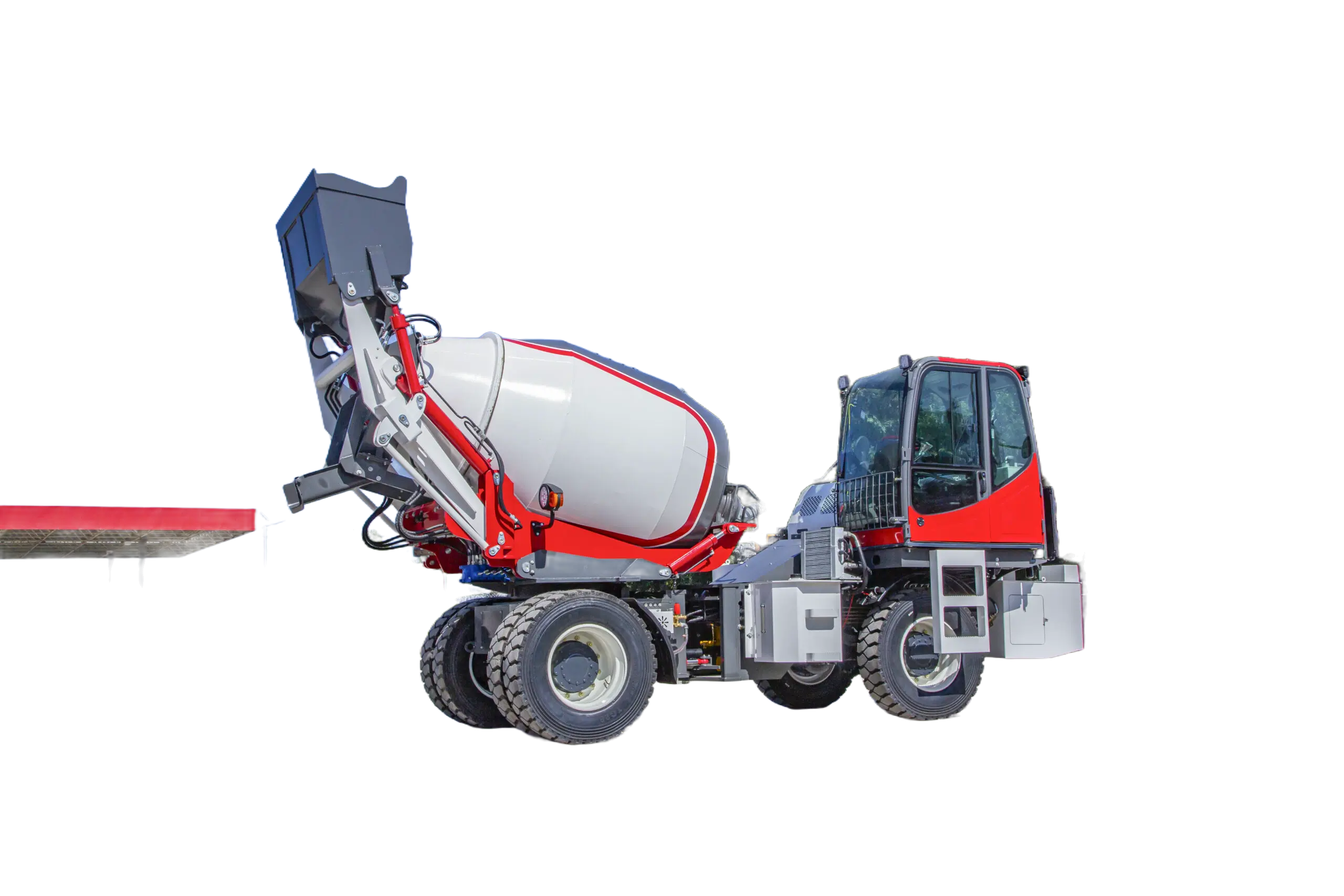
A remote concrete job can fail for a simple reason: the buyer chooses a mixer by drum impression instead of by daily concrete rhythm. A self loading concrete mixer manufacturer should help the buyer calculate where raw materials are loaded, how often batches are needed, how far the machine travels, and whether concrete must be discharged directly or pumped to the final point.
MEGA presents self loading mixer output from 0.5 to 6.5 m3, and the product page lists model directions including CMT500C, MG1000, MG1500, MG2500, MG4000B, MG6500C and MG7500C. The same products page also names MGP2000 pan mixer and HBTS30-10-48R concrete pump, which are important because not every concrete job should be solved by the same mobile mixer route.
The buyer’s first decision should be the concrete workflow. If the site changes frequently, a self loading mixer may reduce dependence on outside batching. If the site has controlled fixed production, a pan mixer route may deserve review. If the placement point is far from where the mixer can park, a pump route should be discussed before the order is approved.
Daily concrete demand is more useful than a broad request for a bigger mixer. The buyer should estimate the number of pours, average batch need, travel distance inside the project, road condition and available loading area. A smaller machine can be better when the site needs frequent controlled batches, while a larger machine may be justified when the access route, operator skill and pour rhythm support larger cycles.
MEGA’s 0.5 to 6.5 m3 output range gives buyers several directions. The conversation should start with site reality. A buyer who pours small slabs, curbs or rural foundations may not need the largest machine. A contractor with larger repetitive pours may want to compare higher-output routes. A distributor should keep both stories clear so the product line does not become a simple ladder from small to large.
The MG1000, MG1500 and MG2500 directions belong in early conversations for buyers who need mobility and repeat batches without pushing into the highest-output class. These routes can fit smaller construction teams, rural work, maintenance tasks and jobs where access is more important than maximum cycle size. The buyer should describe whether the machine will work near buildings, on narrow internal roads or across uneven ground.
A smaller self loading mixer is not automatically a starter machine. It may be the correct commercial answer when concrete demand is steady but limited. For a buyer who works across several small sites, a manageable machine can reduce waiting time and keep the mixing task close to the pour area. The supplier should ask how often the machine moves and whether one operator is expected to manage loading, mixing and discharge.
MEGA lists MG4000B and MG6500C within the concrete equipment range, and the homepage highlights 0.5 to 6.5 m3 mixer output. Larger output routes make more sense when the buyer has sufficient raw material organization, adequate turning space and a pour schedule that can use the capacity. A machine with more output is only productive if the site is ready to feed, move and discharge it efficiently.
For a road or infrastructure contractor, larger self loading mixers may reduce interruptions where batching plants are distant. For a distributor, these models should be presented to customers with clear questions about access, water supply, aggregate loading and operator skill. Otherwise the customer may buy capacity that cannot be used fully on the actual site.
The concrete equipment section also includes MGP2000 pan mixer and HBTS30-10-48R concrete pump. These products should not be described as simple accessories to the self loading mixer line. A pan mixer route can fit more controlled batch preparation. A pump route fits the question of placing concrete where direct mixer discharge is not practical. The buyer should decide whether the main issue is producing concrete, moving concrete or placing concrete.
Concrete pump sizing advice in the industry commonly starts with concrete volume, distance and height. That logic is useful for MEGA buyers too, as a general planning rule. If the mixer can prepare concrete but cannot reach the final slab, column base or foundation point efficiently, the buyer should discuss a pump before trying to force the mixer into every placement task.
| Concrete work pattern | MEGA direction to review | Question before selecting |
| Small repeated pours | MG1000, MG1500 or MG2500 self loading mixer route | How many batches are needed each day and how narrow is the access route? |
| Larger mobile concrete cycles | MG4000B, MG6500C or higher-output self loading mixer route | Can the site feed, turn and discharge a larger mixer without delays? |
| Controlled batch preparation | MGP2000 pan mixer route | Is the work closer to fixed mixing than mobile delivery? |
| Concrete placement away from access | HBTS30-10-48R concrete pump route | What distance and height separate the mixer from the placement point? |
Remote jobs often create hidden delays. Aggregate may be stored far from water, the pour area may move during the project, and access roads may be rough after rain. A self loading concrete mixer helps when loading, mixing, transport and discharge must happen near the work. But the machine still needs a plan. The buyer should mark where materials sit, where the machine turns, where water is available and where concrete will be placed.
MEGA’s website positions self loading mixers as part of a wider construction machinery supply system. That matters for remote sites because the concrete workflow may also need a wheel loader, a concrete pump, a site dumper or a road roller. A buyer should not treat the mixer as the only site machine if other steps in the work will slow it down.
A self loading mixer combines several jobs, which is why the buyer must check access carefully. The machine has to load raw materials, mix while moving or positioned, travel safely and discharge where the crew can use the concrete. If one part of that route is blocked, the whole workflow slows. The supplier should ask about ramps, gate width, turning space, ground slope and the distance between raw material storage and the pour area.
For a rural housing project, the value may be that the machine can work near scattered foundations without waiting for outside deliveries. For a road drainage job, the value may be frequent pours along a changing line. For an industrial yard repair, the value may be controlled batches around access restrictions. These scenarios should lead to different model conversations, even when all of them use self loading mixer language.
When concrete must be placed above, below or beyond the machine’s direct discharge position, the buyer should discuss pumping. MEGA lists HBTS30-10-48R as a trailer-mounted concrete pump for building projects. The buyer should not add a pump only after discovering access problems on site. Pumping distance, height, hose route and work rhythm should be discussed before the order is finalized.
A mixer and pump combination can be useful only when the site can feed both machines properly. If concrete production is slow, the pump waits. If placement is disorganized, the mixer waits. A supplier conversation should therefore connect the mixer’s output with the pump’s practical placement role. This is the difference between buying concrete equipment and planning a concrete workflow.
Before a buyer confirms a self loading mixer order, the file should answer five practical questions: which model direction is being quoted, what output range is expected, what site route the machine will follow, what operator support is needed, and what additional concrete equipment might be required. This file should be written for the project team, not only for the purchasing office.
MEGA’s factory and team pages provide useful support context: the site states a 20,000 sqm production base, 5 standardized workshops and 80+ team members across production and support. These details give buyers a place to begin the factory and service discussion. The buyer should still ask for machine-specific photos, configuration notes and dispatch information linked to the actual model direction.
A self loading mixer order should not rely on generic mixer images. The buyer should know whether the conversation is about MG1000, MG1500, MG2500, MG4000B, MG6500C or another direction in the range. Photos should match the machine being discussed, and the file should separate mixer images from pan mixer or concrete pump images. Clear organization prevents misunderstandings when the buyer compares several concrete routes at once.
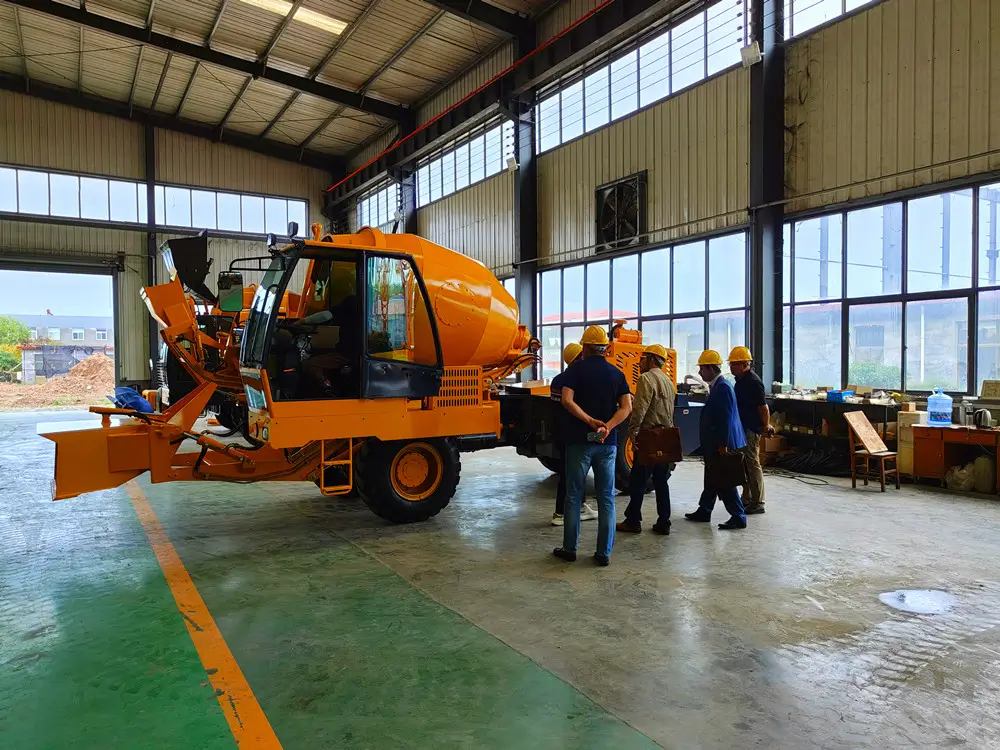
Workshop review is especially helpful when the buyer is comparing suppliers remotely. It allows the buyer to connect the sales description with a real production environment. The image does not replace specifications, but it gives context to the supplier’s ability to discuss concrete equipment as machinery rather than as a generic listing.
Self loading mixers ask more from the operator than a simple transport vehicle. The operator must understand loading, mixing, movement and discharge habits. Before dispatch, the buyer should discuss daily checks, basic operating guidance, wearing parts and the most likely service questions for the working environment. This is especially important for remote projects where downtime is more expensive than in a yard close to service support.
A distributor selling self loading mixers should prepare a simple customer handover file for each model direction. It can explain what work the machine fits, what information the customer should provide before purchase, and when a pump or pan mixer should be discussed. This makes the distributor more useful than a seller who only repeats output numbers.
The fastest way to review MEGA’s concrete equipment is to begin with the product range and then move outward. The products page shows self loading mixer directions, pan mixer and concrete pump options. The homepage explains the broader construction machinery position, including loaders and road equipment. The project scenes page helps buyers think about overseas jobsite combinations rather than a single machine in isolation.
A buyer planning remote concrete supply should write down the work pattern before choosing output. Small repeated pours, changing road work, rural building sites and larger infrastructure jobs all lead to different machine conversations. The manufacturer should help turn those site details into a clear equipment route: self loading mixer alone, mixer plus pump, pan mixer plus loader support, or a wider package with loader, dumper and road equipment.
Review the MEGA concrete and construction machinery range for model families, compare jobsite use on the overseas project scenes page, and read the factory team support page when preparing questions about production, inspection and after-sales communication.
Before the final model decision, the buyer should write the concrete route on paper: material loading point, mixing point, travel path, discharge point and any pumping need. That simple route check often reveals whether the selected mixer output is practical.
For a wider machinery package, read the mixed construction machinery supplier guide. If the concrete route also needs aggregate handling, compare the wheel loader supplier guide for yard and road work.
