

Get quote
Get Free Consultation!
We are ready to answer right now! free consultation.
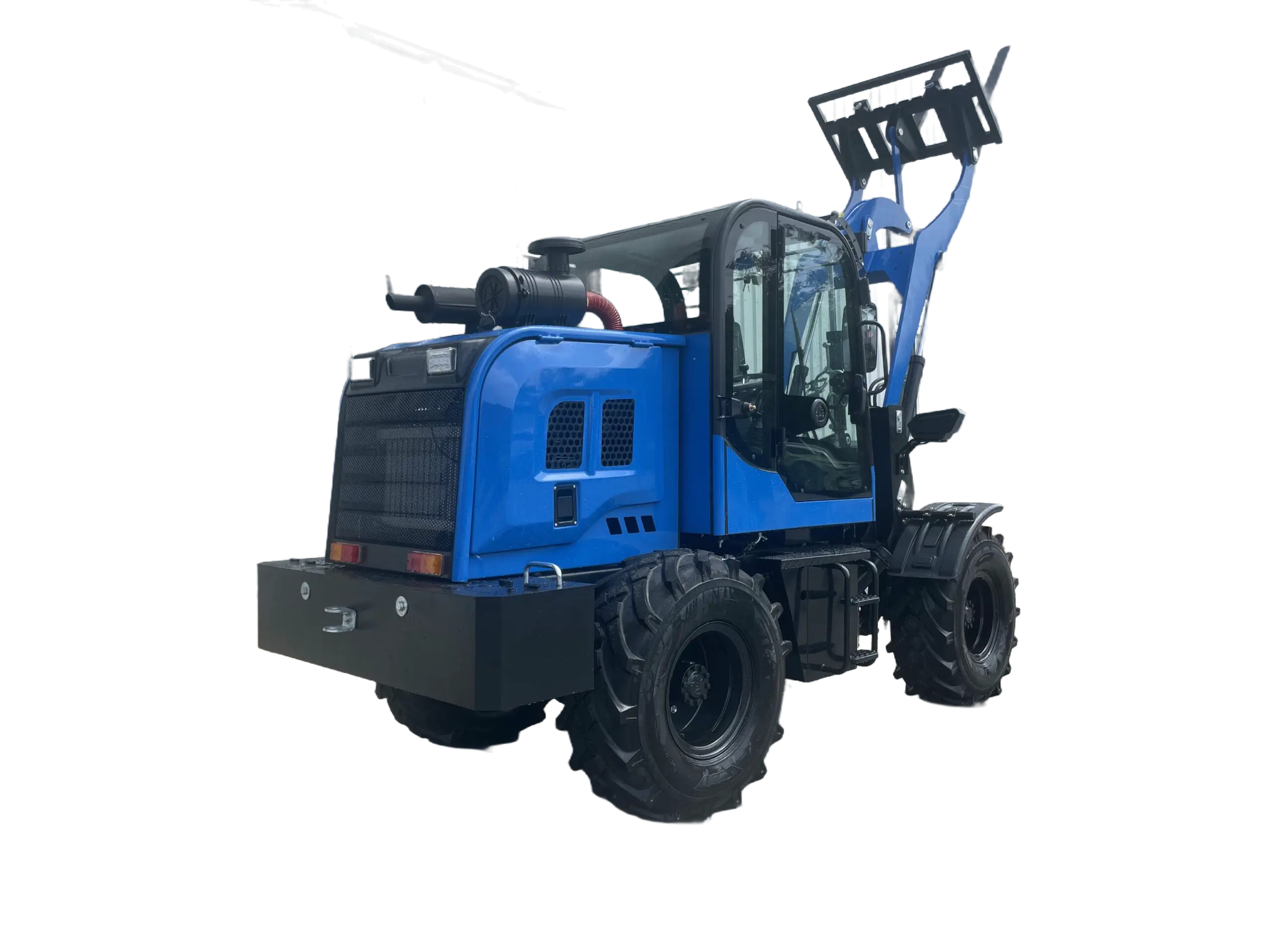
A compact wheel loader supplier should be judged by how well it understands restricted working space. Many buyers ask for a small loader because the machine must pass gates, turn in yards, work near buildings, move between farm areas or support light construction without occupying the entire site. In these conditions, the loader’s value is not only payload. It is how easily the operator can use it every day.
MEGA’s loader range includes compact directions such as MG910, MG910H and MG910C, plus TL16 telescopic loader for reach-focused work. The wider loader range extends to MG936, MG940 and MG958, but compact buyers should not jump directly to larger machines before checking access, surface condition and daily material. A small loader that fits the work can be more productive than a larger loader that constantly waits for space.
The buyer should start with the tightest point on the site. It may be a gate, a storage aisle, a barn entrance, a small truck loading area or a roadside work zone. Once the tightest point is known, the supplier can discuss whether a compact wheel loader route is appropriate and whether a telescopic route such as TL16 adds value.
Access limits decide whether a compact loader makes sense. A buyer should measure or describe the narrowest route, turning area, ground condition and loading point. If the machine must work near parked vehicles, building walls or stored material, maneuverability may be more important than the largest bucket. Compact loader guidance from major equipment brands often highlights tight-space productivity and reduced surface disturbance; that general idea applies to MEGA buyers as a selection principle.
The supplier should ask where the machine will turn, where it will wait and where it will discharge. If those points are unclear, the buyer may approve a loader that fits the brochure but not the yard. Compact equipment is selected through space, not only through model size.
The MEGA product page names MG910, MG910H and MG910C in the loader family. These model directions should be reviewed when the buyer needs compact movement for farms, yards, depots and small construction areas. The buyer should explain whether the loader handles loose material, bagged material, light grading or general cleanup.
A compact loader conversation should include daily travel distance. If the loader moves only short cycles between pile and truck, one route may fit. If it moves across a farm or mixed property, operator comfort, surface condition and simple daily maintenance become more important. The supplier’s recommendation should reflect that difference.
TL16 is listed as a 1 ton telescopic wheel loader with extended reach and matched front tools. This route should be discussed when the buyer needs to lift over obstacles, reach into a truck, handle materials near walls or use front tools in a compact working area. It is not simply a smaller version of a standard loader. The buying reason is reach plus maneuverability.
If the customer only loads heavy aggregate all day, a standard loader route may be better. If the customer moves varied farm, yard or light construction materials, TL16 may deserve attention. A compact wheel loader supplier should explain this distinction clearly so the buyer does not treat every small machine the same way.
Bucket size can mislead compact loader buyers. A bigger bucket may look productive, but material density, stability and working surface matter. The buyer should describe the main material: dry sand, wet soil, gravel, farm material, debris or mixed construction goods. The supplier can then discuss whether compact payload and bucket choices fit the real work.
A small loader working with light material may feel efficient. The same loader working with heavy wet soil may struggle if the bucket expectation is too aggressive. A supplier should help the buyer avoid the mistake of choosing a bucket by appearance instead of by material and stability.
Farm buyers may work on packed soil, gravel, concrete lanes and areas close to buildings. They may move feed, soil, pallets, light aggregate or general property material. The compact loader should be selected for daily usability, not only for peak lifting. A machine that turns cleanly and avoids unnecessary ground disturbance can be more useful than one that is technically larger.
The buyer should ask about tool route, tire discussion and whether the machine will work with repeated short cycles. If lifting height matters, TL16 may enter the conversation. If bucket loading is the main task, an MG910-family compact loader route may be the starting point.
A small construction yard may need both loose material loading and pallet movement. A compact loader can handle certain material tasks, but outdoor pallets may also point toward MEGA’s all-terrain forklift route. The buyer should explain whether the main work is bucket loading, pallet handling or both. This prevents a compact loader from being asked to solve every handling job.
If pallet movement is frequent, the supplier may discuss MG3580 all-terrain forklift as a related machine. If loose material dominates, the loader remains central. The right choice depends on the work mix.
A distributor selling compact loaders should avoid presenting every small machine with the same language. Customers understand site types: farm, narrow yard, depot, light construction, roadside maintenance and property work. MEGA compact routes can be explained against these site types before model names are introduced.
This approach also helps prevent overselling. A customer with a narrow farm route may not need a higher-payload MG958 direction. A customer with heavy aggregate cycles may outgrow compact equipment quickly. The distributor’s job is to recognize the site type early and guide the buyer to the correct product family.
For narrow yards, the buyer should know where the loader will be stored, how it turns into the pile and whether other vehicles share the same route. The supplier should request photos or a simple site sketch when possible. A compact loader may be physically small, but poor route planning can still make it inefficient.
Light construction buyers often use the same machine for cleanup, material movement and small loading tasks. The supplier should ask how many hours the loader works, how often attachments change and whether the surface is rough or finished. This helps separate a practical compact loader from a machine that is too small for the expected workload.
Compact buyers may later need a larger loader, a dumper, a forklift or a concrete equipment route. The first compact loader order should therefore record why the small machine was chosen. If the reason is access, that reason remains important when the customer expands. If the reason is reach, TL16-type logic may guide future tool choices.
MEGA’s wider construction machinery range lets buyers expand from compact loading into dumpers, forklifts, mixers, pumps and road rollers when the site grows. The supplier should not force expansion too early, but it should keep the relationship between machines clear.
Start with the MEGA product range, compare the wheel loader supplier guide, and review mixed equipment planning when compact loading is part of a larger site package.
Compact loader buyers should also decide how often the machine will travel between work zones. A machine that only works inside one yard may be selected around turning and loading. A machine that moves between farm buildings, storage areas and roadside tasks may need a broader discussion about operator comfort, surface changes and daily inspection habits. The supplier should not assume all compact loader work happens in one fixed place.
A buyer comparing compact and medium loader routes should write down the jobs that happen every week, not the unusual jobs that happen once a year. If the weekly work is light material and tight access, compact equipment may be the right route. If the weekly work is heavy aggregate loading for long hours, the buyer should compare MG936 or a larger route even if the site also has narrow areas.
The supplier can help by asking which task earns money for the customer. For a farm, the value may be flexible handling around buildings. For a small depot, the value may be loading and cleanup without blocking trucks. For a light contractor, the value may be moving from cleanup to material handling quickly. Each value points to a slightly different compact loader conversation.
The quotation should reflect that conversation. Instead of listing only a compact model, it should say why the compact route was selected, what material it is expected to handle and whether reach, bucket work or tool flexibility is the main reason. This makes the buyer’s decision easier to defend internally.
A compact loader buyer does not need a complex engineering survey before asking for a quotation. A simple site measurement can be enough to improve the supplier conversation. The buyer can measure the narrowest gate, the common turning area, the highest loading point and the distance between material storage and discharge point. Photos from those places are often more useful than a long written description.
The supplier can then compare compact loader routes against real access limits. If the route is narrow but the material is light, a compact loader may fit well. If the route is narrow and the material is heavy, the buyer may need to change the working method rather than expect a small loader to handle the same cycle as a larger machine. A serious supplier should be willing to say that.
The tightest point may not be where the loader spends most of its time. It may be a gate, a corner, a storage aisle or the area beside a truck. If the machine cannot pass or turn there comfortably, the rest of the specification matters less. The buyer should identify this point first and share it with the supplier before discussing bucket choices.
Compact loaders may work on concrete, gravel, packed soil, grass or mixed surfaces. Surface condition affects how the buyer thinks about tires, travel habits and daily use. A supplier should ask whether the machine must protect finished surfaces or can work on rougher ground. This helps avoid a machine that fits the gate but performs poorly on the actual surface.
When the buyer makes this information clear, the quotation can explain why the compact route is suitable. That makes the purchase easier for owners, operators and finance teams to understand.
A compact wheel loader supplier should also ask who will operate the machine. A business owner, farm worker and construction operator may have different expectations for visibility, controls and daily checks. The supplier should make the order file clear enough for the real operator, not only the person approving payment.
