

Get quote
Get Free Consultation!
We are ready to answer right now! free consultation.
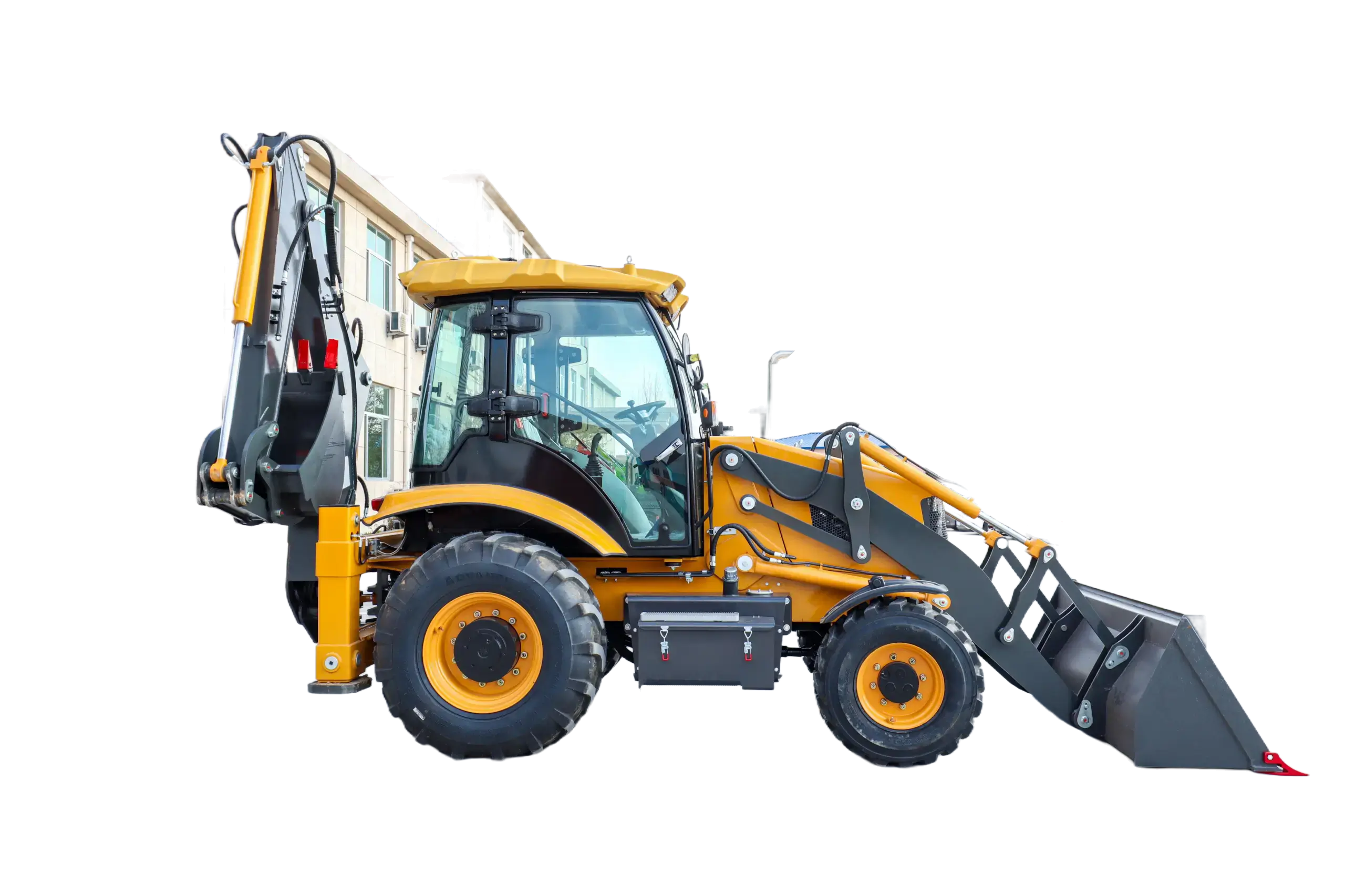
Backhoe loader quotations often give the buyer a long table but little proof that both ends of the machine have been inspected. A running video can show travel while leaving digging geometry, stabilisers, loader rollback, brakes and the delivered buckets unresolved. Backhoe loader manufacturers in China should be compared through an acceptance plan with four evidence streams: identity, travel, excavation and loading.
MEGA’s backhoe loader range contains two very different classes. WZ20-15 is a 2,500 kg compact machine with a 0.05 m³ backhoe bucket and 0.3 m³ loader bucket. WZ30-25 is published at 7,400/8,400 kg with a 0.3 m³ backhoe bucket, 1 m³ loader bucket and telescopic digging-depth route. A buyer should not average their data or ask both factories to quote against an undefined “standard backhoe.”
The acceptance plan begins before the order. Every measurement and functional check should refer to the selected configuration, safe manufacturer procedure and an approved load or material. Unknown fields remain open until documented; they are not filled from a competing model.
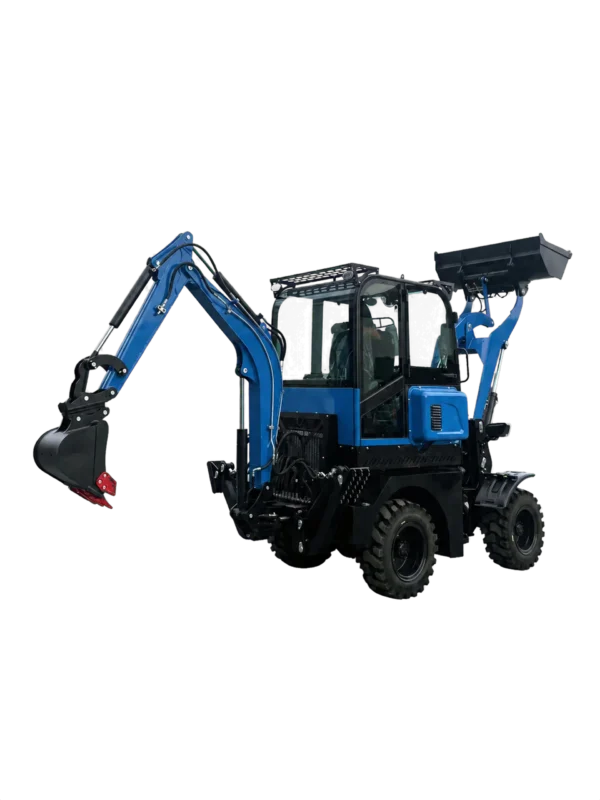
Identity connects the quotation to parts, manuals and later service. Record model plate, machine identifier, engine brand and model, transmission, axle, tires, bucket or attachment markings and any serialised major component the manufacturer supplies.
The WZ20-15 page lists a Yunnei 490 naturally aspirated Euro II engine at 37 kW / 2,400 rpm, automatic 2F/2R transmission, Isuzu narrow axle and YJ265 torque converter. It publishes mechanical joystick control and 10.5/46-16 tire wording with alternatives described on the page.
The buyer should resolve the exact tire and engine configuration in the order. Photographs of the installed engine, axle, transmission identifiers where available and tire markings should be tied to the machine record. A generic WZ20-15 manual is insufficient if it covers a different powertrain.
The WZ30-25 lists a Yudong 4105 turbocharged engine at 85 kW / 2,600 rpm, fixed-shaft 4F/4R powershift gearbox, YJ280 converter, wheel-side reduction axle, four-wheel drive and hydraulic transmission. It publishes electro-hydraulic pilot control.
Confirm whether the delivered machine is the 7,400 or 8,400 kg route and which option creates that difference. Record the selected telescopic equipment, tires and buckets. The page warns that specific parameter changes are subject to the actual machine, so revision control is essential.
The machine should first pass basic readiness and safety checks under the manufacturer’s procedure: fluids, visible leaks, guards, steps, controls, instruments, steering, direction changes, service brake and parking brake. Testing on a level controlled area limits confusion before excavation functions are introduced.
Its page presents overall dimensions as 4,179 x 1,500 x 2,462 mm plus a second 1,190 x 1,900 x 2,462 mm string. Ask the manufacturer to explain the measurement and provide a current drawing of the transport and working envelope. Verify critical width and height with the machine in the shipping configuration.
Run both forward and reverse ranges, steering and braking without making a production claim from a short test. Record abnormal noise, warning indications and visible hydraulic condition. If the buyer plans trailer transport, obtain confirmed machine and attachment weights and tie-down guidance.
WZ30-25 publishes 6,150 x 2,350 x 3,763 mm dimensions, 2,200 mm wheelbase, 6,580 mm minimum turning radius and 38 km/h maximum driving speed. Its brakes are listed as air-over-oil caliper discs with an air parking brake.
Measure the swept path on a marked surface if site access is tight. Verify brake operation under the approved procedure and identify air-system checks in the manual. Maximum speed is not an acceptance target; controllable operation and correct function matter.
Position the machine on firm, level ground with the supplier-approved stabiliser arrangement. Mark the slew exclusion zone. Use measurement points defined in the drawing so a depth or radius can be repeated.
The page lists a 2,200 mm maximum digging depth, 2,500 mm unloading height, 3,000 mm digging radius, 170-degree boom slew and 0.05 m³ bucket. The test should identify the bucket and show stabiliser deployment, boom, dipper, bucket and slew functions.
If measurement is required, agree whether it checks one geometry point or an entire envelope. Soil type, operator and setup affect digging performance, so a demonstration should not be converted into unsupported hourly production. Inspect pins, bushings, hoses, cylinders and bucket attachment after operation.
Its page pairs 4,000/5,200 mm digging depth, 4,500/5,300 mm unloading height, 4,800/6,000 mm digging radius and 5,200/5,950 mm lifting height. The acceptance sheet should state which values belong to the ordered telescopic route and show the boom configuration during measurement.
The page lists 36 kN maximum digging force, 190-degree slew and 0.3 m³ bucket. Unless the factory has an appropriate documented method, do not improvise a force test. Verify the published geometry and functional operation that can be safely demonstrated.
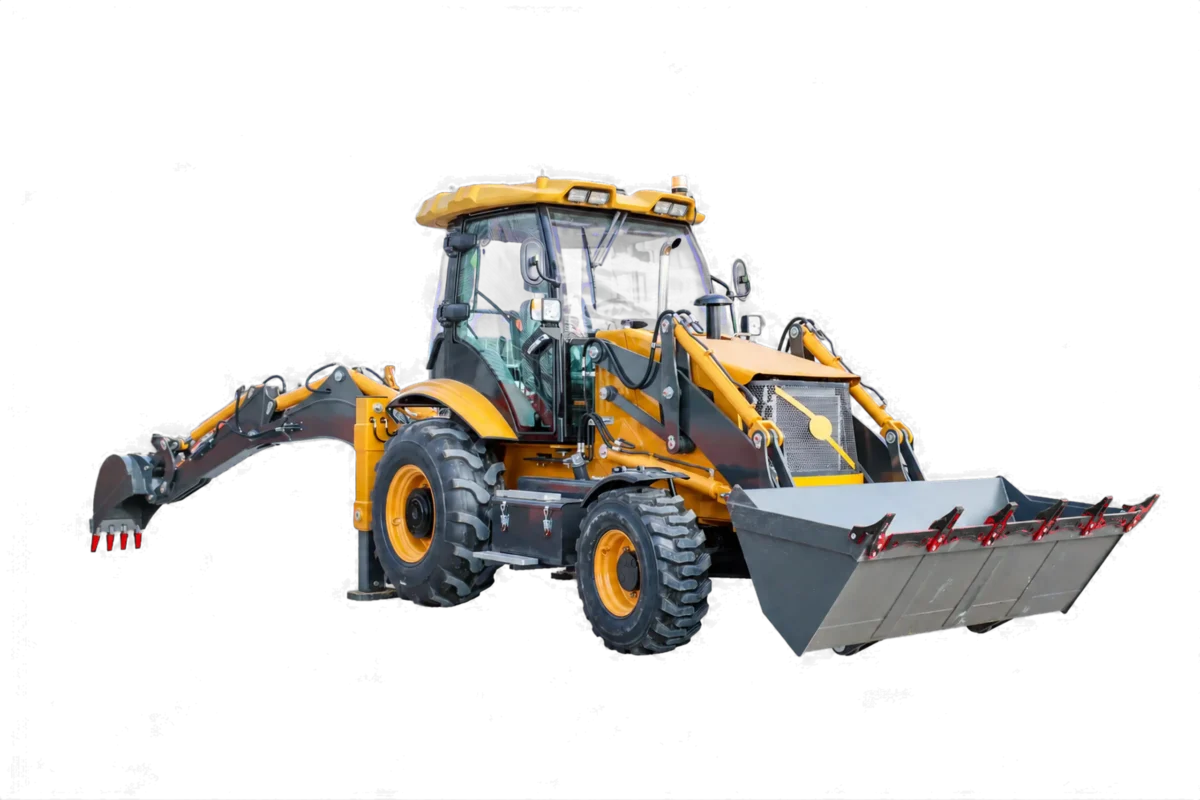
Switch deliberately from the rear equipment to the loader controls and work zone. Identify the bucket, rollback position, lift path, dumping measurement and safe material. Check visibility and exclusion around the front of the machine.
The page publishes a 1,000 kg rated loader load, 0.3 m³ bucket, 2.4 m dumping height and 802 mm reach. The buyer should confirm the capacity definition and bucket included. Measure height or reach only using consistent bucket positions.
For a defined safe loaded check, record material, mass and bucket fill. Dense spoil may reach the 1,000 kg boundary before the bucket is volumetrically full. Inspect rollback, boom cylinder and visible hydraulics after the cycle.
WZ30-25 publishes a 1 m³ bucket, 2,742 mm dumping height, 1,062 mm distance and 72 kN breakout force. Demonstrate raise, rollback and dump with the ordered bucket. If a truck or hopper drives the purchase, compare the measurement with that receiver drawing.
Do not infer a 1,000 kg or other loader payload from bucket volume; the page does not publish that value in the same way as WZ20-15. Ask the manufacturer for the approved capacity information needed by the application.
WZ20-15 uses mechanical joystick wording; WZ30-25 uses electro-hydraulic pilot control and a 28 MPa system-pressure entry. The buyer should operate the actual control route, inspect access to filters and service points, and ensure manuals match.
A fleet moving from compact mechanical controls to pilot controls needs separate training. Label unfamiliar functions, stabiliser controls, transmission directions and parking procedure. Do not assume an experienced operator can transfer habits without review.
Request part numbers for routine filters, belts, seals, brake items and wear parts for both bucket systems. Add any telescopic-boom service items for WZ30-25. The MEGA downloads page can be used as a navigation point, but the buyer should still obtain model- and configuration-specific documents.
The JCB backhoe loader overview and 3CX machine information illustrate how established manufacturers organise information for both loader and excavator functions. Their models and data are not MEGA evidence. Use the functional categories, not their values, to improve the acceptance plan.
Two factories can report the same digging depth while measuring from different ground or bucket points. Before inspection, place a sketch beside each required dimension and identify machine setup, tire condition, stabiliser position and measurement endpoints.
Use firm, level ground and the ordered bucket. Record whether the depth is measured at the cutting edge and how the boom is positioned. For WZ30-25, identify extension state. A photograph should show the tape or instrument, reference surface and complete boom where practical.
WZ20-15’s 2.4 m and WZ30-25’s 2,742 mm values cannot be compared if one bucket is fully tipped and the other level. Agree the manufacturer’s definition and use it consistently. Include reach from the relevant machine point and note tire or bucket changes.
Record the measuring device and its basic verification where project procedures require it. Timestamp photographs and link them to the machine identifier. The purpose is not laboratory precision; it is to make the result traceable enough for receiving to repeat the critical check.
Ask for shipping dimensions, machine weight, removed equipment, lifting and lashing information, preservation and a packing map. Label backhoe bucket, loader bucket, pins, hoses and hardware to the machine. Protect open hydraulic interfaces and machined surfaces.
Confirm the folded and packed envelope rather than relying on the ambiguous dimension string. If the backhoe assembly changes the length, state it. The receiving site can then select a suitable trailer or container unloading plan.
Resolve whether the shipment is 7,400 or 8,400 kg and include loose attachment weights. Prepare lifting equipment and a level assembly area. Do not start the engine or move the machine until the receiving checks and any required assembly are complete.
Identity passes only when components match the approved configuration. Travel passes only when steering, transmission and brakes function under procedure. Excavation passes only when the ordered rear equipment and selected geometry are evidenced. Loading passes only when the front bucket and relevant working dimensions are verified.
The MEGA production page states pre-shipment checks and final debugging that can include running and load simulation. The buyer should agree what those activities mean for the selected WZ machine and receive traceable evidence.
At destination, repeat identity and transit inspection before commissioning. A compact WZ20-15 and full-size WZ30-25 should not share a generic pass mark. Each needs evidence proportional to its controls, geometry, buckets and project role. That approach makes quotations from backhoe loader manufacturers in China comparable without pretending the two classes are interchangeable.
If a measurement fails, record the actual value and configuration rather than adjusting the acceptance limit after the test. The manufacturer can correct the machine, explain the selected option or propose a documented deviation. The buyer should approve that decision before shipment.
Archive the completed record under machine identity and revision. Include unresolved items that the buyer accepted conditionally, with an owner and closure date. Receiving should not assume a shipment mark means every technical question was closed.
After commissioning, compare the factory measurements with the destination checks. A consistent difference may reveal setup or definition rather than damage. Resolve it using the agreed measurement method. This feedback improves the next order and prevents a new inspector from repeating the same ambiguity.
For repeat purchases, provide the first WZ20-15 or WZ30-25 record and ask for a disclosed-change sheet. Engine, tire, control or boom changes can be beneficial, but they need new evidence and parts planning.
Road-restoration buyers can pair the machine acceptance file with the roller selection by compaction zone.
