

Get quote
Get Free Consultation!
We are ready to answer right now! free consultation.
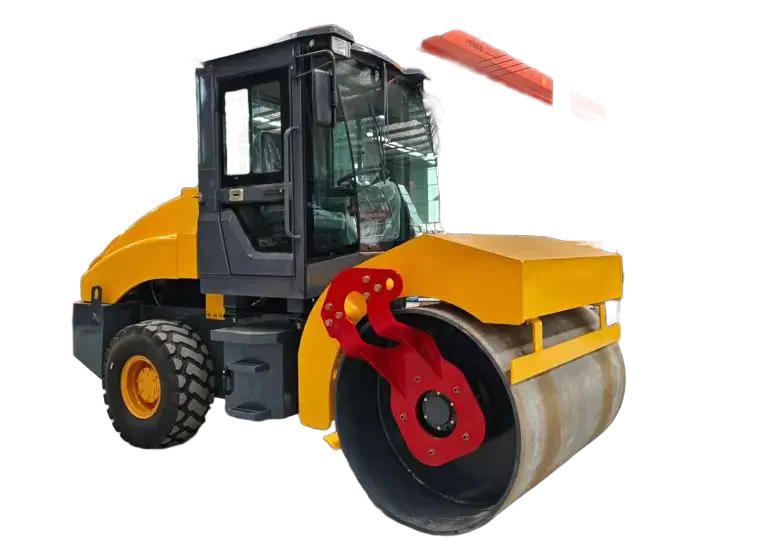
A utility reinstatement may contain four compaction zones within 50 metres: narrow backfill beside a trench, an asphalt patch, a wider granular base and the final edge near live traffic. One roller cannot be assumed ideal for all four. A road roller manufacturer should connect drum type, width, operating mass, frequency, amplitude and force to the material, layer and access in each zone.
MEGA’s road compaction range includes the 600 kg walk-behind MGY06, 1,000 kg tandem MGY10H, 3.5-ton MGY35D and 5,000 kg single-drum MGY50D. Their published data supports a practical ladder, but not a compaction guarantee. Moisture, lift thickness, support, speed and number of passes require project procedures and field verification.
A utility crew working beside a trench may need a 600 mm drum where a ride-on roller cannot safely enter. An asphalt repair contractor may value tandem drums and water spray. A broader base-course area may justify more mass and width, provided the site has space and the material responds to the selected vibration.
For each zone, record material, compacted lift thickness, moisture condition, width, edge support, nearby structures, slope, desired surface and how density or finish will be accepted. Machine data becomes meaningful only within this work plan.
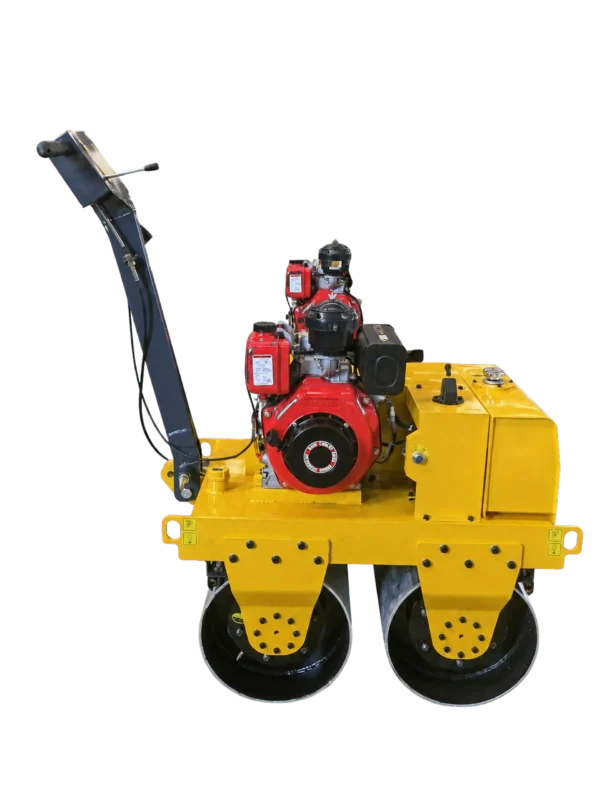
The MGY06 is described as a walk-behind vibratory roller for backfill, asphalt repair and narrow areas. It publishes 600 kg operating mass, 600 mm drum width, 426 mm drum diameter, 70 Hz frequency, 0.5 amplitude and 25 kN exciting force. Travel speed is 0-3.8 km/h.
This machine can fit a narrow strip where a ride-on unit lacks clearance. The crew must still control the open trench, edges, people and traffic. A small roller should not operate on unsupported ground merely because it fits.
Its foldable handrail can help transport, while the listed sprinkler device and lights support particular work conditions. Confirm the exact water system and engine route in the delivered configuration.
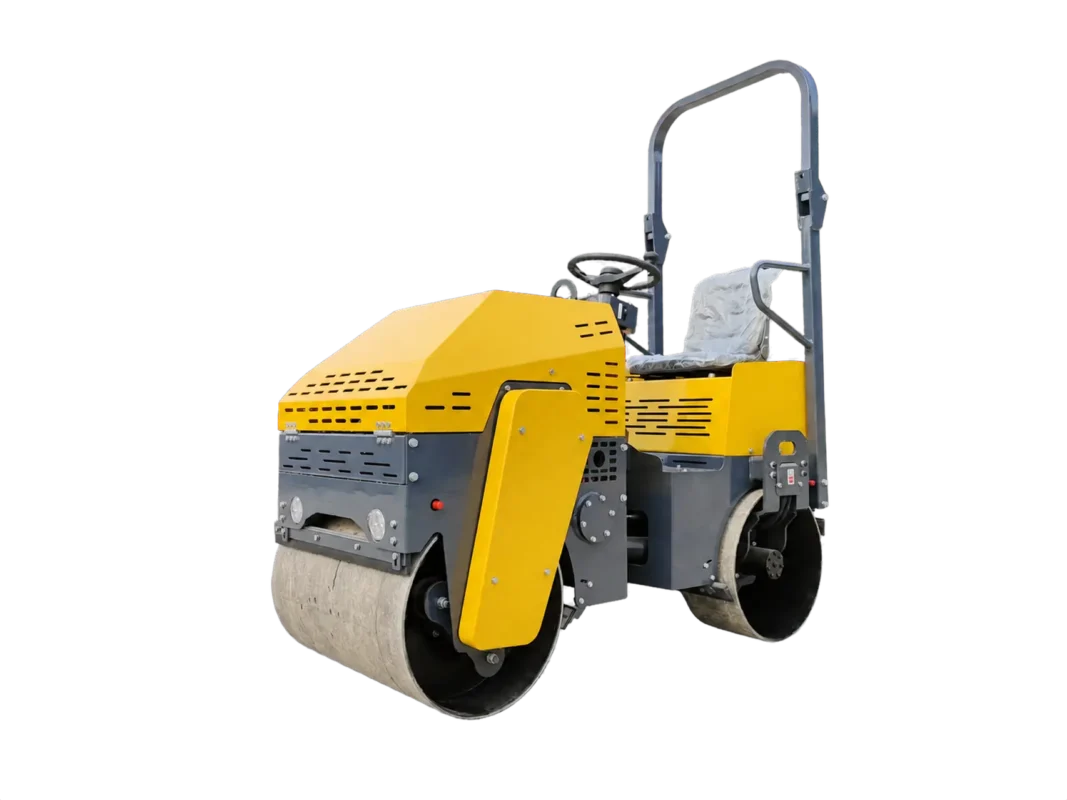
The MGY10H publishes 1,000 kg work quality, front and rear hydraulic dual drive, front-wheel vibration and hydraulic steering. It lists 740/800 mm vibrating-wheel width, 530 mm diameter, 70 Hz frequency, 0.5 mm amplitude and 25 kN excitation force.
Its electronic water spray and tandem drums make it a relevant asphalt-patch route. The buyer should identify whether the delivered width is 740 or 800 mm and how the spray system is configured. Water distribution, drum cleanliness, mat temperature, pass sequence and turning technique all affect finish.
MGY10H lists a 20 L water tank, 0-6 km/h travel speed and 1,800 mm minimum turning radius. These values help plan a small patch, but the compaction procedure should specify operating speed rather than using the maximum.
Frequency describes vibration cycles per second; amplitude describes nominal drum movement; exciting force describes the vibratory force generated under stated conditions. Operating mass and drum contact also matter. None of these values alone tells the buyer which lift thickness will reach the project requirement.
Both small machines publish 70 Hz and 25 kN, yet MGY06 is a 600 kg walk-behind with a 600 mm drum while MGY10H is a 1,000 kg ride-on/tandem route with 740/800 mm width. The operator, drive configuration and surface interaction differ. Do not describe them as equal because two vibratory numbers match.
For asphalt, run a trial strip when the specification requires it and use the project’s accepted measurement method. For trench backfill, verify lift thickness, moisture and support before adding passes. Excessive vibration can damage material structure or nearby assets rather than improve density.
The MGY50D publishes 5,000 kg operating mass, 1,500 mm drum width, 1,045 mm diameter, 55 Hz frequency, 0.7 mm amplitude and 82 kN exciting force. It is a single-drum route with hydraulic vibration, articulated steering and rear tire hydraulic drive.
This combination may suit wider soil or granular-base zones rather than the narrow edge or delicate asphalt finish assigned to smaller machines. Its 35% gradeability is a maximum published value, not a normal working-slope target. Surface and stability must be reviewed.
The 3.5-ton and 5-ton pages contain different levels of detail. A buyer should not fill missing MGY35D values from MGY50D. Request a complete current specification when width, frequency or force decides the project.
The MGY35D page describes a 3.5-ton dual-drive, dual-vibration full-hydraulic roller with a Xinchai 490 China IV engine and 50 horsepower. It does not publish drum width, frequency, amplitude or force on the audited page.
That makes MGY35D a candidate requiring more data, not a machine that can be placed confidently between MGY10H and MGY50D on every performance field. Ask for dimensions, drums, vibration settings, speed, turning, braking and water system where relevant.
Its overall dimensions are 3,950 x 1,700 x 2,650 mm, with a 5,180 mm minimum turning radius and 2,350 mm wheelbase. Confirm transport weight, route width and edge support. A wider roller can reduce lane passes but may be unable to work near structures or trench edges.
The page lists a YN27PAF4 36.8 kW engine, 100 L diesel and hydraulic tanks, and travel speeds of 1.7/4.6/7.8/16.8 km/h. The job procedure should state which working speed applies to the trial, not leave the operator to choose from transport ranges.
The final edge may border kerbs, covers, walls or live pavement. Choose a machine that can compact without bridging the edge, striking structures or forcing a dangerous turn. Sometimes the smallest roller returns for this zone even after a larger unit works the centre.
Assess whether the ground outside the compacted lane supports the roller. Keep away from unsupported trench sides and drop-offs according to competent site planning. A walk-behind operator also needs safe footing and an escape path; smaller mass does not eliminate edge hazards.
Nearby pipes, structures or newly placed elements may restrict vibration. Define start and stop points in the method statement. Check manufacturer guidance for vibration engagement and turning. Avoid stationary vibration that marks the surface or concentrates energy.
The Caterpillar tandem vibratory roller information and compaction publication provide general professional context on roller applications and compaction variables. Their model data does not apply to MEGA equipment.
Set the material condition and lift thickness, then select a starting speed, vibration setting and number of passes under project and manufacturer guidance. Mark a trial area. Measure results using the specified method and adjust only through controlled changes.
Two crews can report six passes while using different overlap, speed and vibration. Define what one pass means, the direction pattern and how edges are treated. Record weather and material moisture where they affect the result.
For MGY10H work, inspect pickup, tearing, displacement and marks while controlling the spray system. A density result does not excuse surface damage. Stop and correct temperature, water, speed or turning issues before the entire patch is affected.
MGY50D may create a convincing surface, but the project needs acceptance at the required depth. Use the specified field test and investigate soft areas. More passes on unsuitable moisture or weak support may not solve the problem.
The same roller can produce different results on a dry morning and after rain. Record material moisture and temperature where relevant, then decide whether to condition the material, delay work or change the pass plan through the project’s technical process.
If loose fill is too wet, the 600 kg walk-behind roller may pump or displace it rather than compact it. If too dry, the surface may look firm while deeper particles do not rearrange as intended. Stop and correct material condition under the specification instead of adding vibration indefinitely.
Confined utility work also traps water near trench walls. Inspect drainage and the support below each lift. A small machine cannot repair weak foundation conditions by itself.
Mat temperature, weather and haul timing affect the available compaction window. Coordinate the 1-ton tandem roller with placement so it does not arrive after the material has cooled beyond the approved method. Keep the spray system ready before the first pass.
If the roller picks up material or pushes the mat, stop and review temperature, water, speed and direction. Do not hide marks with additional uncontrolled passes.
Rain can soften an edge or underlying layer. Inspect the 1,500 mm lane and turning area before the 5-ton machine enters. Use project testing to confirm the layer is ready. The roller’s 400 mm-class ground contact assumptions cannot substitute for subgrade assessment.
Confirm model, engine, operating class, drum width and diameter, vibration system, drive, steering, brakes, water system, tires where present and safety devices. Measure dimensions needed for transport and access. Operate travel and vibration on a controlled surface under the manufacturer’s procedure.
For MGY35D, close the missing specification fields before using it in the project plan. For MGY10H, resolve the 740/800 mm width. For MGY06 and MGY50D, ensure the delivered plate and manuals match the published class.
At receiving, inspect drums, scrapers, spray nozzles, hoses, articulation, tires, handrails and loose components. Commission on a safe prepared area before entering the live work zone. Train operators on the exact vibration and drive controls.
A road roller shortlist should therefore contain a zone assignment, not just a tonnage. MGY06 covers the narrow strip, MGY10H the small asphalt route, MGY35D a 3.5-ton candidate requiring complete current data, and MGY50D the wider 5-ton single-drum work. Field response and project acceptance decide the final pass plan.
Keep the zone map and trial results with the project record. If the crew changes material source, lift thickness or roller, repeat the relevant trial. A pass count copied from another surface is not a controlled compaction method.
Service the machine according to the delivered configuration. On MGY10H, blocked spray nozzles or empty water capacity can damage an asphalt finish even when vibration works correctly. On MGY50D, inspect the single drum, scraper, articulation, rear tires and vibration system. MGY06 handrails and controls also need condition checks because the operator works directly behind the machine.
Record unusual vibration, leaks, drum buildup and steering behavior before the next zone begins. Do not compensate for a mechanical problem by increasing passes or changing speed. A roller must be serviceable before the trial data can mean anything.
Transport arrangements should use confirmed weight and dimensions, with the handrail or cab in its approved position. Secure the roller only at manufacturer-identified points.
Concrete teams working on the same civil package can use the trailer-pump route verification for placement planning.
