

Get quote
Get Free Consultation!
We are ready to answer right now! free consultation.
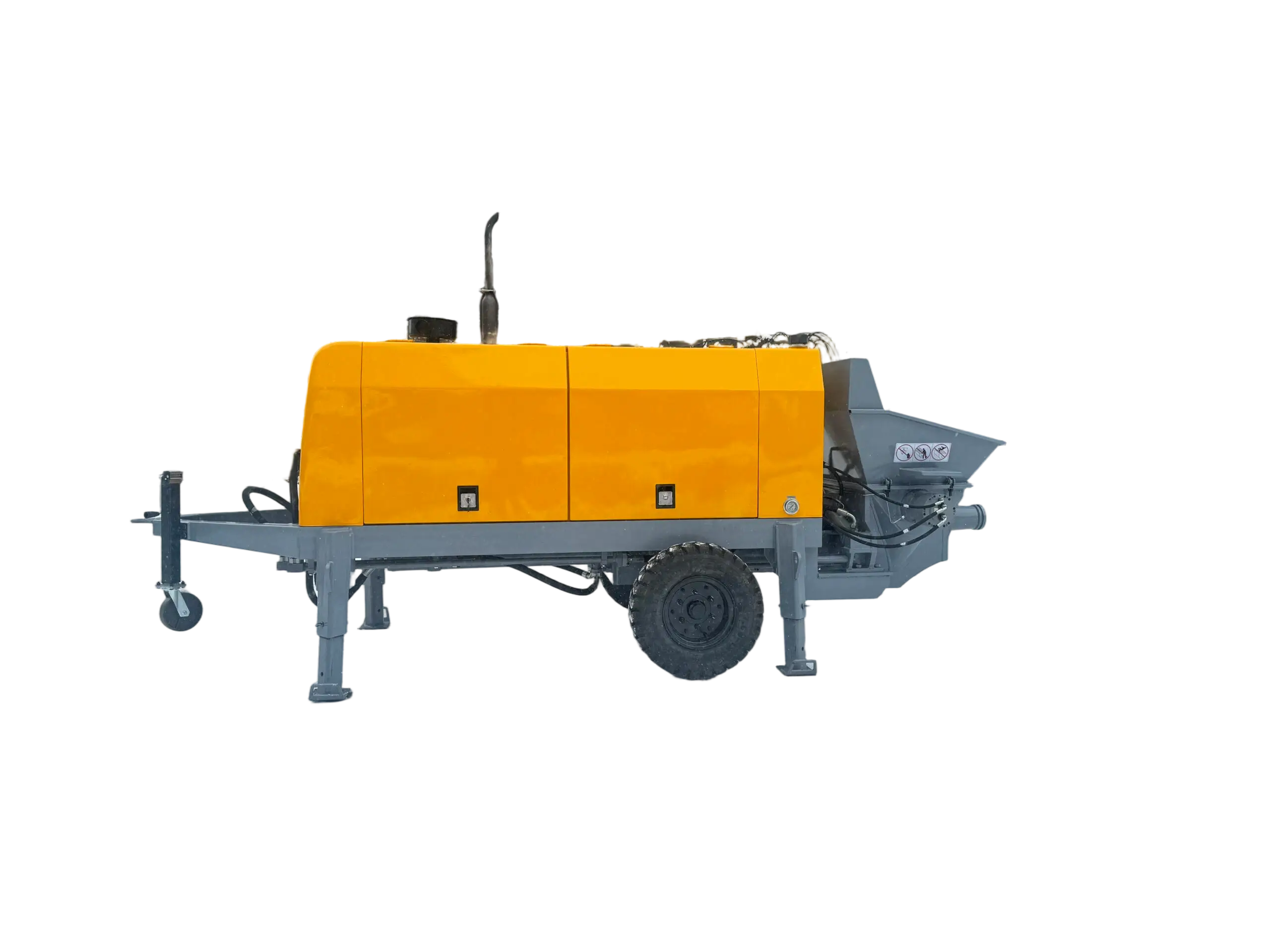
A trailer pump can publish 350 metres horizontal delivery and still fail on a much shorter project when the route includes rise, elbows, hose reductions, unsuitable concrete or poor pipeline setup. Concrete pump manufacturers in China should be evaluated by following the material from hopper to discharge point. Published output and distance are theoretical boundaries, not project promises.
MEGA publishes one trailer pump, the HBTS30-10-48R. Its page lists 30/16 m³/h theoretical output, 8/4 MPa pumping pressure, a 100 mm delivery line and maximum aggregate sizes of 35 mm pebble or 30 mm crushed stone. It also lists maximum theoretical delivery distances of 120 m vertical and 350 m horizontal. The buyer must resolve the high/low pressure pairing, concrete mix, pipeline route, site output requirement and safety plan before approving the trailer pump.
A low-rise contractor may assume a 200 m route is easy because it is below 350 m, yet ten elbows and a vertical rise add resistance. A rental fleet may accept the pump but lack compatible 100 mm pipe, clamps, seals or cleanout equipment. Both buyers need a route schedule and concrete information, not a headline distance.
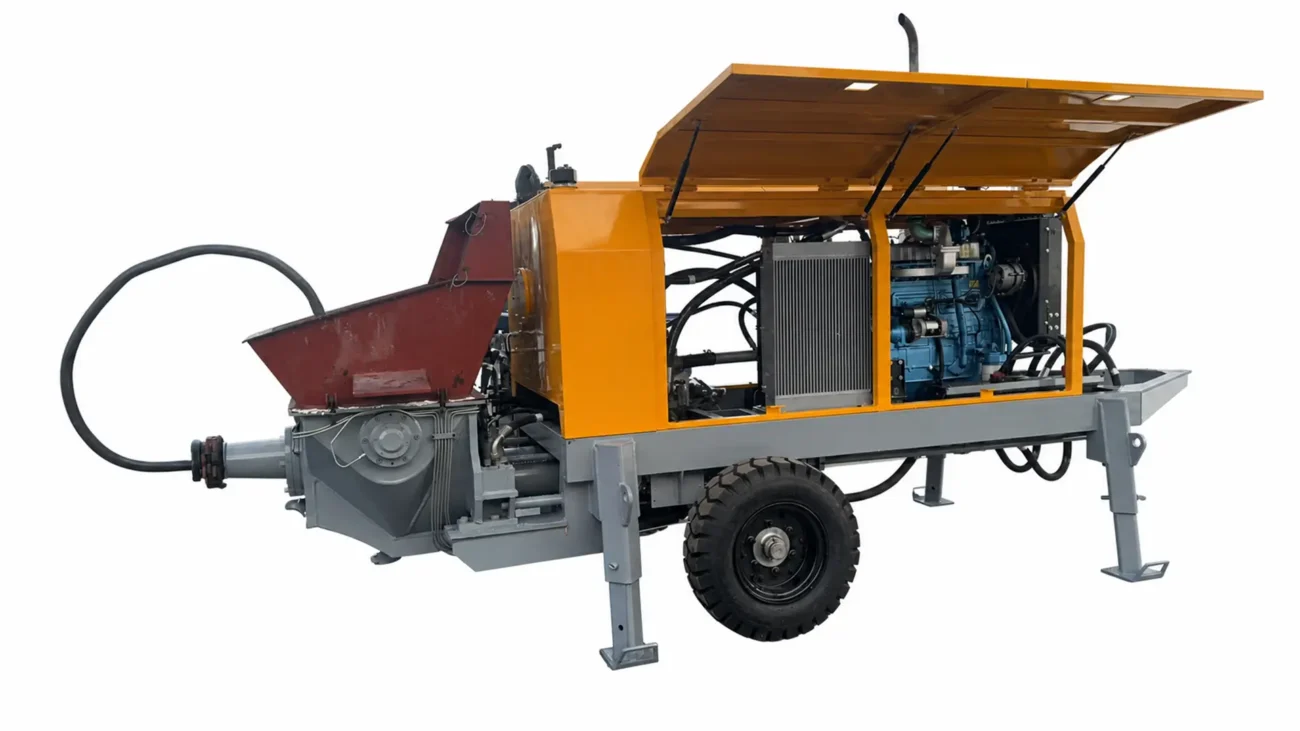
Draw the pump position, hopper access, first pipe, every bend, reducer, vertical rise, horizontal run, flexible hose, anchorage point and final discharge. Number the sections. Record pipe inner diameter, condition and pressure rating according to the system design.
The HBTS30-10-48R page publishes maximum theoretical distance as 120 m vertical or 350 m horizontal. It does not provide a conversion formula for a mixed route. Do not subtract vertical metres from the horizontal figure or use a generic factor without manufacturer engineering.
Send the complete route to MEGA with the required concrete output. Ask for a project-specific assessment and operating mode. Identify all elbows and hose because local resistance can matter more than straight-line length.
The final hose handling zone should be included. A shorter, well-planned line can be safer and easier to clean than one arranged around late site changes.
The page lists a 100 mm outlet inner diameter and 100 mm delivery-pipe inner diameter. Confirm the complete pipeline, couplings, elbows, seals, reducers and hose supplied or locally sourced. Components need appropriate identification and compatibility for the intended pressure and application.
A rental buyer should inventory pipe by length and condition, not just count pieces. Worn pipe, damaged couplings or mixed systems can undermine the original configuration. Inspection and replacement criteria should follow manufacturer and applicable guidance.
HBTS30-10-48R lists maximum theoretical output of 30/16 m³/h for low/high pressure and maximum pumping pressure of 8/4 MPa for high/low pressure. The ordering of the page’s labels can confuse a buyer. Request a clear operating table that pairs each mode with output, pressure and control setting.
Actual placement rate can be lower because of concrete supply, hopper filling, pipeline resistance, interruptions, operator actions and placing crew capacity. The contractor should work backward from the pour volume and allowable joint plan, then include realistic utilisation rather than schedule at 30 m³/h continuously.
A crew that can place only 12 m³/h should not select logistics around a theoretical 30 m³/h supply. Conversely, a critical continuous pour may need more capacity or redundancy than one HBTS30 route provides. The project engineer and pumping specialist should settle the plan.
Higher pressure may support more resistance while lower pressure may allow greater theoretical volume, but the manufacturer must confirm the machine’s actual high/low conversion and the system ratings. The page says high/low pressure conversion is available and identifies an S valve.
Do not change mode to overcome a blockage without following the approved procedure. A blockage is a safety event requiring trained response, exclusion and pressure release according to the supplied manual and local requirements.
The page lists maximum aggregate size of 35 mm pebbles and 30 mm crushed stone. Maximum size alone does not prove pumpability. Grading, shape, cementitious content, water, admixtures, slump consistency and segregation all affect movement.
Give the concrete supplier the 100 mm line and manufacturer aggregate limits, then confirm the specified mix is suitable for pumping and structural requirements. Do not change water at the hopper to make a difficult mix move unless the approved mix design and responsible technical process permit it.
The pump page’s numbers describe the machine boundary; the concrete designer controls the mix. Keep delivery tickets and observe consistency between trucks. A batch that segregates or contains oversize aggregate should be addressed before it enters the hopper.
HBTS30 publishes a 400 L hopper at 1,100 mm height. Plan truck approach, washout, personnel separation and communication so the hopper remains supplied without vehicle conflict. The hopper should not run so low that air enters the system, and personnel should not enter hazardous areas.
The page lists a 140 x 1,000 mm concrete cylinder and manual grease lubrication. Maintenance and lubrication schedules must follow the delivered manual. Confirm guarding and emergency controls at acceptance.
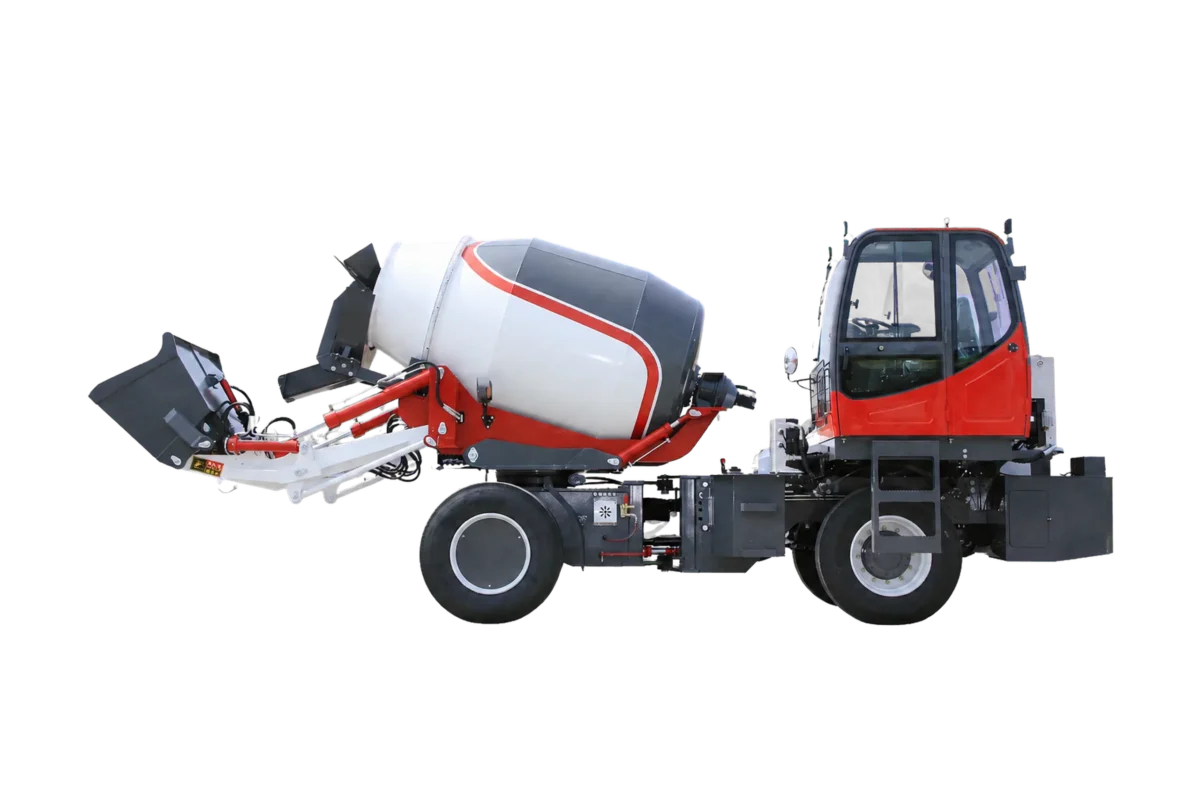
Some projects use ready-mix trucks. Others may assess a self-loading mixer range for remote supply. The pump does not correct inconsistent batching. The selected upstream system must sustain the specified mix and placement rate.
The MG2500 self-loading mixer belongs to MEGA’s concrete equipment family. If paired conceptually with HBTS30, compare its verified batch output, mixing control, discharge arrangement and cycle time with pump demand. Trial the approved mix and coordination before a critical pour.
Do not infer that two machines from one supplier automatically form a validated system. Site layout, concrete recipe, transfer and timing still require project review.
The MGP2000 page calls the machine a pan mixer but specifies a mobile, fully hydraulic self-feeding flat-mouth mixer truck with 2.0 m³ tank and 850 mm outlet height. If considered upstream, verify its actual mixing and discharge sequence and whether it can feed the hopper safely without modification.
The line route needs isolation, support, communication and access for inspection. Establish what happens when concrete supply stops, the line blocks, power or engine fails, weather changes or the receiving crew pauses.
Secure vertical and horizontal lines using engineered methods appropriate to the site and system. Keep people away from clamps, bends, hose ends and other risk areas. Do not support pipe from temporary elements without approval. A 350 m theoretical boundary says nothing about the anchors needed on a real building.
Identify the approved cleaning method, discharge area, waste control, water and equipment. Pipe contents and stored pressure create hazards. Only trained personnel should follow the manufacturer’s procedure and applicable site rules.
The American Concrete Pumping Association contractor resources and the Concrete Pumping Association guidance provide professional safety and planning context. They do not approve a MEGA machine or replace the actual manual, engineering and local regulations.
Send every candidate the same document: concrete requirement, pump position, pipe map, vertical rise, bends, hose, placement rate, aggregate limit, power or engine preference, cleaning method and destination rules. Ask the supplier to return the schedule with confirmed, conditional and unanswered fields.
The supplier should show how high and low pressure modes correspond to the published 30/16 m³/h and 8/4 MPa values. It should state which mode is proposed for the route and why, without turning a theoretical value into a guaranteed site result. Any required pipeline class and safety equipment should be identified.
If a quotation simply repeats all four numbers, keep the operating-mode decision open. Price should not be approved before the buyer understands which capacity is actually being offered for the job.
List straight lengths, elbows, reducers, couplings, seals, hose, supports or accessories, cleaning tools and initial spares. Record inner diameter, pressure suitability and supplied quantities. A lower pump price can become a higher system cost when the line package is incomplete or incompatible with local inventory.
Ask for wear-part identification, lubrication points, hydraulic and engine maintenance schedules, recommended startup spares and diagnostic guidance for the delivered HBTS30 configuration. Confirm remote-control battery or replacement details where applicable. A rental fleet needs traceable parts more than a generic promise of availability.
The page lists a 4102ZD diesel engine at 48 kW and 1,800 r/min, wireless remote control, manual grease lubrication and S-valve system. It gives 3,100 kg machine weight and 4,500 kg total weight in the audited facts. Clarify the weight definitions, transport arrangement and supplied line package.
Record model, engine, pump, valve, cylinders, hopper, outlet, controls, remote, guards and emergency devices. Under the manufacturer’s safe test procedure, demonstrate operation and high/low conversion using an appropriate test medium or approved method. Record what the test proves and what remains project-dependent.
Do not accept a water test as proof of concrete output at the site route. It can confirm functions but not the complete mix-and-pipeline performance.
Compare the packing map with machine, pipes, elbows, clamps, seals, hose, tools and spares. Inspect transit damage, corrosion and identification. Confirm the 100 mm route and pressure suitability. Keep mismatched or damaged components out of commissioning.
Inspect supports and exclusion, communicate with the placing crew, prime and operate only under the approved procedure. Start with controlled conditions and monitor pressure and material behavior. Stop if the route or mix differs from the engineering review.
The right supplier comparison makes uncertainty visible. HBTS30-10-48R provides a concrete set of published limits—30/16 m³/h, 8/4 MPa, 100 mm line, aggregate limits and theoretical distances—but the buyer must convert them into a route-specific operating plan. The manufacturer that answers that plan with traceable configuration and evidence is more useful than one that repeats the maximum horizontal number.
After the first controlled pour, record concrete tickets, route, mode, interruptions, observed pressure behavior, placed volume and cleaning outcome. Use the record to improve future planning while keeping each new mix and route subject to review. One successful short pour does not validate every theoretical distance.
Keep the pipe map current during the pour. If the crew adds an elbow, longer hose or a different discharge point, pause and have the responsible pumping team review the change. A route approved in the morning can become a different hydraulic problem after site access moves.
Record replaced pipes and couplings by location and condition. This gives later crews a trustworthy system instead of an untraceable pile of similar components.
If the proposed upstream machine is labelled a pan mixer, first resolve the MGP2000 mobile-versus-stationary fit.
