

Get quote
Get Free Consultation!
We are ready to answer right now! free consultation.
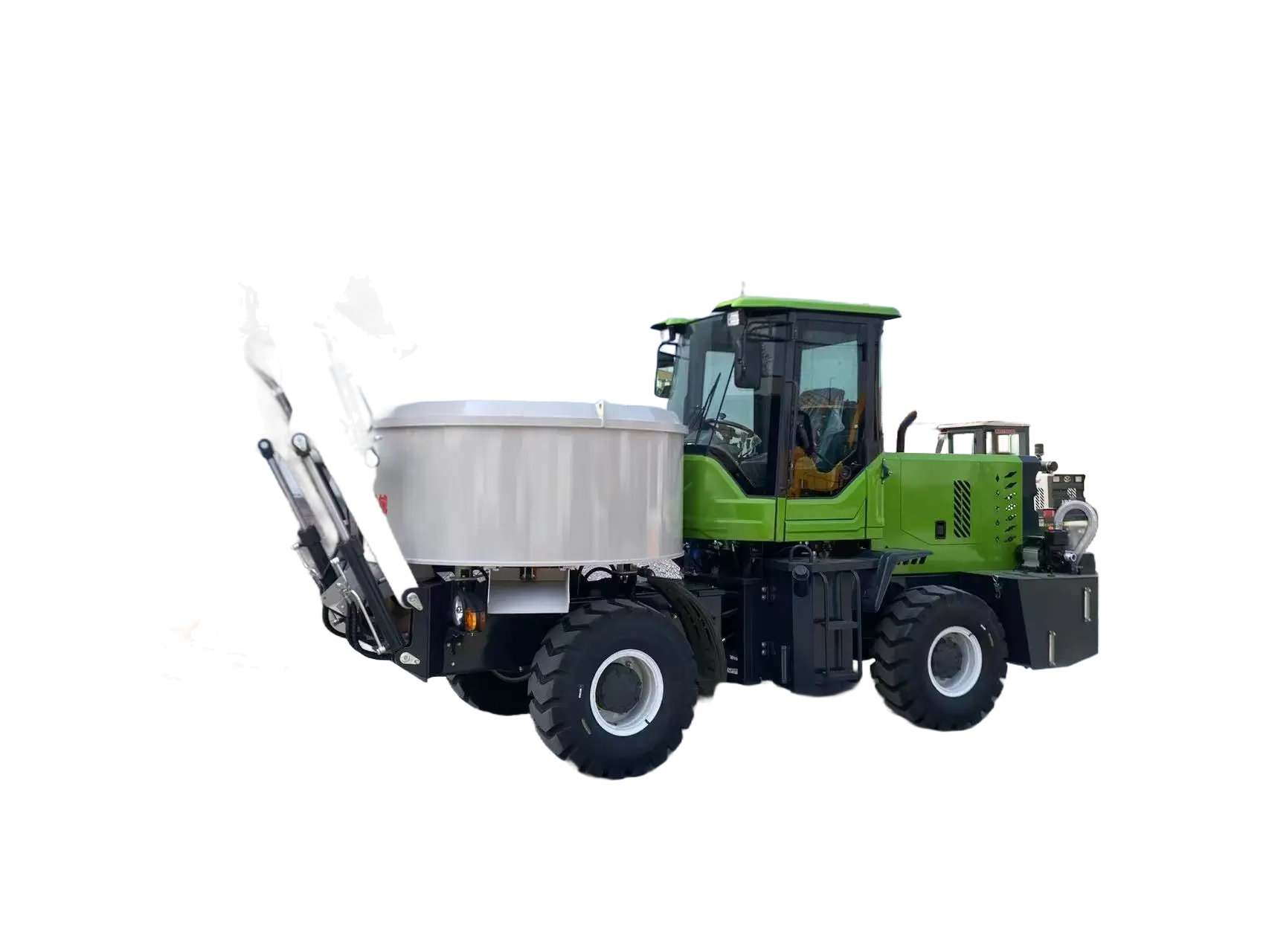
A buyer searching for a concrete pan mixer may expect a stationary vessel that feeds a block or precast line. MEGA’s MGP2000 page uses the “Pan Mixer” title, but its specification calls the product a “fully hydraulic self-feeding flat-mouth mixer truck” with four-wheel drive and a 2.0 m³ tank. A concrete pan mixer manufacturer evaluation should resolve that terminology conflict before price, capacity or layout is compared.
The MGP2000 product page provides enough facts to define a mobile route: 5,300 x 2,000 x 2,800 mm vehicle dimensions, 4,600 kg self weight, 76 kW engine, 0.7 m³ water tank, 850 mm outlet height and forward/reverse hydraulic mixing. It does not publish the fixed-plant feed geometry, stationary pan mixing action or batch-control arrangement that a conventional plant buyer may expect.
A block factory should not select MGP2000 merely because its page sits in the pan mixer category. A remote contractor may value self-feeding mobility, but must see the real loading, water, mixing and discharge sequence. The right outcome may be to choose MGP2000, move to a self-loading mixer, or ask MEGA whether a conventional stationary pan mixer is actually available.
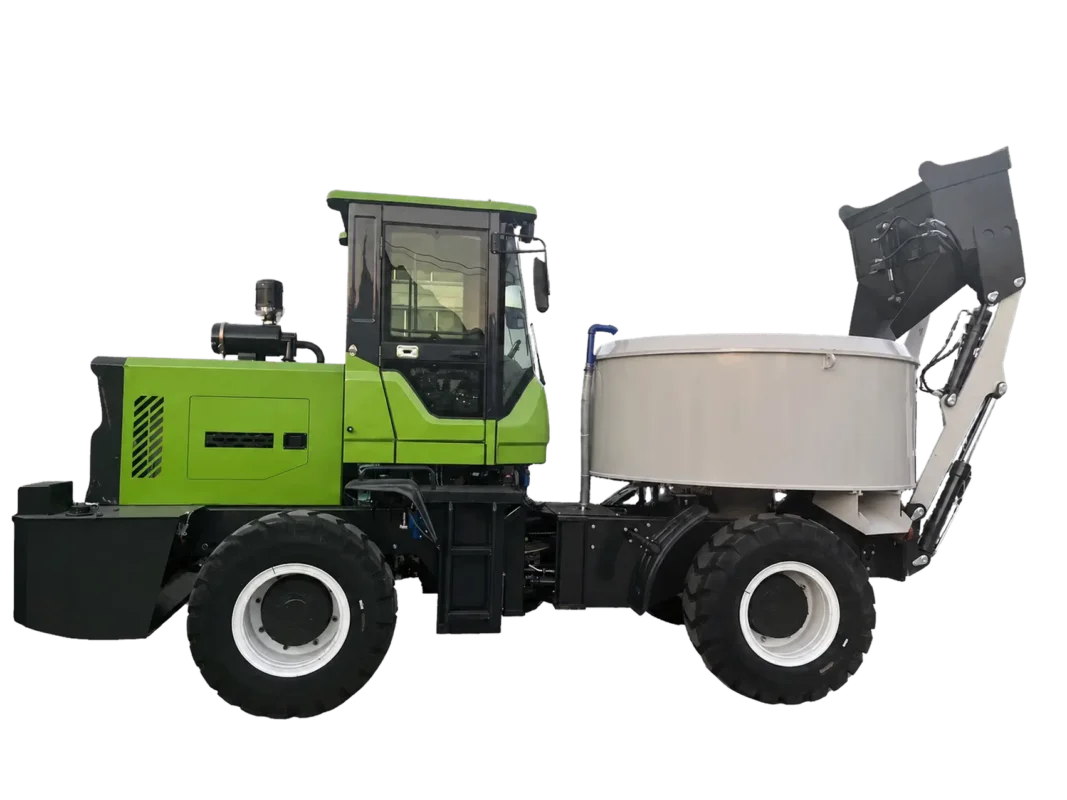
Ask for a sectional drawing or clear operating video showing the vessel, agitators or blades, loading point, water addition, discharge and cleaning access. Product names vary across markets; the physical process must settle the comparison.
The site lists “Product Type: Fully hydraulic self-feeding flat-mouth mixer truck,” “Model: 2000 type” and “Tank Capacity: 2.0 m³.” It gives a 1.9 m mixing-tank diameter and 720 mm tank height. Mixing is described as forward and reverse hydraulic mixing.
These facts support a mobile mixer discussion. They do not prove the forced mixing action, stationary installation, gate arrangement or integration expected in a conventional pan-mixer line. Ask MEGA to demonstrate the mechanism and identify whether 2.0 m³ means geometric tank capacity, mixing capacity or another definition.
The page includes blank or misaligned entries around discharge residual rate and mixing time. Do not create values to complete the table. Request a corrected current data sheet.
Professional information from Diem-Werke’s pan mixer range and a Putzmeister batching-plant brochure illustrates conventional stationary plant questions such as mixer integration, feed and discharge. Their designs, capacities and performance belong to those manufacturers, not MEGA.
Use the distinction to question the process: Is the vessel stationary? How are aggregates and cement metered? What moves the material? How is discharge controlled into the next machine? MGP2000 needs its own answers rather than borrowed terminology.
Mobility can be valuable when production moves between pour locations and no fixed batching line exists. It can be a disadvantage when the mixer must sit under fixed aggregate bins, feed a block machine at repeatable elevation or integrate with plant controls.
MGP2000 publishes four-wheel drive, fully hydraulic high/low-speed transmission, hydraulic steering and air brakes. Its tires are 20.5/70-16 front and 16/70-20 rear. A remote project could use those features to bring a mixing system closer to material or pour locations, subject to route, ground and workflow.
The buyer should map aggregate and cement storage, water supply, loading path, mixing position and discharge receiver. Four-wheel drive assists mobility but does not verify batching accuracy or concrete uniformity. Those require an operating procedure and project quality controls.
If MGP2000 must remain parked beneath a hopper, its vehicle chassis may consume space without solving plant integration. The 850 mm outlet height should be compared with the block-machine or transfer-hopper inlet. Ask whether discharge is direct, uses a chute or requires another conveyor.
A stationary buyer should request the electrical or hydraulic interface, cycle sequence, batch-control options, foundation loads, maintenance access and guarding for the proposed equipment. If MEGA cannot provide a stationary pan configuration, the product should not be presented as one.
The published 2.0 m³ tank capacity is not automatically 2.0 m³ of finished concrete per batch. Tank volume, rated mixing capacity and output per cycle can differ. Confirm the usable batch and the material recipe before calculating production.
MGP2000 lists a 0.7 m³ water tank and automatic water supply. Ask how water quantity is measured, displayed and calibrated, what pump or controls are supplied, and whether the system can meet the project’s batching tolerance. A tank only stores water; it does not by itself prove dosing.
If the project uses moisture correction for aggregates, define how the operator adjusts water. Do not promise automatic correction when the page does not publish such a system.
The audited table does not contain usable values for mixing time or residual rate. A buyer should request a witnessed trial with the intended mix and an agreed sampling or uniformity method where required. Record batch inputs, actual mixing time, discharge and retained material under a safe procedure.
Do not transfer cycle times from an external stationary mixer or another MEGA self-loading model. The MGP2000 mechanism must be assessed on its own.
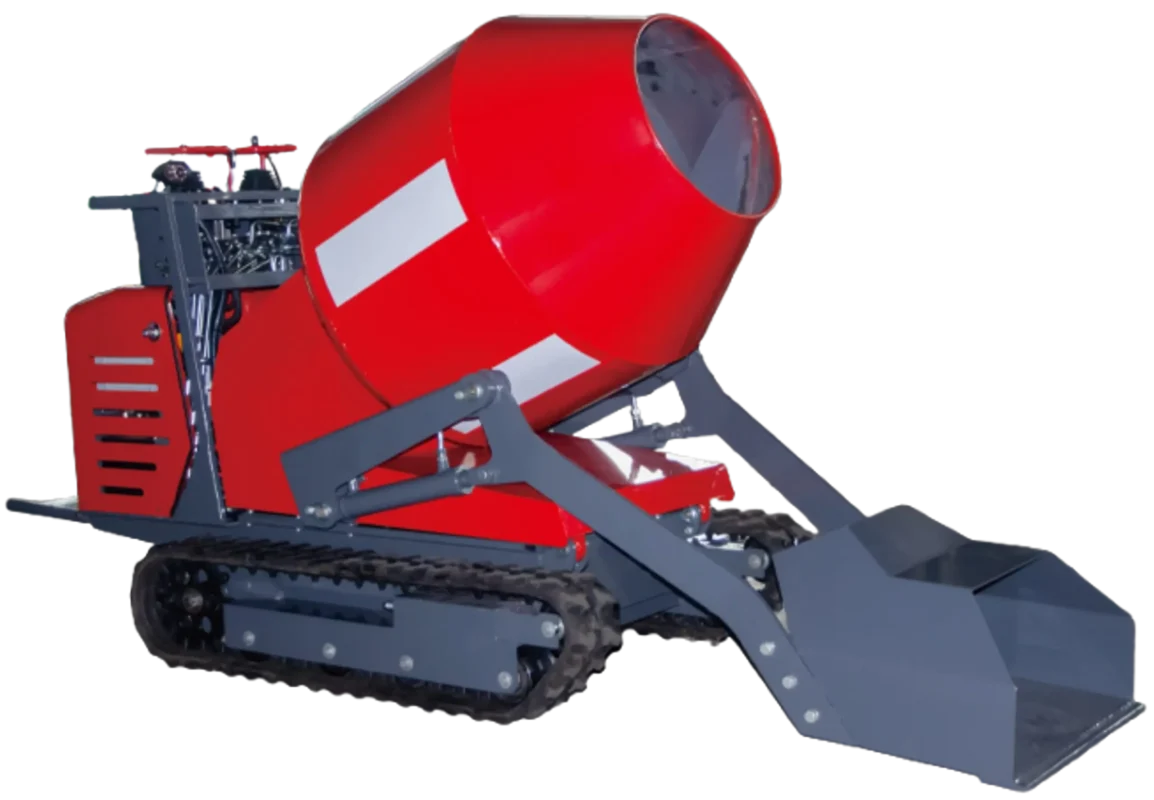
MEGA’s self-loading mixer family provides nearby mobile options with clearer batch or mixing-capacity fields. This comparison helps the buyer decide whether mobility and self-loading—not the “pan” label—drive the purchase.
The CMT500C publishes 500 L total volume and 320 L concrete per batch. It weighs 860 kg, is 1,000 mm wide and uses a 0.1 m³ loading bucket. This route can suit small, restricted jobs where 2.0 m³ equipment would be too large.
Its compact capacity is not a substitute for a block plant. It is a different mobile workflow. The buyer should compare batch size, loading labour, mix control, discharge and number of cycles.
MG1000 publishes 0.7 m³ mixing capacity, 0.3 m³ bucket, 230 L water tank, 3,500 kg overall weight and 4×4 traction. MG1500 publishes 1.0 m³ mixing capacity, 0.35 m³ bucket, 300 L water tank, 5,500 kg weight and 4×4.
These pages use a mixing-capacity field, making their role clearer than MGP2000’s tank-capacity entry. A buyer handling dispersed small foundations may compare these routes by required batch, access and water control. They remain mobile drum-style self-loading mixer trucks as presented on the site, not stationary pan mixers.
The MG2500 publishes 2.5 m³ mixing capacity, 500 L water tank, 6,200 kg overall weight, 77.3 kW engine and 4×4 traction. Its vehicle width is 2,350 mm and lifting-arm height 3,610 mm.
For a remote contractor seeking mobile batches around this class, MG2500 may be easier to evaluate because mixing capacity is explicitly stated. It is still physically and operationally different from MGP2000. Compare the actual discharge point and site path.
MGP2000’s 850 mm outlet height may suit some low receiving containers and fail others. Measure the receiver lip, chute angle, required clearance and whether the machine remains level during discharge.
Ask for the outlet dimensions, opening method, flow control and residual-cleaning procedure. Verify that workers do not need to enter a pinch or splash zone. If a chute is supplied, identify its length, support and transport position.
If the buyer intends to discharge into the HBTS30 trailer pump, compare outlet and hopper geometry, batch continuity, concrete pumpability and vehicle approach. Do not assume the two products form an approved system. A controlled trial and project mix review are necessary.
A mobile tank and a stationary pan can demand different access, lockout and cleaning arrangements. Ask where material accumulates, how the vessel is made safe, which covers or guards are opened and where washout is discharged. The answer can decide whether the equipment fits a block plant or remote pour.
The 1.9 m diameter and 720 mm tank-height entries help identify the vessel but do not describe safe entry or cleaning. Request the manufacturer’s isolation, washout and residual-material procedure. Personnel should not enter or reach into moving equipment. The site must control wastewater and hardened residue.
MGP2000 lists high-manganese steel for the tank. Ask where liners, blades or other wear elements are used in the actual mixing mechanism and how they are inspected or replaced. Do not infer service life from material name alone. Keep part numbers tied to the delivered machine.
The fully hydraulic drive, steering, high/low transmission and forward/reverse mixing route create hoses, pumps, valves and oil-service requirements. Confirm hydraulic fluid specification, filters, inspection intervals and startup spares. A plant maintenance team that expected only a fixed mixer may need different skills and containment.
Factory evidence should begin with the product name and physical mechanism. Show model plate, engine, tank, loading equipment, water system, hydraulic controls, drive, steering, brakes and discharge. Record dimensions and outlet height.
Use an approved representative material or actual project mix under a safe plan. Record loading order, measured quantities, water addition, mixing time, direction changes, discharge time and retained material. Identify whether the test proves mixing capacity, geometric volume or only mechanical function.
Confirm shipping dimensions, weight, loose chutes or loading parts, fluid preparation, lifting and lashing guidance. Protect hydraulic connections and tank surfaces. At receiving, compare the machine with the approved mobile drawing before planning plant integration.
MGP2000 may be a useful mobile self-feeding flat-mouth mixer for a contractor who needs 4×4 movement, hydraulic mixing and a low outlet. It may be unsuitable for a buyer seeking a conventional stationary pan mixer connected to fixed batching and production equipment. The website’s category name does not erase that difference.
The responsible purchasing decision is to describe the required process in plain engineering terms: fixed or mobile, usable batch, mixing action, dosing, outlet, receiver and control. Ask MEGA to confirm which published product satisfies it. If the answer remains incomplete, keep the category question open instead of converting a 2.0 m³ tank into a performance promise.
Preserve the supplier’s final terminology and drawing in the receiving file. If the delivered plate or manual calls the machine by another type, resolve the difference before integrating it with production equipment. Clear names protect maintenance, training and future replacement decisions.
For a repeat order, compare tank, water system, outlet, engine, hydraulics, tires and control sequence with the first machine. A category label cannot reveal a changed mixing mechanism or discharge arrangement. Require the supplier to disclose changes before production and update operator and parts records.
Where MGP2000 may feed a pump, verify the combined plan through the HBTS30 output, pressure and route review.
