

Get quote
Get Free Consultation!
We are ready to answer right now! free consultation.
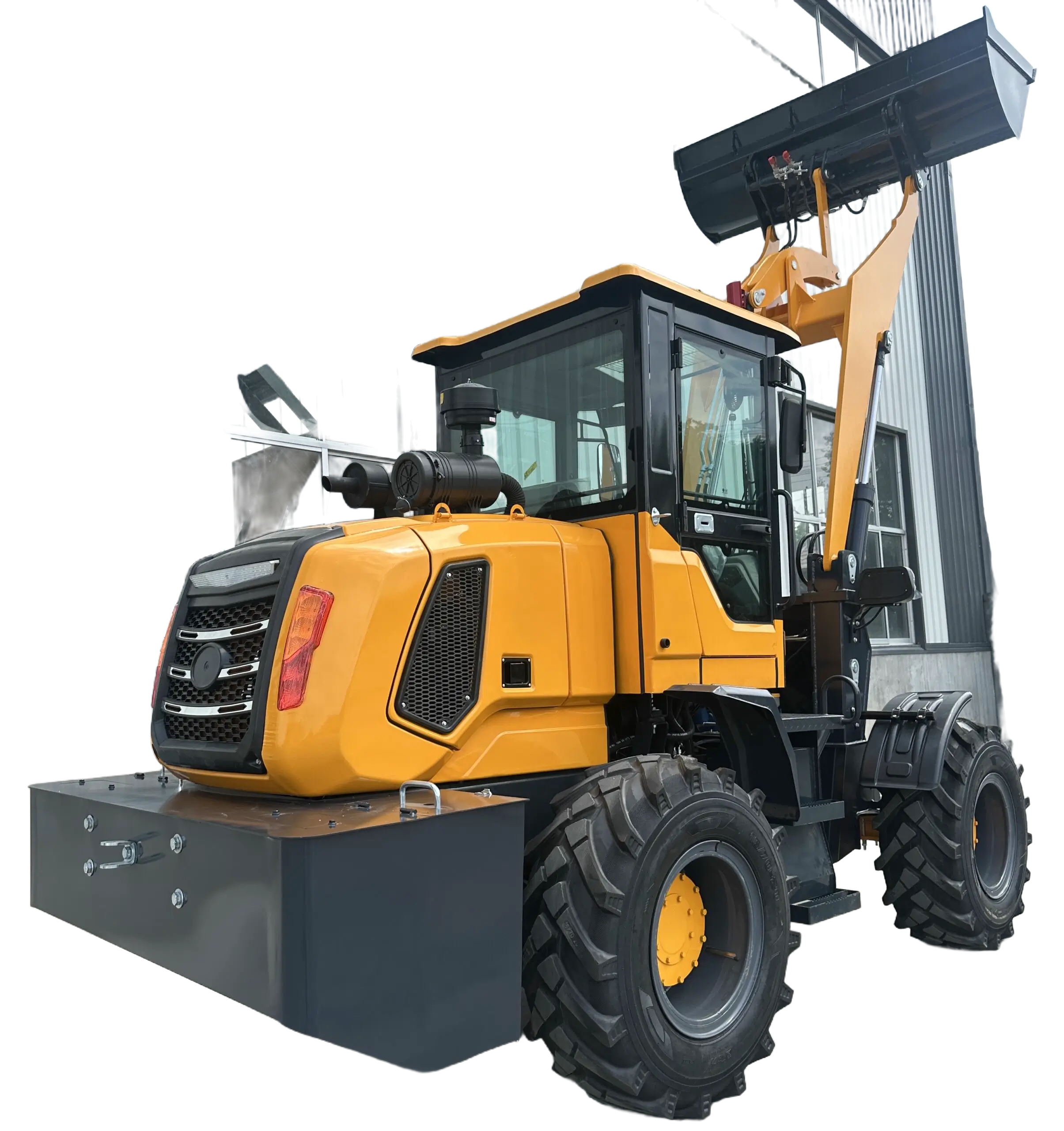
A project buyer reviewing a construction machinery manufacturer should begin with evidence that can be checked from the supplier’s own product range and factory information. A polished product photo is useful, but it does not answer whether the manufacturer can support a mixed order of wheel loaders, self loading concrete mixers, concrete pumps, backhoe loaders, dumpers, forklifts and road rollers.
MEGA’s published site gives buyers several facts to work with: the company was founded in 2015, operates a 20,000 sqm production base, works through 5 standardized workshops and presents 80+ team members across production and support. The visible product range includes 1 to 5 ton wheel loader routes and 0.5 to 6.5 m3 self loading mixer output, along with model names such as MG936, MG958, TL16, MG6500C, WZ30-25, MG60DA and MGY10H.
The useful question is not whether every number sounds large. The buyer needs to decide whether the manufacturer’s range, workshop visibility and model documentation match the project’s real machines. A contractor buying one loader has a different risk from a distributor building a mixed equipment catalog. Both should ask for evidence that connects the model name, production scene and intended application.
The first review point is product organization. MEGA separates its products into concrete equipment, loading and earthmoving, transport and handling, and road and agriculture. That structure helps a buyer avoid a confusing all-in-one machinery list. It also lets the buyer check whether the manufacturer can discuss each product by working role rather than by broad category name.
For mixed orders, this matters more than many buyers expect. A wheel loader and a site dumper both move material, but they should not be selected for the same reason. A self loading concrete mixer and a concrete pump both belong in concrete work, but one prepares and moves concrete while the other places it beyond direct access. A manufacturer should help separate these roles before a quotation becomes fixed.
MEGA presents wheel loader payload focus from 1 to 5 tons. The product page names MG910, MG936, MG940, MG958 and TL16 among the loader directions. A buyer should ask which loader route fits the material, turning area, truck height and work cycle. Smaller loaders can make sense in farms, inner yards and lighter construction work. Higher-payload routes should be considered when the site has larger stockpiles and enough room for steady loading cycles.
A manufacturer review should therefore include more than a payload number. The buyer should request model photos, basic configuration notes and the working condition that each route is meant to serve. If several loader models appear in one order, the file should explain why each model exists in the plan.
MEGA lists self loading mixers such as MG1000, MG1500, MG2500, MG4000B, MG6500C and MG7500C, while also naming MGP2000 pan mixer and HBTS30-10-48R concrete pump. These products solve different concrete problems. The manufacturer should help buyers decide whether the job needs mobile concrete production, fixed batch preparation, or concrete placement beyond where a mixer can discharge.
For a remote project, a self loading mixer may be attractive because it combines loading, mixing, travel and discharge. For a controlled yard, a pan mixer route may deserve attention. For a building site where concrete must travel away from the mixer, a pump should be discussed early. The manufacturer’s value is in keeping those choices clear.
MEGA’s transport and road equipment includes site dumpers, all-terrain forklifts and road rollers, with product examples such as MG60DA site dumper, MG3580 all-terrain forklift and MGY10H double drum road roller. These machines can remove bottlenecks that a loader or mixer cannot solve. A dumper can shorten repeated material trips, a forklift can handle outdoor pallets, and a roller can finish compaction work after material is placed.
A construction machinery manufacturer with these lines can support buyers who want a practical jobsite package. The buyer should still check whether the manufacturer has current images and model sheets for the exact equipment being discussed. A mixed order becomes safer when every machine has a named role.
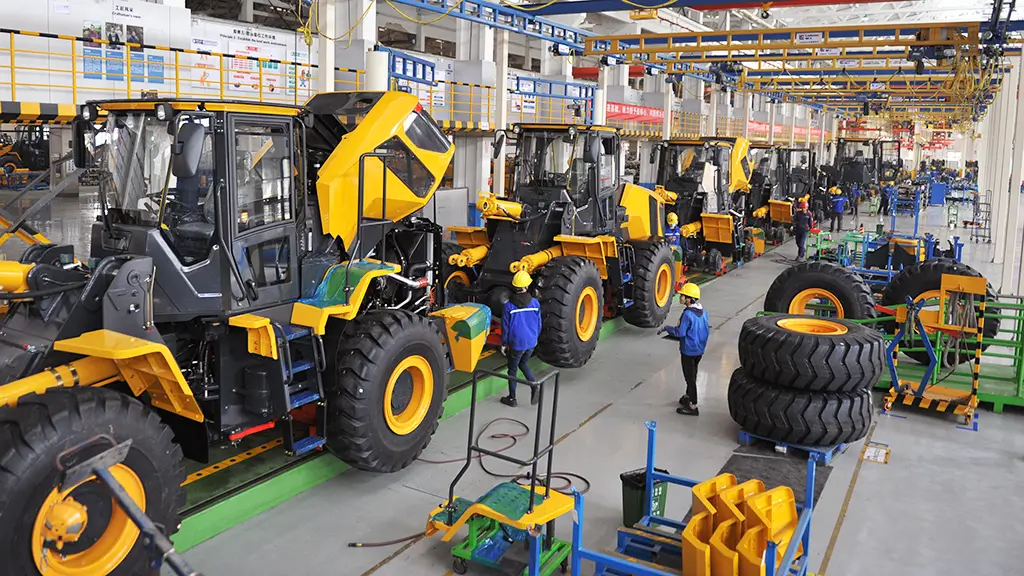
Factory size alone does not prove a machine is suitable. MEGA states a 20,000 sqm production base and 5 standardized workshops, and the website shows factory, assembly and inspection scenes. The buyer should use those details as starting evidence, then ask for model-specific workshop images or pre-dispatch checks for the machine family being ordered.
A distributor may need repeated orders, consistent photos and reliable model naming. A contractor may need one machine delivered with a clear support file. Both buyers should check whether factory images, product pages and sales documents tell the same story. If the website shows one model direction and the quotation names another, the buyer should ask for clarification before approving shipment.

Assembly imagery can help a buyer understand whether the manufacturer is presenting real machinery work rather than a generic warehouse. For wheel loaders, assembly and yard images should support the loader family being discussed. For concrete equipment, the buyer should separate self loading mixer photos from pump or pan mixer photos. Clear separation keeps the order file usable for purchasing, warehouse and after-sales teams.
When several machines are ordered together, each model should have its own folder or file section. This practical discipline prevents later confusion between a loader, a dumper and a road roller. It also makes it easier for the buyer’s team to explain the order internally.
A pre-shipment discussion should be built around the work the machine will perform. For a loader, the buyer may review bucket route, tire suitability and loading height. For a self loading mixer, the buyer may review output range, discharge method and site access. For a road roller, compaction surface and job size matter. A single generic checklist is less useful than a machine-specific review.
Industry equipment guidance often stresses matching machine size, attachment, ground condition and workload before purchase. That general principle is useful here: the manufacturer should help buyers link each MEGA machine direction with the worksite conditions rather than with a broad equipment label.
Contractors and distributors evaluate manufacturers differently. A contractor usually knows the first project and wants the machine to fit that job. A distributor needs a range that can be explained to many customers. MEGA’s product range gives both buyer types several routes, but the conversation should be organized differently for each one.
A contractor may start from a road, yard, building or farm problem. A distributor may start from customer categories: compact loader buyers, concrete contractors, road maintenance teams, outdoor handling users and mixed equipment fleets. The manufacturer should support both conversations with model names, photos and practical product positioning.
A contractor preparing an order should write down the first job in concrete terms. The document should say what material is handled, where the machine turns, how far it travels, what access limits exist and what support is expected after delivery. That information helps a manufacturer recommend MG936 versus a higher-payload loader route, a self loading mixer versus a pan mixer route, or a dumper versus repeated loader travel.
Without that job description, the buyer may receive a quotation that looks complete but misses the real bottleneck. The machine may be technically capable yet poorly matched to the site layout. A good manufacturer review reduces that risk before the order is placed.
A distributor needs a clean product story. MEGA’s range can be grouped into loader work, concrete work, digging work, site movement, outdoor handling and compaction. That grouping is easier for sales teams than a long list of model codes. The distributor can still keep model names underneath each group for accuracy.
For example, MG936 can be explained as a 2 ton loader direction for daily loading work, TL16 as a telescopic loader route where reach matters, WZ30-25 as a backhoe loader direction for trenching and loading, and MGY10H as a compact double drum roller route for road compaction work. The product story should remain practical, not decorative.
Before a construction machinery manufacturer order is approved, the buyer file should prove four things: the machine role, the model direction, the site condition and the support expectation. The file does not need to be complicated. It needs to be clear enough that the buyer, finance team, warehouse team and operator understand the same machine.
MEGA buyers can start with the published product range, then add project notes, machine images and model-specific questions. If a machine is selected because it solves a special condition, such as reach, narrow turning, concrete mobility or road compaction, that reason should appear in the file. This makes later reorder and service conversations easier.
Model names are important, but they should be paired with plain working roles. MG6500C can sit in the file as a self loading mixer route for higher-output mobile concrete work. HBTS30-10-48R can sit as a concrete pump route for placement support. MG60DA can sit as a site dumper route for repeated short material movement. The buyer should not leave the file as a bare list of codes.
For manufacturer evidence, compare the MEGA product range, the factory team support page, and the mixed construction machinery supplier guide. The project scenes page is useful when a buyer wants to see how several machine families are presented together.
A buyer can also compare how the manufacturer presents people, machines and factory scenes together. MEGA’s team page shows factory visits, production coordination and after-sales communication around loaders, self loading mixers, forklifts, backhoe loaders and excavators. That kind of content is useful because construction machinery is not purchased only from a model table. The buyer needs to know whether the supplier can keep sales, production and support working from the same machine information.
For a distributor preparing a new product line, the manufacturer review should include a simple sales-and-service path. The sales file may explain loader payload routes, mixer output range and road equipment use. The service file should preserve the same model identity so future spare parts or technical questions do not begin from zero. If those files use different names for the same equipment, the distributor should fix the file before placing repeat orders.
For a contractor ordering directly, the manufacturer review should be narrower. The contractor should focus on the first machine, the first site and the first support need. If the first machine is MG936, the file should explain daily loading work. If the first machine is MG6500C, the file should explain concrete output and access. A clear first order is better than a broad order that nobody on the jobsite can explain.
