

Get quote
Get Free Consultation!
We are ready to answer right now! free consultation.
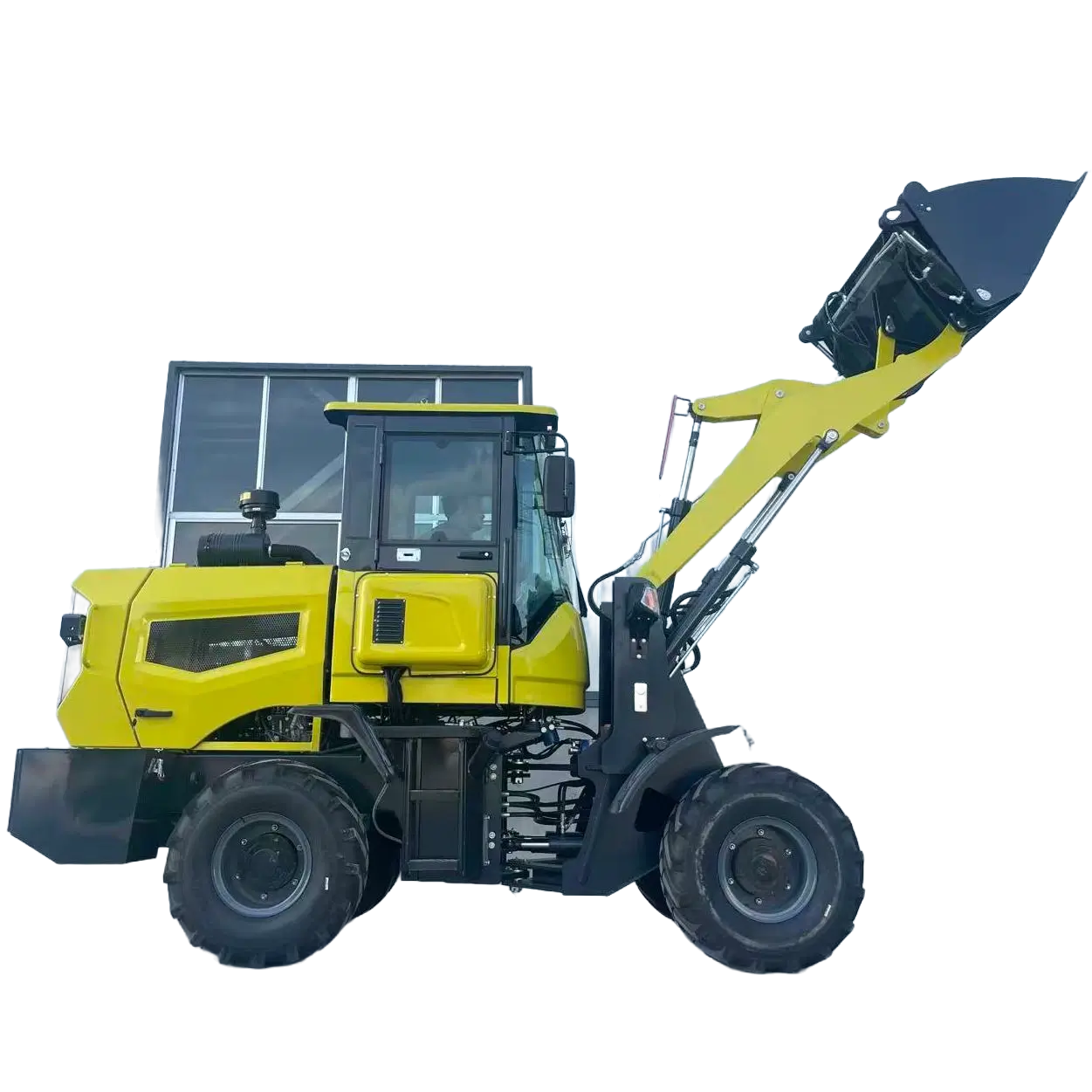
An international buyer does not need the longest list of machines when comparing construction machinery manufacturers in China. The useful shortlist is the one that can connect an actual job to an identifiable model, freeze the ordered configuration, show what was checked before dispatch, and give the receiving team enough information to recognize the machine on arrival. That approach suits contractors assembling a mixed fleet, distributors selecting several product families, and engineering teams that cannot visit every factory in person.
For a first review of MEGA, begin with the construction machinery range. It currently spans wheel loaders, self-loading concrete mixers, site dumpers, all-terrain forklifts, backhoe loaders, compact rollers and a trailer concrete pump. The range is relevant to loading, short-haul transport, on-site concrete production, outdoor pallet handling, utility work and compact road construction. It is not presented as a catalog of mining trucks, cranes or large excavators, so buyers needing those classes should not stretch the available evidence beyond its limits.
The first confirmation should be the intended work of every machine. A model name alone cannot tell a buyer whether the bucket will clear a receiving hopper, whether a dumper can turn on the haul road, or whether a mixer can pass the site gate with its loading arm raised. Start with material, payload, access, working height, route condition and daily cycle; then test the manufacturer’s recommendation against those facts.
A supplier’s home presentation can establish context, but an order should be approved from product-specific evidence. MEGA states that it operates a 20,000 square metre production base with five standardized workshops and more than 80 people across research, production and service. Those statements give a buyer subjects to verify during a video inspection or factory visit. They do not replace the model sheet, order confirmation, inspection record or shipping file for the machines being purchased.
The China Construction Machinery Association is a useful source for understanding the breadth of the country’s equipment industry. Its existence should not be used to imply that a particular supplier has membership, certification or endorsement unless that status is separately documented. The same evidence rule applies to every badge, standard, engine statement and emissions description in a quotation.
A controlled specification has a date or revision, an exact model, the selected options and a clear unit for every number. This matters because similar machines can have materially different operating roles. MEGA’s MG939 wheel loader, for example, lists a 92 kW engine, a 4 x 4 drive arrangement, a 2,630 mm wheelbase and a 17.5-25 tire size. The page also publishes a 3,100 mm dumping height, 1,060 mm dumping reach and 120 kN maximum breakout force. These figures should be copied into the order file only after the supplier confirms that they describe the offered configuration.
The same discipline catches incomplete information. If a field is blank, merged with another label or inconsistent with a drawing, mark it as an open question. Do not infer the missing value from another model. Ask the manufacturer to return a corrected sheet, because the corrected answer will be more useful to operators and service staff than a smooth-looking quotation with an unverified assumption.
Factory images can show that fabrication, assembly or testing activity exists, but buyers need an unbroken link from the purchase order to the machine inspected. Ask for a photo or video sequence that includes the model plate, overall machine, key option, control area and a readable order reference. A general workshop tour is valuable context; it is not proof that the selected tire, engine, mast, bucket or hydraulic route was installed on a particular unit.
MEGA describes pre-shipment checks, final debugging, running checks and load simulation in its company material. For a real order, turn those broad activities into model-specific acceptance points. A wheel loader test can include steering, travel, braking, boom movement, bucket rollback and dumping. A site dumper test can include travel, skip lift and optional rotation. A mixer check should include loading, drum rotation, water operation and discharge. The inspection record should state what was observed rather than simply say “passed.”
| Audit evidence | What it should identify | Why a buyer needs it |
|---|---|---|
| Frozen specification | Model, engine, tires, dimensions, capacity and selected options | Prevents the delivered machine from drifting away from the approved quote |
| Order-linked images | Model plate, whole machine and order-specific features | Connects factory evidence to the unit being purchased |
| Functional record | Operations tested, date, result and unresolved items | Gives receiving and service teams a usable baseline |
| Packing list | Machine, loose parts, tools, manuals and accessories | Reduces missing-item disputes after unloading |
| Receiving note | First checks, intended duty and limits requiring confirmation | Helps the site start the machine for the work it was selected to do |
One advantage of reviewing several MEGA families together is that the buyer can see whether the supplier handles technical information consistently. Select one representative model from each required family and compare the quality of the evidence, not merely the number of published products. Five carefully reviewed samples reveal more than fifty model names skimmed in a catalog.
For loading, the MG939’s bucket and dump geometry should be checked against the material density and the receiving vehicle. A bucket that is suitable for lighter material may reach the rated payload before it looks full when it handles dense aggregate. Request the bucket type and assumed material, not only its volume. Confirm that the 3,100 mm published dumping height and 1,060 mm reach are measured in the configuration being quoted.
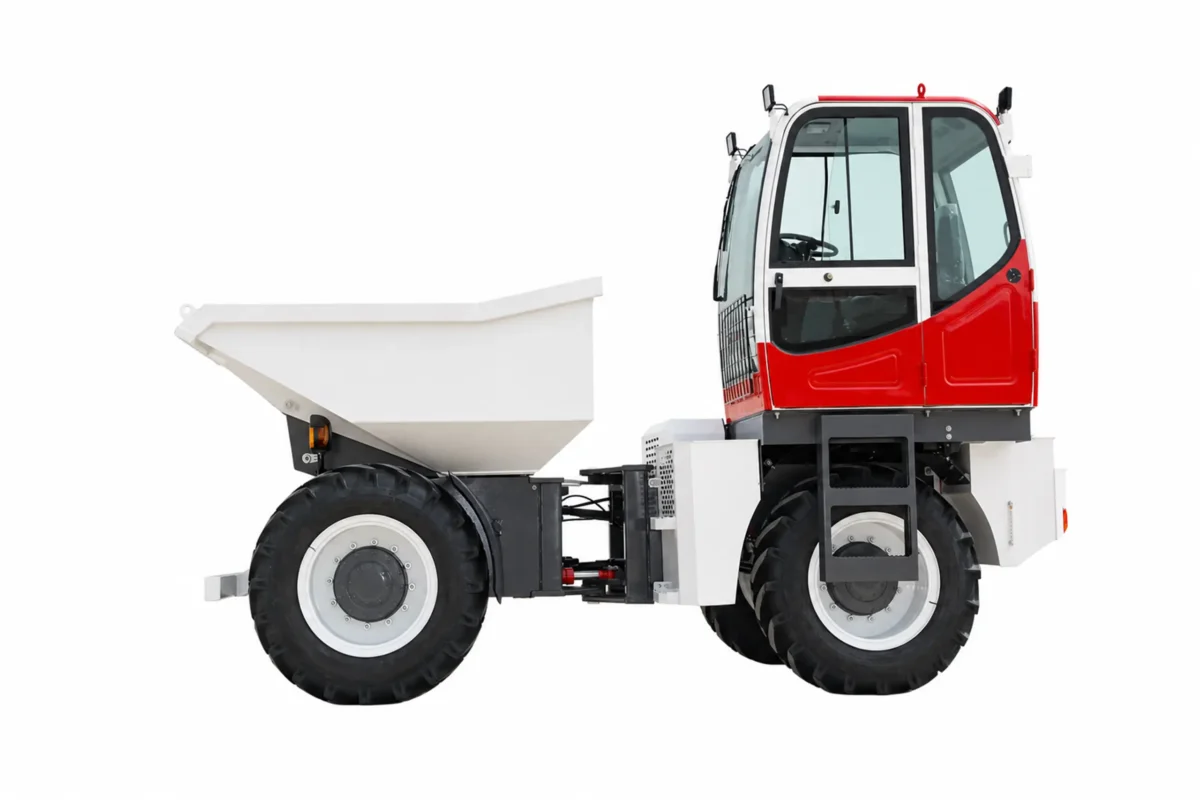
For hauling, the MG60DA site dumper lists a 6,000 kg rated load, 2.5 m³ bucket, four-wheel drive, 320 mm minimum ground clearance and 16/70-20 tires. Its published overall dimensions are 4,616 by 2,361 by 2,880 mm. A contractor should place those numbers on the route drawing: gate width, passing points, overhead restrictions and tipping area. Four-wheel drive does not make every slope safe, and the product sheet does not remove the need for a manufacturer-confirmed gradient limit.
A distributor may approach the same evidence differently. Instead of one route, it should define which customer segment the 6-ton dumper serves, what smaller model sits below it and which local transport restrictions affect delivery. This turns the model into a defensible stock position rather than an isolated catalog item.
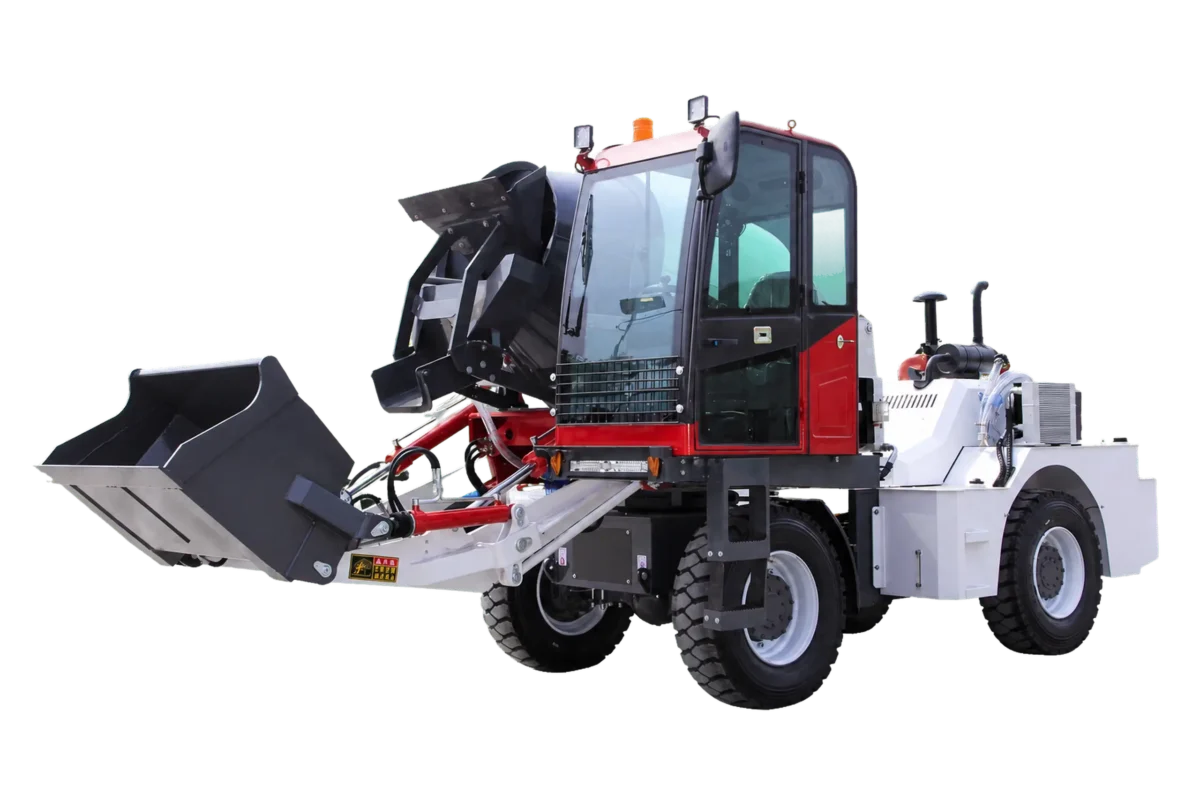
The MG3200A self-loading mixer publishes a 3.2 m³ mixing capacity, a 710 L water tank, 77.3 kW engine power, 4 x 4 traction and double 16/70 R22.5 tires. Its width is listed as 2,400 mm, while height is 3,900 mm with the lifting arm and 2,940 mm with the arm down. Those are decision-making figures, but none alone proves the machine’s hourly concrete output on a particular site.
Output depends on loading time, aggregate position, water refill, mixing, travel, discharge and cleaning. A buyer should give the manufacturer a simple cycle description and ask how the model fits. If the material source is distant or the placement crew cannot accept each batch immediately, a larger mixer may wait rather than produce. The audit should reward a supplier that discusses those constraints instead of turning mixing capacity into an unsupported production promise.
The WZ30-25 backhoe loader must be reviewed as both an excavator and a loader. Its published information includes a 4,000/5,200 mm maximum telescopic digging depth, 0.3 m³ backhoe bucket, 1 m³ loader bucket and 72 kN loader breakout force. The same sheet lists four-wheel drive, hydraulic transmission and electro-hydraulic pilot control. An acceptance video that only shows road travel would leave the buyer without evidence for most of the machine’s intended work.
Compaction equipment needs another test logic. The MGY50D road roller publishes a 5,000 kg operating mass, 82 kN exciting force, 55 Hz vibration frequency, 0.7 mm amplitude and a 1,500 mm drum width. These figures describe a different role from a compact tandem roller or walk-behind unit. Ask which surface and layer conditions the recommendation assumes, then record vibration, steering, travel and visible fluid checks in the handoff file.
Imagine a contractor buying a loader, dumper, self-loading mixer, backhoe loader and roller for a road-and-drainage package. Purchasing may communicate with the factory, a freight forwarder may coordinate shipping, and a site team may receive the machines. If the only common document is a commercial invoice, important decisions disappear between those groups.
The handoff should give each machine one plain-language duty. The loader supplies and handles material. The dumper carries material along a defined short route. The mixer produces concrete at identified work fronts. The backhoe loader digs and restores utility sections. The roller compacts specified layers or repaired surfaces. This duty line belongs beside the exact model and main constraints, so the receiver understands why the machine was ordered.
A distributor can use the same five-product audit before committing to a broader relationship. Pick one machine with simple specifications, one with several options, one with a complex hydraulic work cycle, one with road or site safety implications and one that needs strong after-sales support. Ask the same factory contact to return a complete evidence pack for all five.
The result shows whether units are consistent, whether option changes are documented and whether questions receive specific answers. It also reveals when marketing language outruns technical detail. A supplier does not need every answer instantly, but it should identify what is confirmed, what is configurable and what still requires engineering review.
For repeated orders, preserve the approved specification and images from the first shipment. When the next quotation arrives, compare it against that baseline. Engine availability, tires or components may change over time; changes are manageable when they are disclosed before production and approved by the buyer. Silent substitutions are the greater risk.
MEGA states that it supports export documentation and packing coordination. The buyer should translate that capability into an itemized packing record. Identify loose buckets, forks, hoses, pins, seals, filters, tools and manuals by quantity. Photograph items before they are enclosed, and link the photo set to the packing list. Mark lifting or securing points where the receiver needs them.
A distributor bringing several machines into stock also needs model separation. A filter or seal described only as “loader spare” can be difficult to allocate when two loader configurations arrive together. Part descriptions should connect to a model or component reference. If a part is shared, record that deliberately rather than assume interchangeability.
The published MEGA range is a plausible starting point for contractors and distributors needing compact-to-midrange loading, site hauling, mobile mixing, outdoor pallet handling, utility work and compact compaction. Buyers can compare real pages, including the wheel loader range and self-loading mixer range, then ask for current order-specific confirmation.
It is not enough evidence for a buyer who needs an equipment class the catalog does not publish. A mining contractor seeking a large rigid dump truck, a lifting contractor needing a crane or a mass-excavation project requiring a large excavator should source those duties from a verified range built for them. A mixed-fleet supplier can be useful without being universal.
The strongest next move is a small, difficult sample request: one real project description, five model candidates and a requirement that every recommendation return with a frozen specification, option list, inspection points, packing scope and receiving note. A manufacturer that handles that exercise clearly gives the buyer something more valuable than a large catalog—an order trail that can survive procurement, shipment and daily use.
A team ordering several equipment classes can continue with the mixed-fleet supplier workflow to turn the audit file into a coordinated project package.
