

Get quote
Get Free Consultation!
We are ready to answer right now! free consultation.
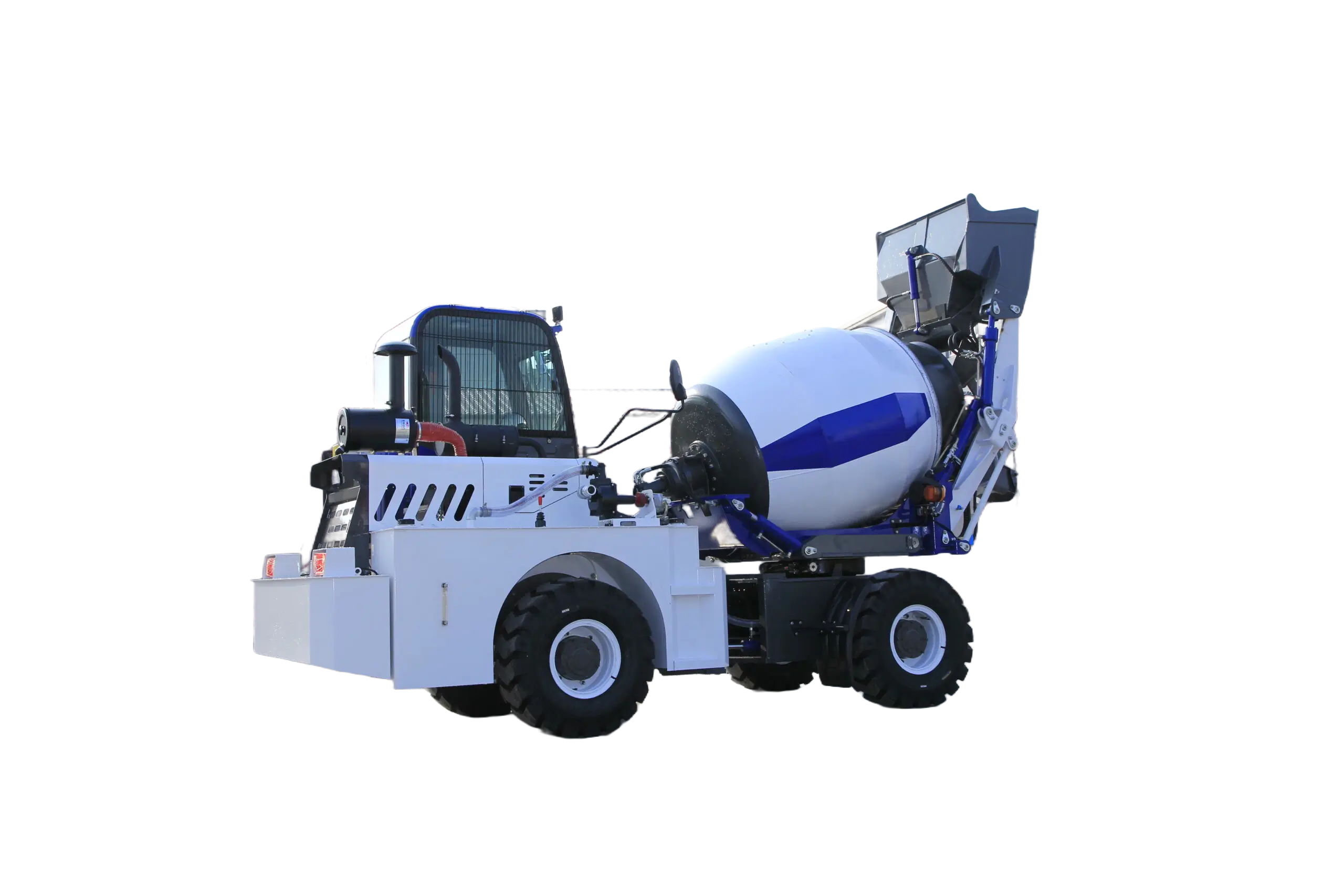
A mixed equipment order should begin with the movement of material, not with a supplier’s product list. For a road, drainage or housing project, aggregate may be loaded, carried to a work front, mixed with water and cement, pumped or discharged, and followed by backfilling and compaction. A construction machinery supplier in China is useful when it can assign the right machine to each step, explain the interfaces between machines, and keep every configuration identifiable through shipment and receiving.
This approach is most suitable for project buyers who want coordinated loaders, dumpers, self-loading mixers, pumps or compact rollers, and for distributors building a range around connected jobs. The first confirmation is the bottleneck: receiving height, haul route, batch rhythm, pumping path or compaction width. Once that constraint is known, buyers can start with MEGA’s construction machinery range and test a proposed fleet against the actual workflow.
MEGA’s catalog supports a compact-to-midrange route. It does not mean every project needs one machine from every family. A loader may feed a mixer directly in an open yard, while a narrow work front may need a dumper between the stockpile and mixer. A self-loading mixer may discharge at the placement point, while another job needs a trailer pump. The supplier should remove unnecessary equipment as readily as it recommends needed equipment.

Draw the material path from source to final position. Mark who loads it, how far it travels, where it waits, what changes its condition and which machine controls the pace. This simple map prevents a common package-order mistake: buying several individually reasonable machines that do not work at the same rhythm.
Consider a remote housing project with aggregate stored 300 metres from several small pour locations. The loader works at the stockpile, a dumper may shuttle material, a self-loading mixer produces batches, and a pump may be needed where the mixer cannot approach the formwork. If the pump’s receiving rate exceeds the mixer’s sustainable cycle, the pump waits. If the mixer waits for aggregate, extra drum capacity does not solve the supply problem. The supplier should discuss the whole sequence.
Start the order file with a one-sentence duty. An MG936 wheel loader loads aggregate at the central stockpile. An MG30D site dumper carries it along a defined unpaved route. An MG2500 self-loading mixer prepares concrete for distributed work fronts. An HBTS30-10-48R trailer pump places concrete along a planned delivery line. An MGY10H roller handles small asphalt repair or compact surfaces where its tandem-drum configuration fits.
Then write a boundary. The loader is not approved for lifting suspended loads. The dumper is not a public-road haul truck. The mixer is not assigned an output rate until the batch cycle is tested. The pump’s maximum distance is not treated as a guaranteed project distance. The roller is not selected for every soil and layer simply because it vibrates. Boundaries reduce wrong use after a multi-machine shipment arrives.
Every material transfer has a receiving point: dumper skip, mixer bucket, pump hopper, truck body or compaction surface. Record its height, width, acceptable rate and approach path. The MG936 page lists a 3,500 mm dumping height and 1,000 mm reach. Those numbers are useful only when compared with the receiving edge and the loader’s safe working position.
For a pump, the receiving point includes concrete consistency and aggregate size. The HBTS30-10-48R page publishes a 400 L hopper, 100 mm outlet and delivery-pipe diameter, and maximum aggregate sizes of 35 mm for pebbles or 30 mm for crushed stone. The mix design and supply rhythm must suit those limits. A supplier coordinating both mixer and pump should state how the proposed concrete route stays within them.
Cycle balance is not a promise of a perfect hourly output. It is a check that one stage will not systematically starve or block another. Use conservative working assumptions, measure the first site cycle and revise the plan before expanding the fleet.
A municipal road-repair package shows why this matters. The loader may prepare aggregate at a depot, the dumper moves it through a restricted work zone, and a tandem roller closes each repaired section. Concrete work for drains may occur only twice a week. Buying the mixer and pump around the loader’s daily pace would exaggerate their required size. Instead, make a separate cycle for each workstream and identify the shared equipment, people and access windows. The supplier can then recommend machines for the rhythm they actually see.
Keep uncertainty visible in the calculation. Record a range for loading, travel and discharge time, and identify which stage has not yet been measured. If a supplier presents one precise output number without asking about these variables, request the assumptions. A range that explains its limits is more useful to a project manager than a confident total that cannot be reproduced on site.
| Workflow stage | MEGA example | Published evidence to verify | Project question |
|---|---|---|---|
| Load | MG936 wheel loader | 2,000 kg rated load; 1.2 m³ bucket; 3,500 mm dump height | Can the bucket match material density and the receiver? |
| Short haul | MG30D site dumper | 3,000 kg rated load; 1.6 m³ bucket; 4×4 drive | Can it turn, pass and tip on the actual route? |
| Mix | MG2500 self-loading mixer | 2.5 m³ mixing capacity; 500 L water; 4×4 drive | What is the complete load-mix-travel-discharge cycle? |
| Place | HBTS30-10-48R pump | 30/16 m³/h theoretical output; 100 mm line | Does mix, line layout and supply support the planned placement? |
| Compact | MGY10H road roller | 1,000 kg; 70 Hz; 740/800 mm drum | Does tandem vibration suit the surface and repair width? |
The MG2500 self-loading mixer publishes a 2.5 m³ mixing capacity, 500 L water tank, 77.3 kW engine, 4×4 traction and 35 km/h running speed. It is 2,350 mm wide and is listed at 3,610 mm high with the lifting arm. Before choosing it, mark the water source, aggregate loading point, safe mixing location, discharge path and wash area.
A remote crew often focuses on producing the first batch and overlooks the final wash. Hardened material can affect later work, while uncontrolled wash water can create a site problem. The supplier should identify the machine’s cleaning points and the buyer should provide a safe, permitted location. This is operational planning, not a claim about a specific cleaning procedure beyond the manufacturer’s instructions.
The American Concrete Pumping Association’s contractor resources reinforce the importance of trained people and safe pumping practices around a placement operation. When MEGA’s trailer pump is included, the buyer should separately plan competent operation, hose handling, line restraint and the work zone. A machine quotation does not replace site safety control.

On an open site, a loader may travel between the pile and mixer without an intermediate dumper. On a narrow or distributed site, repeated loader travel can remove the loader from its loading role and increase traffic around people. The site dumper range gives the buyer another route, but it should be added for a measured reason.
The MG30D lists a 3,000 kg rated load, 1.6 m³ bucket, four-wheel drive, 30 km/h travel speed, 250 mm minimum ground clearance and a 4,500 mm minimum turning radius. Put these values on the route sketch. Check material density, passing space, edge protection and the planned tipping area. Do not fill the skip by appearance alone, and do not assume four-wheel drive establishes a safe slope limit.
A distributor serving small contractors might choose one compact loader, one mid-payload dumper, one self-loading mixer capacity and one compact roller before adding nearby variants. Each stock unit needs a clear customer: tight yard, short-haul site, remote concrete work or repair compaction. That description helps sales staff ask the right questions and prevents an attractive machine from being offered for the wrong stage.
The same logic applies to spare parts. Instead of ordering a generic “mixed machinery spare package,” the distributor should identify filters, seals, wear parts and tools by selected model and component. Shared parts can be consolidated only after interchangeability is confirmed. This keeps the first service event from becoming a parts-identification exercise.
A mixed shipment creates more opportunities for ambiguity. The loader may have an optional engine, the dumper may have a rotating-skip option, the mixer may use a particular axle or tire route, and the pump may require a defined delivery-line package. Record every selected option next to the base specification, and require written approval for changes.
The MG936 wheel loader page lists several optional engine routes and notes that parameters may change with design improvement. That is precisely why the purchase order should freeze the supplied engine, power, bucket, tires, controls, cabin equipment and attachments. A web listing can be updated; the order file must preserve what the buyer approved.
Pre-shipment evidence should show more than machines running individually. Confirm the interface items: loader attachment pins, dumper skip operation, mixer water components, pump line fittings and roller sprinkler components where applicable. The packing list should identify loose items and their machine. Photograph them before enclosure, and give the receiver a copy that does not require access to the salesperson’s chat history.
MEGA states that it provides pre-shipment checks, final debugging, export documentation and packing coordination. Ask the supplier to turn each statement into an order-specific record. A useful record says which function was checked, on which machine, using which identifiable configuration, and whether anything remained open before dispatch.
When equipment reaches the site, inspect shipping damage and fluid leaks before operation, reconcile model plates and loose parts, and follow manufacturer instructions for commissioning. The first working cycle should be controlled and observed. If one machine consistently waits for another, change the workflow before assuming that a larger machine is the only answer.
One construction machinery supplier in China can reduce coordination work when the proposed families are within its documented range and the machines share a real project workflow. It can also make export packing and a common receiving file easier. That benefit depends on specific evidence for each machine, not on treating the package as one undifferentiated product.
Separate specialists may be better when a duty lies outside the supplier’s published range, when a critical machine needs deeper application engineering, or when local support is available only through another channel. A project that depends heavily on pumping, for example, should not select the pump only because it can ship beside the mixer. The trailer concrete pump range currently presents one published model, so buyers should verify that exact model against the complete placement plan.
The practical decision is visible on the workflow map. If every machine has a necessary role, an evidence-backed configuration and a receiving plan, the mixed order can simplify the project. If several machines have no distinct duty or a key interface remains undefined, reduce or divide the package before payment. Good coordination is measured by fewer unresolved handoffs, not by a longer pro forma invoice.
Before signing, ask the project engineer, operator representative and receiving coordinator to read the same one-page map. Each should be able to explain where material enters, which machine owns every transfer and what evidence will arrive with it. A disagreement at that meeting is inexpensive to fix; the same disagreement after five machines reach the port is not.
When drawings, manuals and serialised records must pass from purchasing to the site, use the engineering handoff method as the next project control.
