

Get quote
Get Free Consultation!
We are ready to answer right now! free consultation.
The person who approves a construction-equipment order is often not the person who unloads, commissions or operates it. Weeks may pass between those events, and freight forwarders, customs agents, warehouse staff and site engineers may each handle only part of the information. A construction equipment manufacturer in China should therefore deliver two things: the agreed machine and a handoff file that allows another team to identify what was ordered, what changed, what was checked and what remains to be confirmed on site.
This article is for importers, engineering managers and distributors receiving loaders, mixers, dumpers, forklifts or road equipment from MEGA. The first item to confirm is not the manual format. It is the exact configuration: model, engine, tires, capacity, dimensions, attachments, controls and destination requirements. Once that record is frozen, inspection, packing and commissioning evidence can refer to the same baseline.
MEGA states that it conducts pre-shipment checks, final debugging, running checks and load simulation, and that it supports export documentation and packing coordination. Buyers can review the factory and team presentation for context. For an order, each broad capability should become a dated, machine-specific record that a receiving engineer can use without guessing.

The technical baseline should combine the commercial selection and the machine’s intended job. A purchase order that says only “one compact wheel loader” leaves too much room for interpretation. A stronger line identifies the model and defines the selected engine, rated load, bucket range or exact bucket, overall width and height, tires, transmission, cabin route, attachments and any destination-specific requirements.
Add a one-sentence duty: “load loose landscaping material through a measured 1.45 m gate and discharge into a 2.1 m receiving bin,” for example. That statement helps engineering staff see why a dimension or attachment cannot change casually. It also gives the receiving team a reason for each feature in the order.
MEGA’s model pages sometimes present options or alternative components. Treat the published base as a reference, then list the order’s deviations. The MG910C compact wheel loader publishes an 800 kg rated load, 0.3–0.5 m³ bucket range, 1,300 mm bucket width, 2,400 mm dumping height and an overall width of 1,300 mm. It lists a 20 kW engine, manual mechanical 2F/2R gearbox and 4×4 drive.
If the ordered bucket, tire or other component differs, record the change and its effect on dimensions or performance. Do not rely on a salesperson’s message as the only approval. A controlled deviation line should state the requested item, supplier confirmation, any changed measurement and the buyer’s approval date.
Some product fields can be incomplete, inconsistent or subject to configuration. That is an engineering issue to resolve, not an editing problem to hide. Mark the value “supplier confirmation required,” link it to a question and preserve the answer in the final file. If a measurement is critical for transport or access, request a drawing or tape-measure evidence on the completed unit.
This practice is especially important for closely related products. Several MEGA all-terrain forklift pages share a 3.5-ton rating but list different machine lengths, weights, transmissions and tire arrangements. A buyer should never copy a convenient figure from one model into another model’s order.
A generic running video proves that an engine starts and a machine moves. It does not prove that the selected work system behaves as required. Build the pre-shipment inspection from the duty statement and the agreed specification.
| File owner | Required evidence | MEGA example | Handoff risk if missing |
|---|---|---|---|
| Procurement | Approved specification and option register | MG3501 mast, tires and 500 mm load centre | Receiver cannot identify a substitution |
| Factory inspection | Dated functional checks tied to serial or model plate | MG4000C load, drum, water and discharge functions | Running video omits the work system |
| Logistics | Dimensions, weight, loose-item list and securing plan | MG60DA size and removable items | Forwarder or receiver plans from a catalog image |
| Receiving engineer | Arrival checks and first-use limits | MGY06 controls, sprinkler and vibration | Site operates before damage or mismatch is recorded |
| Service coordinator | Component references and consumable list | Engine, filters, seals and wear parts by model | First maintenance request lacks identity |
For the MG910C, the record can show start and idle condition, forward and reverse travel, steering, service and parking brakes, boom raise, bucket rollback, controlled dumping and visible hose or cylinder checks. A loaded test must use a defined safe method and follow the manufacturer’s procedure. The aim is not to create an improvised proof load; it is to document that the agreed work functions were observed.
The same loader test should capture the exact bucket and overall width if access is critical. A close photograph of the tire marking and a readable model plate can prevent later confusion. If a cabin or attachment ships separately, its packing-list line should reference the machine.
The MG4000C self-loading mixer lists a 4.5 m³ mixing capacity, 640 L water tank, 85 kW engine, 4×4 traction and double 16/70 R22.5 tires. The page publishes a width of 2,800 mm and heights of 4,220 mm with the lifting arm or 3,070 mm with the arm down.
Those numbers belong in the logistics file as well as the technical file. The functional record should address the self-loading mechanism, drum rotation, water operation, travel and discharge controls. If a weighing or metering function is expected, it must be explicitly listed in the approved configuration; it should not be assumed from general industry practice.
The receiving note should identify the first planned batch class and remind the site that output depends on the entire load-mix-travel-discharge-clean cycle. It should also direct operators to the supplied manufacturer instructions rather than turning a sales summary into an operating manual.
Loose components deserve more attention in a mixed shipment because they can be separated from the machine. List every bucket, fork, pin, hose, tool, filter pack, manual and accessory by quantity and model. Use part or drawing references where available. A photograph before packing is valuable when it shows the item and its identification together.
For the MG3501 all-terrain forklift, the published baseline includes a 3,500 kg rated load, 500 mm load-centre distance, 3,000–6,000 mm lifting-height range, 23.5/70-16 tires and 4×4 drive. Optional buckets, clamps, forks or boom tools change the work system. If an attachment is ordered, the file should state how it affects capacity and which identification or revised capacity information will accompany the machine.
Catalog dimensions may describe a machine in working form, transport form or one option set. The logistics file should identify which condition applies. Ask whether exhaust, cabin, mast, bucket, mirrors or other parts are removed or folded, and record the packaged dimensions and lifting or securing points.
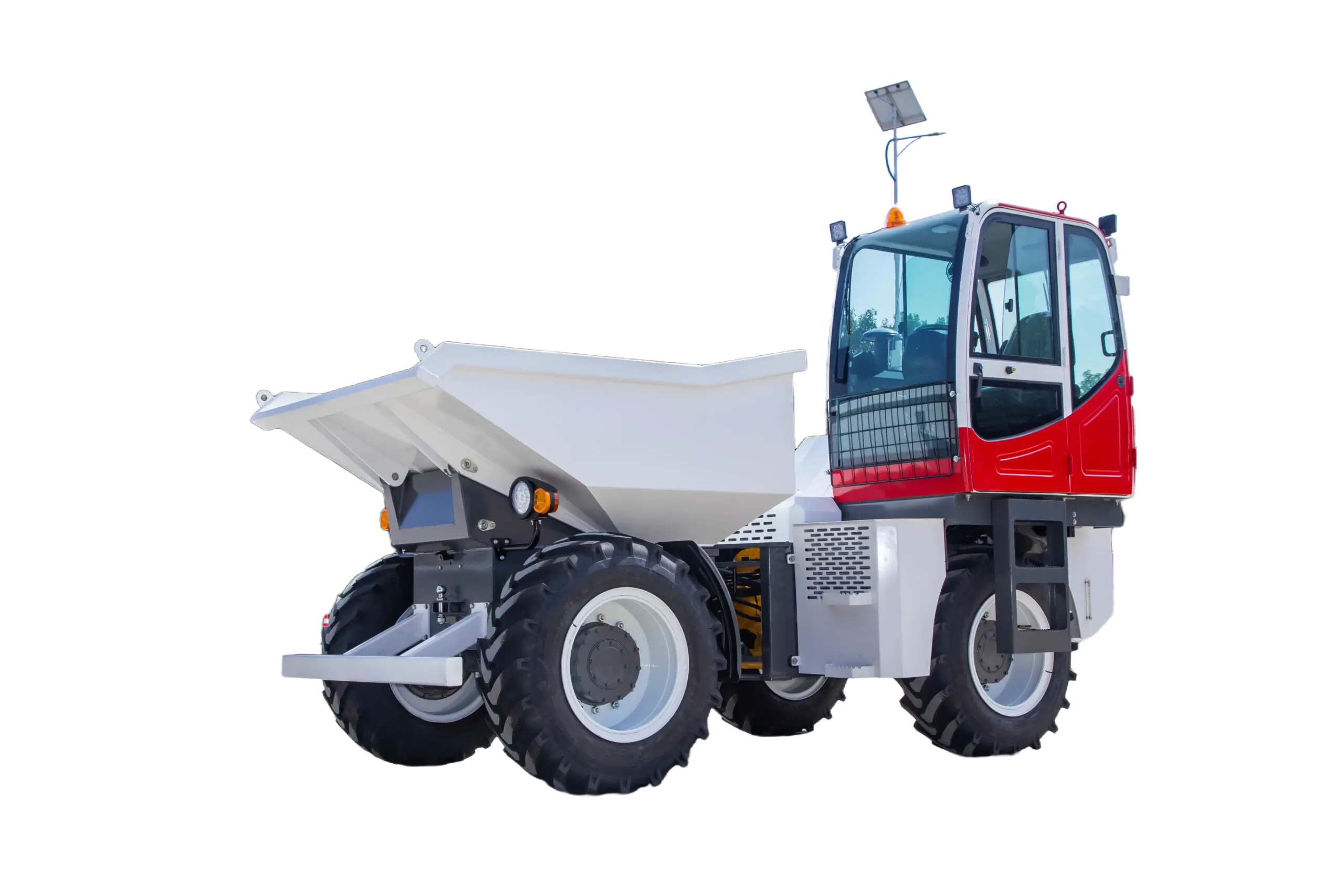
The MG60DA site dumper publishes overall dimensions of 4,616 by 2,361 by 2,880 mm, a 4,200 kg total weight, 6,000 kg rated load and 320 mm minimum ground clearance. If an optional rotating skip is selected, confirm whether it changes transport width, securing or operation. A freight plan should use the supplied unit’s measurements, not a nearby model’s diagram.
Commercial descriptions need to be accurate enough for the buyer’s destination process, but the technical packing list should go further. Separate the complete machine from accessories, consumables and spare parts. Identify quantities and model application. Where the supplier provides engine or component alternatives, preserve the installed brand and reference.
MEGA’s downloads area can serve as a navigation point for available materials, but buyers should confirm which manual, parts reference and certificates are included for the exact order. A general brochure is not a substitute for instructions tied to the delivered configuration.
When the equipment arrives, the receiver should have the purchase specification, inspection evidence, packing list and an arrival checklist. Before starting, compare model plates and visible configuration, inspect securing-related damage, leaks, loose connections, tires, glass, controls and delivered accessories. Record discrepancies with photographs before removing evidence or beginning repair.
Imagine a dealer receiving three similar 3.5-ton forklifts with different tire or transmission routes. If the machines are identified only by yellow paint and model family, accessories and future parts can be assigned incorrectly. A model-and-serial receiving sheet prevents that problem. The same method applies to loader buckets, mixer hoses and roller sprinkler parts.
Commissioning confirms that the delivered unit can enter service under the manufacturer’s instructions. It should not become the first moment that the site discovers the selected mast is too high, a loader cannot clear the gate or a mixer cannot reach the water point. Those fit questions belong before production.
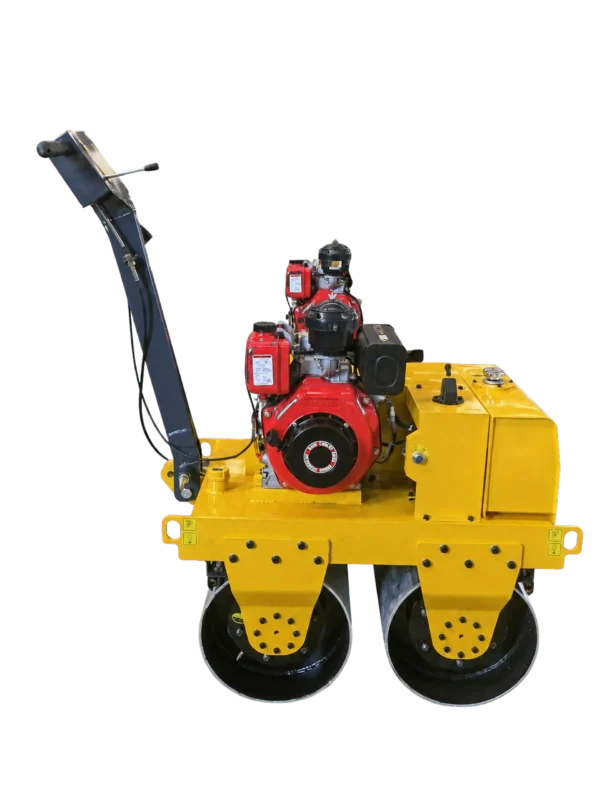
For an MGY06 walk-behind roller, the published data includes a 600 kg operating mass, 25 kN exciting force, 70 Hz vibration frequency, 0.5 mm amplitude and a 600 mm drum. The first controlled check can verify travel controls, visible condition, sprinkler components and vibration operation as directed. The project must still decide whether that small machine suits its material and layer.
If the site needs a different capacity or product family, the receiving record should not be rewritten to make the original choice appear correct. Preserve the finding and feed it into the next order. That creates a real improvement loop between procurement and site use.
The complete record can be compact if every file has an owner and purpose. Procurement owns the frozen configuration. The supplier owns current technical confirmation and factory evidence. Logistics owns packaged dimensions and the itemized shipment. The receiving engineer owns arrival condition and commissioning results. The service coordinator owns component identity and maintenance references.
A construction equipment manufacturer in China earns confidence when these records agree. If the model plate, quote, inspection photos, packing list and manual describe different configurations, more documents do not improve the handoff. Resolve the difference before dispatch.
File names and revision control help. Use the order number, model and date in each file name, keep one approved specification as the reference, and archive superseded versions rather than silently replacing them. The receiver should be able to see that an engine or attachment change was approved and which inspection record followed the change. For dealers, this simple discipline also separates one customer’s unit from another visually similar machine.
The final handoff should avoid confidential commercial clutter where the operator does not need it. Give site staff the safe-use information, configuration, inspection and parts identity relevant to their role, while procurement retains prices and payment documents. Clear access is more valuable than one enormous folder distributed without purpose.
For a first order, choose one representative machine and require the complete trail before applying the process to the rest of the fleet. The compact MG910C, the configurable MG3501, the mixer work cycle of the MG4000C, the dumper logistics of the MG60DA and the simple MGY06 roller together form a demanding test. If the files remain coherent across those products, the buyer has a stronger basis for scaling the relationship.
Procurement teams still deciding which classes fit the job can apply the heavy-equipment fleet-fit review before freezing this handoff.
