

Get quote
Get Free Consultation!
We are ready to answer right now! free consultation.
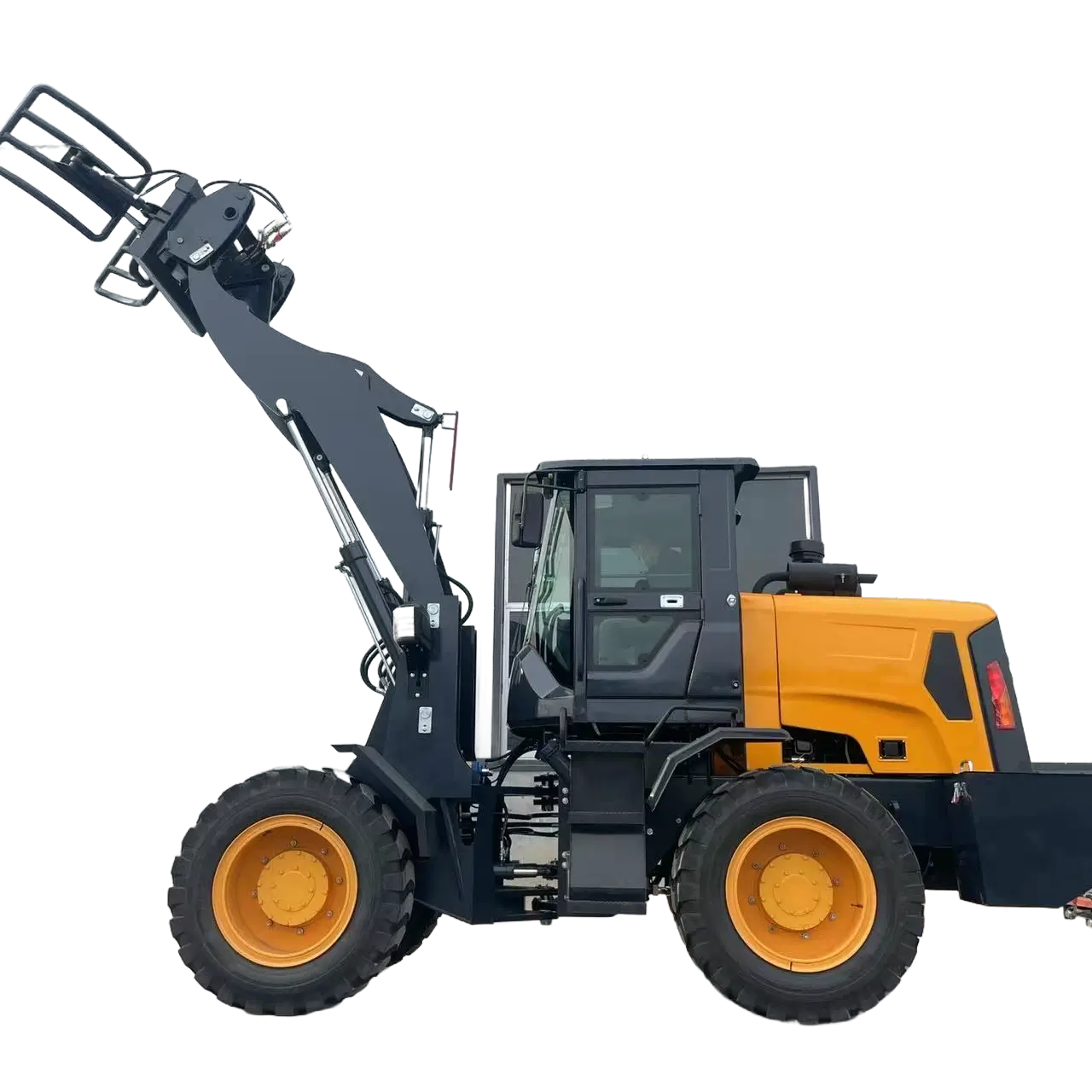
“Heavy equipment” is a broad buying phrase, but a project fails in specific ways. A loader may be too small for quarry production, a forklift may be mistaken for an earthmoving machine, or a site dumper may be treated like an over-the-road haul truck. Buyers evaluating a heavy equipment supplier in China should first establish the supplier’s real capacity envelope and then decide whether that envelope matches the work. A clear non-fit is safer than an oversized promise.
MEGA’s current catalog is strongest for compact-to-midrange construction and material-handling duties: wheel loaders, site dumpers, self-loading concrete mixers, all-terrain forklifts, two backhoe-loader classes, compact road rollers and a trailer concrete pump. Contractors with distributed sites and distributors serving several industrial users may find that combination useful. Buyers seeking large mining excavators, rigid haul trucks, cranes or high-production quarry loaders should not assume those classes exist when they are not published.
The first question is therefore: what must the machine do every hour? Define material, payload, receiving height, route, lift geometry, digging depth, concrete cycle or compaction layer before comparing brands. Then open MEGA’s construction machinery range and test only the relevant families.

Equipment class names describe a general function, not the complete application. A wheel loader handles bulk material with a bucket, but the right size changes with density, production target, truck height, ground condition and cycle distance. A forklift lifts a load on forks at a defined load centre, but its capacity changes with load geometry and mast configuration. A backhoe loader combines two work systems, but it does not automatically replace a dedicated excavator and production loader on a high-volume site.
Write a short duty statement and a non-duty statement. “Load loose aggregate into site dumpers over a short stockpile cycle” is a duty. “Not continuous face loading in a high-production quarry” is a boundary. This language gives the supplier permission to say when a product does not fit.
MEGA’s wheel-loader pages range from the 800 kg-rated MG910C through 1-ton and 2-ton choices to published 2.5- and 3-ton routes. The MG958 wheel loader lists a 2,500 kg rated load, 1.5 m³ bucket, 3,500–4,500 mm dumping height, 92 kW engine and 4×4 automatic transmission. These figures establish a model envelope. They do not establish tonnes per hour without material, operator, travel, bucket-fill and receiving conditions.
For an aggregate yard, calculate a conservative bucket payload from material density and actual bucket fill. Measure the route and receiving edge. If the project target would require constant operation at or beyond the rated envelope, choose another class rather than hoping a specification maximum becomes routine production.
The site dumper range covers short on-site material movement. At the upper end, the MG100D page publishes a 10,000 kg rated load, 3 m³ bucket, 6,500 kg machine weight, four-wheel drive, six 16/70 R22.5 tires and 390 mm minimum ground clearance. Its overall dimensions are listed as 5,100 by 2,350 by 2,980 mm.
Those values may suit a defined construction-site route, but they do not make the machine a public-road truck or a mining-class hauler. Check route surface, turning space, edge protection, tipping area and local operating rules. Ask the manufacturer to confirm the safe gradient and the exact braking and steering configuration. Do not use the word “heavy” to erase the intended class.
A regional contractor may work on housing foundations, rural roads, drainage, yards and utility repair rather than one high-production earthmoving job. In that environment, several correctly sized machines can be more useful than one very large machine. The business case comes from deployment flexibility and fit, not from claiming that smaller equipment has the same production rate as a larger class.
| Project duty | Published MEGA route | Evidence to confirm | Clear non-fit signal |
|---|---|---|---|
| Bulk loading | MG958 or MG940 wheel loader | Rated load, bucket, dump height, reach and material | Continuous production target exceeds the model envelope |
| Short site haul | MG100D or MG60DA dumper | Payload, skip volume, tires, clearance and route | Public-road or mining-haul duty is required |
| Mobile concrete | MG7500C or smaller mixer | Batch capacity, water, access and complete cycle | Central ready-mix supply is more efficient or access is inadequate |
| Outdoor pallet handling | MG3582 all-terrain forklift | Load centre, mast, tires, grade and load geometry | Earthmoving or suspended-load duty is expected |
| Dig and load | WZ30-25 backhoe loader | Dig depth, loader bucket, hydraulics and daily task mix | Dedicated high-production excavation dominates the job |
The MG7500C self-loading mixer publishes a 7.5 m³ mixing capacity, 700 L water tank, 92 kW engine, 4×4 traction and 12,500 kg overall weight. The page lists a 2,920 mm width and 4,640 mm height with the loading arm raised. A large batch can reduce cycles where the site can load, water, mix, travel and discharge efficiently.
It is a poor fit when roads, gates or overhead limits cannot accept the complete machine, when the placement crew cannot receive the batch, or when reliable ready-mix delivery is already more economical. A supplier should ask about the cycle before offering the largest published mixer as the default heavy option.

The MG3582 page presents a 3.5-ton outdoor forklift with 36.8 kW engine power, a custom multi-stage mast, four-wheel-drive high/low-speed selection, 230 mm minimum ground clearance and 20.5-16 tires. These details support rough-yard handling, but forklift capacity is tied to load centre and mast geometry. Ask for a capacity statement for the selected mast and attachment.
A bucket-equipped forklift does not become a wheel loader simply because it can carry loose material. The machine’s data plate, stability and attachment approval remain central. Likewise, a wheel loader fitted with forks is not automatically the right rough-terrain forklift for pallet stacking. Choose the base machine around its primary design and documented capacity.
Official forklift load-handling guidance from the U.S. Occupational Safety and Health Administration explains why load centre, distribution and stability matter. Destination rules differ, but the general engineering lesson is useful: tonnage alone does not define a safe lift.
A supplier earns trust by identifying the break point. If a buyer needs mass excavation around the clock, a backhoe loader may spend too much time switching roles. If a quarry requires large bucket passes and high truck-loading output, a 2.5- or 3-ton loader route may be undersized. If a long public haul dominates the project, a site dumper is the wrong transport system. If a crane-like suspended lift is required, a forklift or loader recommendation needs a separate approved lifting solution.
The WZ30-25 backhoe loader publishes a 4,000/5,200 mm maximum telescopic digging depth, 0.3 m³ backhoe bucket, 1 m³ loader bucket and 72 kN breakout force. It also lists four-wheel drive, hydraulic transmission and electro-hydraulic pilot control. That combination may fit a contractor who digs trenches, handles spoil and restores the site with one machine.
If most of the shift is deep production excavation, the buyer should compare a dedicated excavator not currently shown in the MEGA catalog. If most of the shift is high-volume loading, a dedicated loader class may be more efficient. Versatility has value when the job actually changes roles.
MEGA’s roller range includes a 600 kg walk-behind MGY06, a 1-ton tandem MGY10H, a 3.5-ton full-hydraulic MGY35D and a 5-ton single-drum MGY50D route. The MGY50D page publishes 82 kN exciting force, 55 Hz frequency, 0.7 mm amplitude and a 1,500 mm drum. A heavy equipment buyer should not select it solely because it is the largest roller shown.
Surface, material, layer thickness, width, edge condition and finish requirement determine the route. Caterpillar’s asphalt compaction reference explains the relationship between vibration, amplitude and frequency in general compaction practice. Use that background to ask better questions, while relying on MEGA for current model-specific operation and application confirmation.
MEGA states that it has a 20,000 square metre production base, five standardized workshops and more than 80 staff across research, production and service. It also describes pre-shipment checks, final debugging, running checks and load simulation. These statements are useful audit subjects. A buyer should ask to see how they apply to the selected machines.
For the MG958, request evidence of the exact engine, bucket, tire and dump functions. For the MG100D, confirm the skip option, braking, turning and route-critical values. For the MG7500C, inspect loading, drum, water and discharge functions. For the forklift, preserve the mast and capacity information. For the WZ30-25, test both loader and excavator systems.
A distributor does not need to stock every capacity. It can choose a compact loader for tight yards, a 2- or 3-ton loader for general construction, a mid-payload site dumper, a mixer capacity suited to its common projects and an all-terrain forklift for pallet handling. The stock plan should state which customer the business will refer elsewhere.
That gap is not a sales failure. It keeps employees from presenting a 3-ton loader as a quarry production machine or a 3.5-ton forklift as an earthmoving substitute. Honest positioning reduces returns, service disputes and unsafe improvisation.
Transport also exposes class boundaries. A contractor moving machines among several small projects may value equipment that its local transport arrangement can carry, load and secure. The published MG958, MG100D and WZ30-25 weights and dimensions belong in that calculation. Ask for the actual shipping and working configuration, lifting or securing information, and any removed components. Do not assume that a machine which travels quickly around a jobsite is licensed or equipped for public-road movement.
Parts planning should follow the same disciplined range. Stock filters, seals, wear items and tires for the engines and components actually installed. A mixed fleet becomes costly when every machine arrives with an undocumented option and no one can identify common parts. Standardization can be valuable, but only after the supplier confirms compatibility in writing.
A heavy equipment supplier in China fits when its published product classes cover the project’s real duties, its current configuration can be frozen, and inspection evidence follows the machine from factory to site. MEGA’s catalog offers multiple connected routes for contractors and distributors, but the value lies in matching them precisely.
Before approving a mixed order, write the five most important work statements and five non-fit boundaries. Ask the supplier to map each duty to a model and explain any gap. Verify model-specific dimensions, capacity, engine, tires, controls, options and shipment items. If the supplier’s recommendation becomes narrower after this exercise, that is often a sign that the technical conversation is improving.
The most dependable fleet is not the one described with the strongest adjective. It is the one whose loader, dumper, mixer, forklift, backhoe and roller each have a necessary role, a confirmed envelope and a site that can use them without forcing one class to impersonate another.
If one factory remains on the shortlist, the construction-machinery factory audit provides the evidence sequence for verifying it.
