

Get quote
Get Free Consultation!
We are ready to answer right now! free consultation.
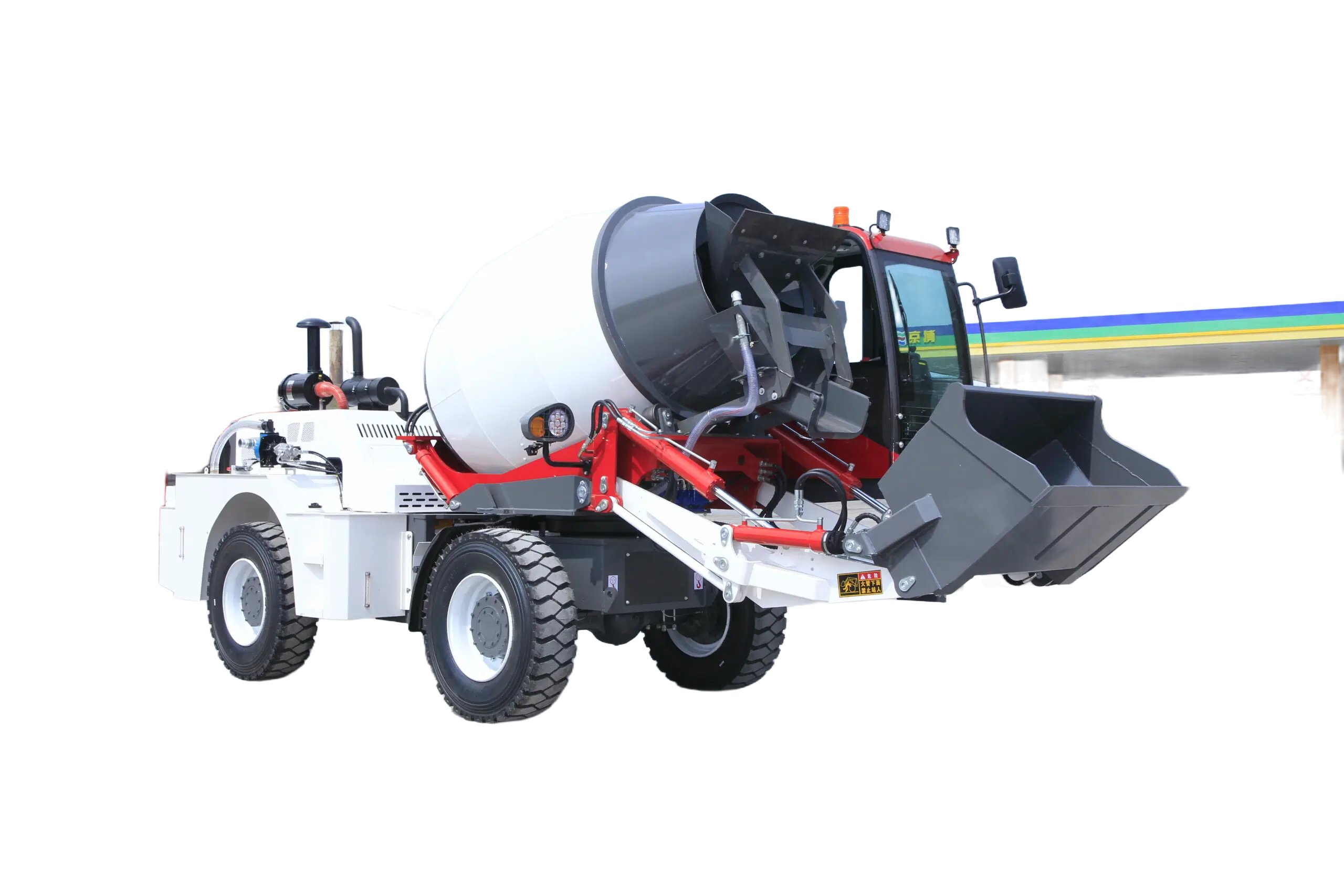
Two self-loading mixer quotations can show the same “capacity” and describe different machines. One may use geometric drum volume, another concrete per batch, and a third a nominal model name. Water, tires, axle, dimensions and supplied controls may also differ. Buyers comparing self loading concrete mixer manufacturers in China should normalize every offer before comparing price or claimed output.
The method is straightforward: choose one capacity definition, convert all units, identify every configurable field, mark missing evidence and connect the machine to a real batch cycle. MEGA’s self-loading concrete mixer range offers a useful internal test because its current pages include compact, 3.2 m³, 4.5 m³, 5.5 m³ and 7.5 m³ routes. Current figures still need order-specific confirmation.
This process suits importers, contractors and distributors who have already received offers. The first issue to resolve is the concrete quantity represented by each quoted capacity. Do that before asking which machine is cheaper.
Create one row per factual field and one column per offer. Do not allow a cell to contain two alternatives without an explanation. If the engine can be supplied in two routes, name the quoted route. If the water tank has options, identify which one the price includes. If dimensions change with the arm position, preserve both conditions.
Use four evidence states: confirmed in the current quote, configurable and awaiting selection, missing, or conflicting. A blank cell is not zero. A copied figure from another model is not confirmation. Send the worksheet back to each manufacturer and ask it to complete only its column.
Add a source column beside every value. It can point to the dated quotation, model drawing, engine sheet, inspection record or written technical response. When a number changes, the buyer can see which source became obsolete. This prevents a familiar problem in long negotiations: the final total comes from the latest commercial offer while the dimensions still come from an older technical attachment.
Choose one unit system for the evaluation, but keep the supplier’s original value in the file. Convert litres and cubic metres carefully, and do not round a gate-critical dimension. Ask whether weights are unladen, operating or gross conditions. A neatly aligned table is not normalized if the underlying definitions remain different.
The CMT500C lists 500 L total volume and 320 L concrete per batch. MEGA’s MG3200A lists 3.2 m³ mixing capacity, while the MG4000C lists 4.5 m³ mixing capacity. These labels show why a buyer cannot compare model numbers or drum volume without definitions.
For each offer, ask: Is the figure geometric vessel volume, rated mixing capacity, compacted concrete per batch or a nominal model class? How is it measured? What material and operating conditions are assumed? The order should preserve the manufacturer’s written answer.
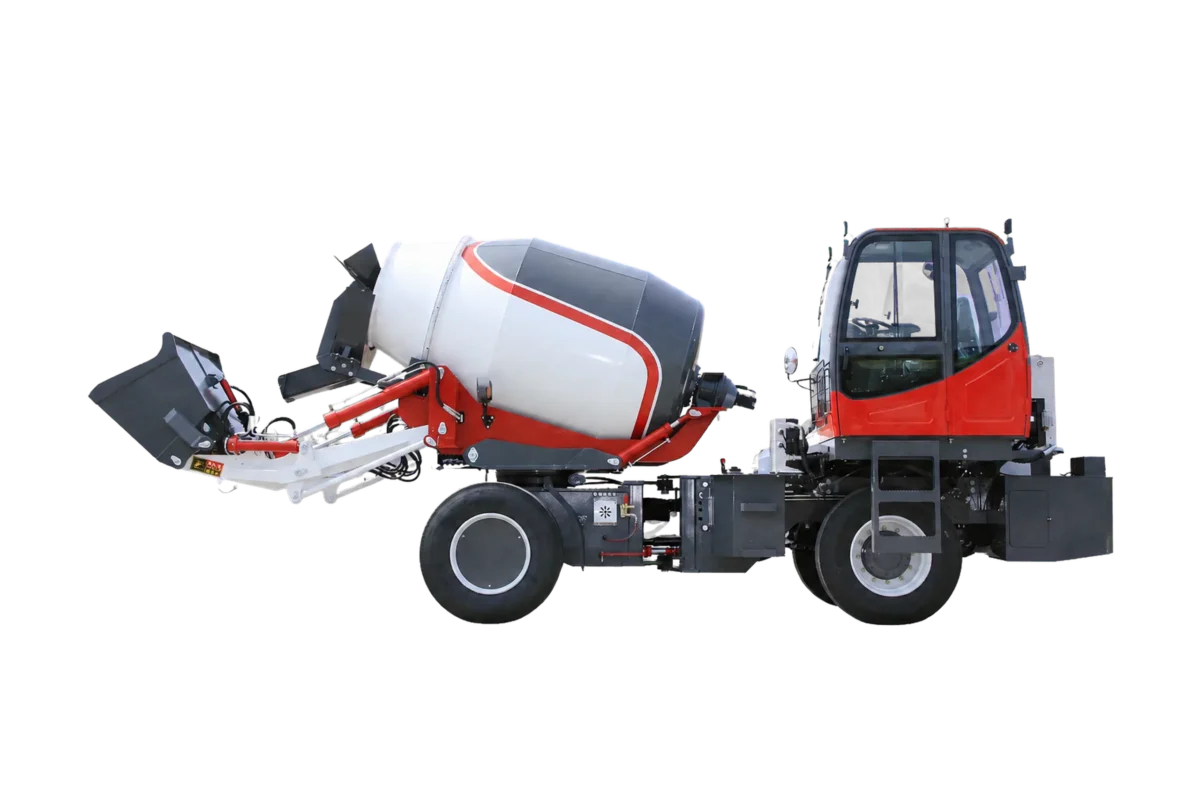
Self-loading machines change height and length as the arm moves. The MG3200A page lists 5,900 by 2,400 by 3,900 mm with the lifting arm and 7,100 by 2,400 by 2,940 mm with the arm down. The MG4000C is listed at 6,700 by 2,800 by 4,220 mm with the arm raised and 7,900 by 2,800 by 3,070 mm with it down.
A buyer needs both sets. The lower condition may govern travel under an obstruction, while raised height and working length govern the loading pad. If a competing quotation provides one size only, ask which machine condition it describes.
Capacity is useful only when the chassis, water, loading and discharge systems support the site. A normalized worksheet can contain the following groups.
| Comparison group | Minimum fields | Question the buyer is trying to answer |
|---|---|---|
| Concrete system | Defined batch capacity, drum speed, loading bucket and discharge arrangement | Can the machine produce and release the batch the crew needs? |
| Water | Tank volume, filling method, supplied pump or fittings, control method | Can the site refill and control water without delaying every cycle? |
| Power and drive | Installed engine, rated power, gearbox, axles, 4×4 and tires | Does the machine match route, service and support conditions? |
| Machine envelope | Working and travel dimensions, weight, wheelbase and turning information | Can it enter, load, travel and ship? |
| Order evidence | Configuration revision, inspection points, packing list and manuals | Will the buyer receive the machine described in the quotation? |
The MG3200A publishes a 3.2 m³ mixing capacity, 710 L water tank, 77.3 kW engine, 2.0T wheel-side reduction axle and double 16/70 R22.5 tires. It lists a 7,500 kg overall weight and 2,300 mm wheelbase. Another manufacturer may quote the same nominal capacity with a different axle, tire or water route.
That difference is not automatically better or worse. It needs to be connected to the job: soft access, travel distance, local tire availability, transport limits and batch rhythm. Ask each bidder to explain its configuration against the same route description. Avoid awarding points for a larger component without a work reason.
The MG4000C lists an 85 kW engine, 640 L water tank, 2.5T axle, double 16/70 R22.5 tires and 8,700 kg overall weight. Its 2,800 mm width is materially different from the MG3200A’s 2,400 mm. If a buyer needs to pass a 2.7 m gate, the capacity upgrade is irrelevant without site changes.
This is why normalized comparisons should include rejection gates before weighted scoring. A machine that fails access, destination rules or placement fit should not win by collecting points elsewhere.
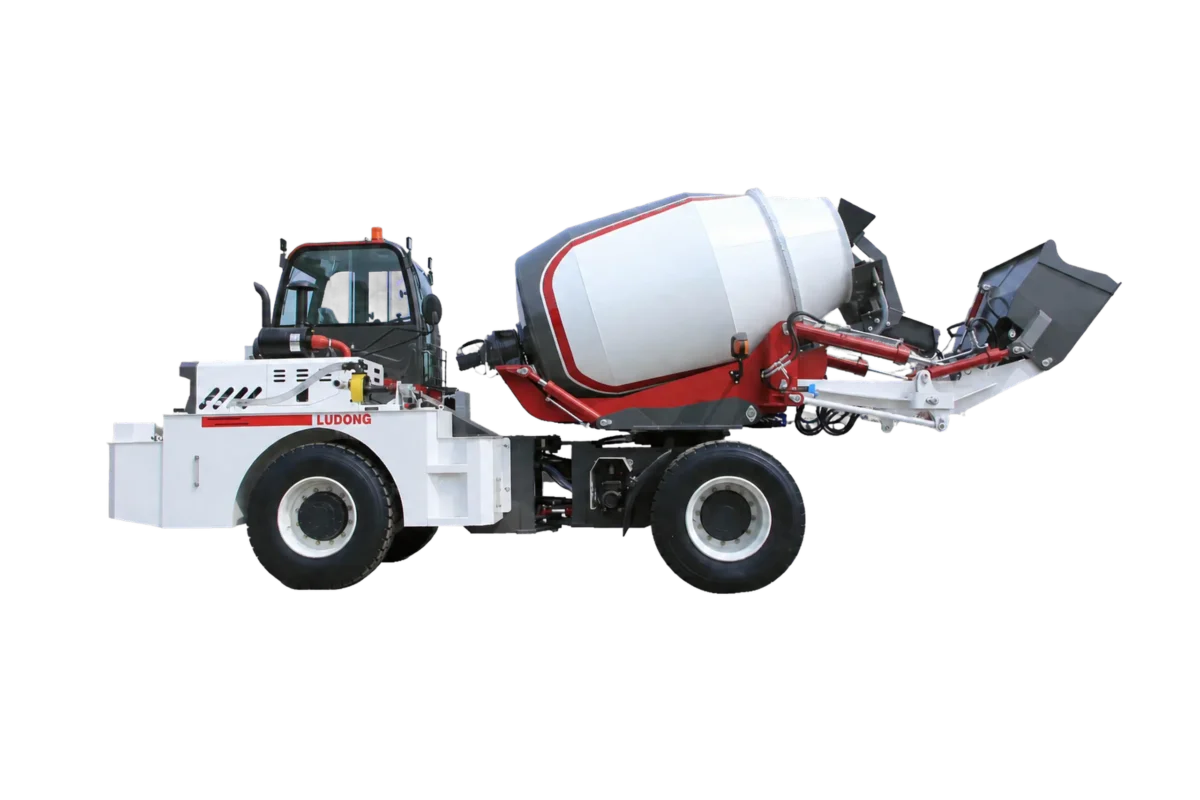
The MG5500C belongs to MEGA’s 5.5 m³ family, while the MG7500C lists 7.5 m³ mixing capacity, a 700 L water tank, 92 kW engine and 12,500 kg overall weight. The MG7500C is published at 2,920 mm wide and 4,640 mm high with the arm raised.
A buyer should ask the placement team how quickly each batch can be accepted, finished and followed by the next. Larger capacity may reduce the number of loads but increase waiting if forms, labour or access cannot keep pace. Manufacturers should be compared on whether they identify this conflict, not simply on whether they offer the largest machine.
External product information can help buyers understand which systems are commonly described, but it cannot be copied into another supplier’s specification. AJAX, for example, publishes its own self-loading mixer details, including batch, bucket, water and machine information. Those values are AJAX facts. Use them to improve the fields in a comparison sheet, never to fill a missing MEGA cell.
The China Construction Machinery Association provides industry context. It does not prove a manufacturer’s membership, quality or certification unless the buyer verifies that specific relationship. Supplier audits should keep association context, company statements and order evidence in separate sections.
MEGA states that it has a 20,000 square metre production base, five standardized workshops and more than 80 people across research, production and service. A buyer may verify those statements through a visit or live tour. The order still needs evidence tied to the selected unit.
Request a readable model plate, whole-machine views, installed engine and tire identity, selected water components and functional checks. The inspection record should name the machine and date. A general assembly video cannot establish which options are included in the buyer’s price.
Do not assume that an engine brand or emission label automatically satisfies the destination. Ask for the exact installed engine, applicable documentation and the buyer’s import requirements. If a manufacturer cannot confirm a required document, keep the issue open or change the route before production.
The same rule applies to safety structures, lighting, mirrors, braking and road use. Requirements vary. A comparison should mark evidence received rather than award points for familiar words.
Once offers use common definitions, compare included scope. Identify the complete machine, options, spare parts, manuals, inspection, packaging, inland transport, freight basis and destination documents. Separate required items from optional recommendations. A lower price may simply exclude something another offer names.
For every cost difference, ask which technical difference explains it. A higher-capacity model may have a larger engine, heavier axle, different gearbox, double tires, larger water system and a larger shipping envelope. A price difference within one nominal class may come from options, component brands or included support.
If the supplier says a feature is standard, make it visible in the signed specification. If it is configurable, select it. If it is not included, remove it from buyer expectations. This is slower than comparing totals but much faster than resolving a mismatch at the destination.
Dealers need more than the first unit. Ask how the supplier records the configuration for repeat orders and how changes will be disclosed. Preserve engine, filters, axles, tires, controls and key component references. If a future component substitution is necessary, require a change note and compatibility explanation.
The spare-parts list should be model-specific. A generic mixer box is difficult to manage when a dealer stocks several capacities. Planned commonality can be valuable, but it must be demonstrated.
The most useful manufacturer may not be the one with the most detailed first brochure. Evaluate how it answers a correction request, identifies the installed component and preserves the selected configuration through inspection. Ask for a sample packing list and a redacted inspection format before the order. These examples show whether the future receiving team will have usable records.
For remote projects, request a proposed initial spare-parts list tied to the installed engine and mixer system. Compare whether quantities are explained and whether each item has a model or component reference. Do not score a supplier higher for a larger spare package if the parts cannot be identified.
After normalization, reject offers that fail access, batch definition, destination requirements or essential evidence. Then compare the remaining machines through the real cycle: material loading, water refill, mixing, travel, placement and cleaning. Include local parts and service arrangements without inventing support that has not been named.
For MEGA, a buyer can compare CMT500C, MG3200A, MG4000C, MG5500C and MG7500C as different work routes. The correct result may be a smaller model than the first request named. That is a useful outcome if it fits the site better.
Send the final worksheet back with one instruction: confirm each value for the offered unit or mark it unresolved. When the supplier returns a coherent, dated configuration and evidence plan, price becomes meaningful. Until then, the totals are attached to different assumptions. If the current request started with a preferred model, allow the evidence to change it; a comparison is valuable only when the buyer can move to the better-fitting capacity.
Archive the completed comparison with the order and repeat it when the configuration changes. A disciplined second review is especially important when a later shipment uses a different engine, water route or tire arrangement. The same table then becomes a change-control record instead of a one-time purchasing exercise.
The shortlisted configuration should next pass the site-access and discharge survey before shipment dimensions are locked.
