

Get quote
Get Free Consultation!
We are ready to answer right now! free consultation.
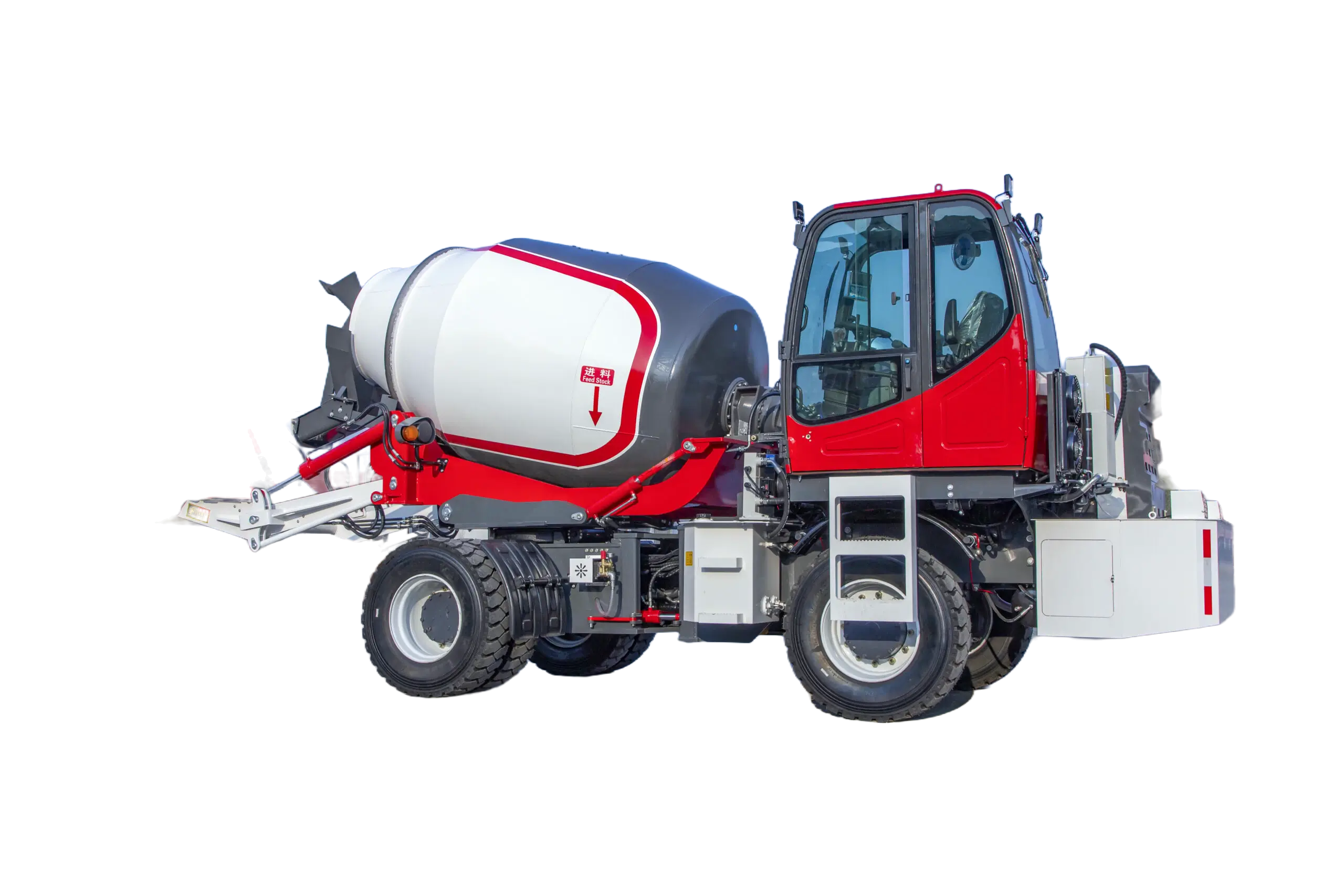
There is no responsible single answer to “self loading concrete mixer price in China” without a configuration. A 2.5 m³ machine and a 7.5 m³ machine differ in engine, axle, tires, water, weight and shipping envelope. Even two quotations for the same nominal capacity can include different components, spares and delivery terms. Buyers should compare the cost of an identical scope before judging which offer is lower.
MEGA does not publish fixed selling prices on the mixer pages reviewed for this article, so no price band should be invented. What the site does publish is enough to explain the quote drivers: capacity, machine dimensions, engine power, gearbox, axle, tires, water-tank route and overall weight. Begin with the self-loading mixer catalog, choose a capacity that fits the site, and ask for an itemized current quotation.
The first confirmation is the basis of price: exact model, installed configuration, included options, spare parts, packing, freight term and destination documents. If those are different, the totals are not comparable.
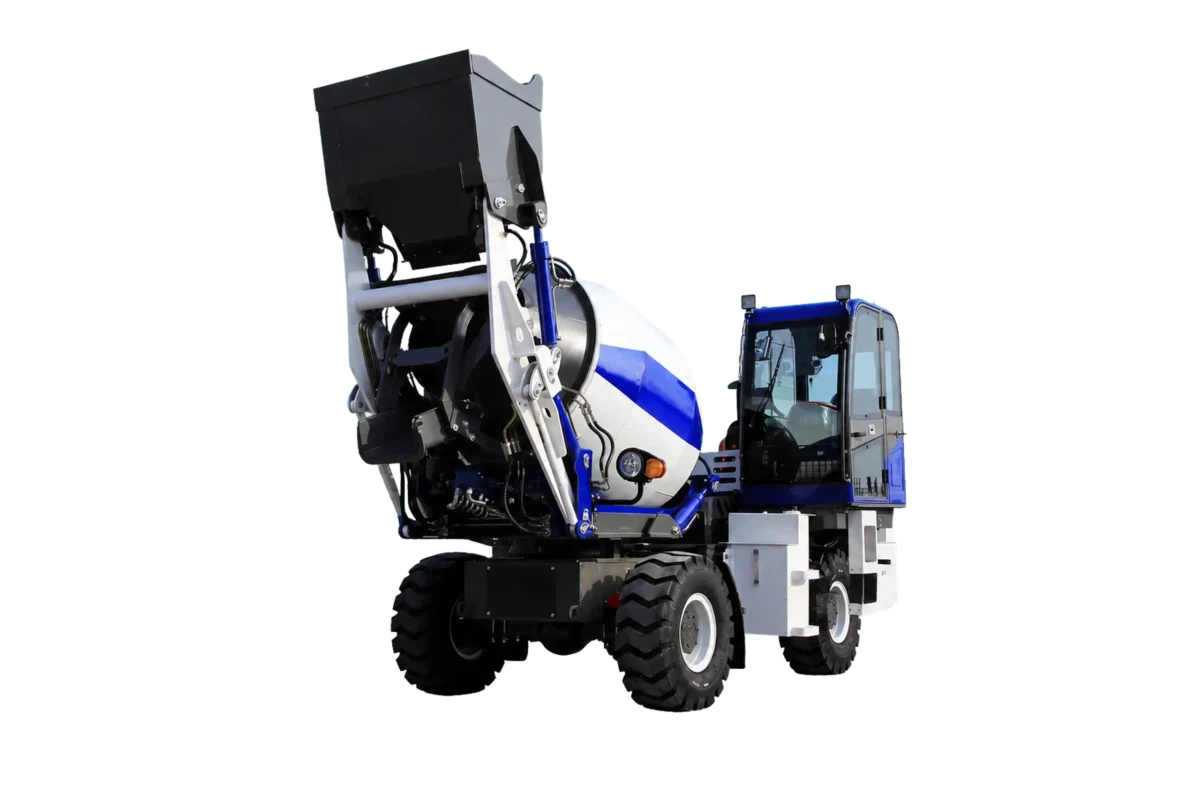
Capacity changes more than the drum. A larger batch requires a machine structure, powertrain and running system suited to the design. It also changes the volume of material handled per cycle and usually affects transport. Buyers should expect price movement between classes; the useful question is which specification difference creates value on the intended site.
The MG2500 lists 2.5 m³ mixing capacity, a 77.3 kW engine, 1.8T wheel-side reduction axle, 20.5/70-16 tires and 6,200 kg overall weight. The MG3200A keeps the same published power but moves to a 2.0T axle, double 16/70 R22.5 tires, 7,500 kg weight and 3.2 m³ capacity.
That comparison shows why a quote should not be reduced to currency per nominal cubic metre. The buyer is purchasing a complete mobile system. Ask which chassis changes accompany the capacity and whether the route needs them.
The MG5500B page lists YCD4J22T-115 or YCD4J22T-125 engine routes at 85/91 kW, a 280 separate gearbox and 2.5T wheel-side reduction axle. The MG7500C lists a 92 kW YC6J125Z-T20 engine, 315 separate gearbox and a front 30S wet axle/rear 30 axle route.
A quotation should identify the installed components, not repeat all available alternatives. A familiar local engine or component may reduce support friction, but buyers should verify parts and service rather than assume brand availability. If two prices use different engines, compare documentation, configuration and application before treating one as a discount.
Ask every bidder to complete the same scope sheet. A total can be compared only after every required item is marked included, excluded or optional.
| Quote line | Technical detail to name | Cost risk if left vague |
|---|---|---|
| Base machine | Exact model and defined mixing capacity | Nominal model names hide different usable volumes |
| Powertrain | Installed engine, rated power, gearbox and axles | Alternative components are compared as if identical |
| Running gear | Tire size, single/double arrangement and brakes | Route suitability and replacement planning remain unknown |
| Water and batching | Tank, filling components and supplied controls | Buyer assumes functions or fittings not included |
| Attachments and spares | Bucket, chute, tools, filters, seals and quantities | Lower quote omits items needed at a remote site |
| Export scope | Packing, inland movement, freight basis and documents | Totals use different delivery points and responsibilities |
The MG2500 publishes a 500 L water tank. The MG3200A lists 710 L. The MG5500B presents 910/1,070 L water routes, while the MG7500C lists 700 L. Tank size is not a simple progression with model name, so the quote must identify the supplied route.
Ask how the tank is filled, which pump, hose or fittings are supplied, and how mix water is controlled. If weighing, metering or batch recording is required, put it in the specification. Do not price an assumed feature.
The MG2500 lists 20.5/70-16 tires. The MG3200A, MG5500B and MG7500C list double 16/70 R22.5 routes. Tire count, size and construction affect the quoted machine and later stocking. Confirm exact markings before ordering spares.
More tires do not automatically make a machine correct for weak ground. Overall weight, ground condition, pressure, route and manufacturer limits still matter. Buy the configuration that fits the site rather than the visually heavier option.
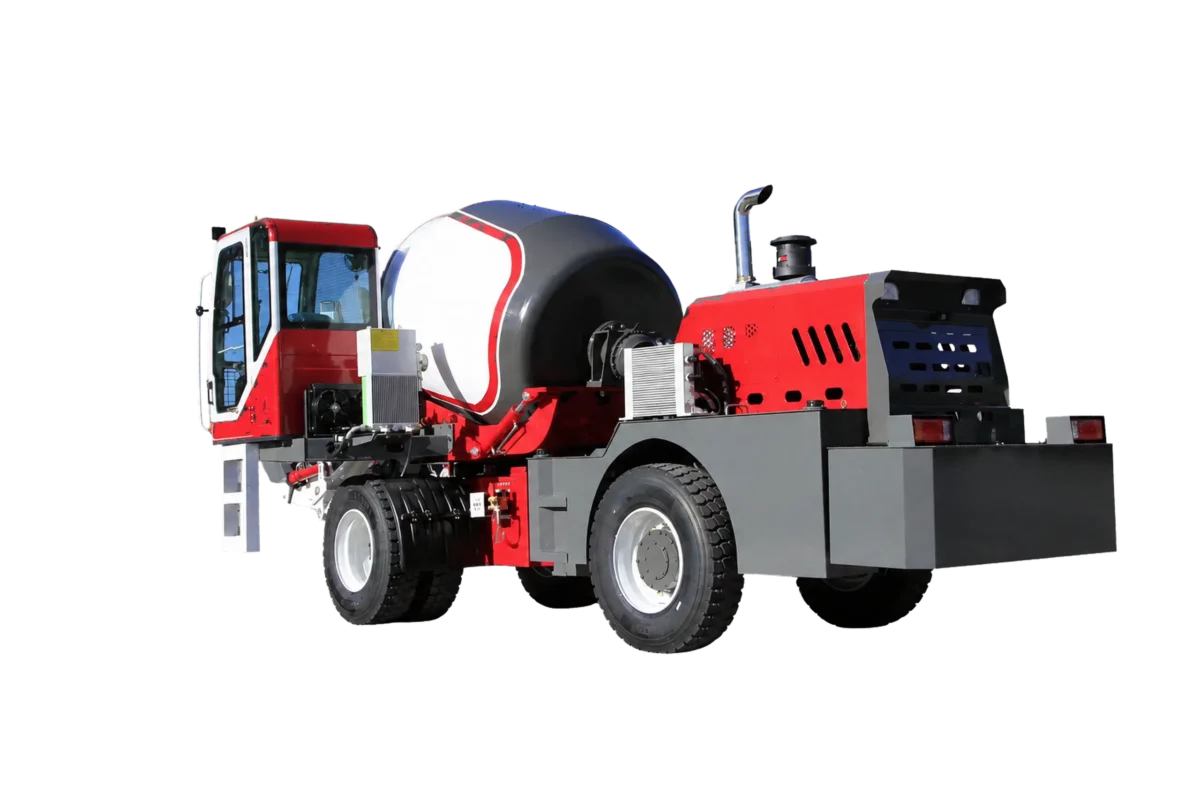
Factory price is only one part of an import. Width, height, length, weight, disassembly and container or transport method affect inland and ocean logistics. Ask the supplier for packaged dimensions and weight of the actual configuration, not just working dimensions copied from a page.
The MG2500 is published at 2,350 mm wide and 6,200 kg. The MG3200A is 2,400 mm wide and 7,500 kg. The MG4000C reaches 2,800 mm and 8,700 kg. The MG5500B is 3,000 mm wide and 9,000 kg. The MG7500C is 2,920 mm wide and 12,500 kg.
These differences can affect loading method, route permits, port handling and shipment type. Request a freight quotation based on the actual packing plan. A lower base-machine price can produce a higher landed total when the envelope changes.
Several MEGA pages publish dimensions with the loading arm raised and down. Shipping may use another condition. Identify removed mirrors, cabin components, chutes, buckets, tires or accessories where applicable. Record reassembly responsibilities and include loose parts on the packing list.
Do not assume that a low transport height means the machine can work under the same obstruction. Site access must use the raised working envelope too.
Operating cost depends on local fuel, labour, maintenance, utilisation, finance and site conditions. No single life-cycle figure is valid for every buyer. Still, a comparison can identify cost categories and ask each supplier for the facts needed to estimate them locally.
A larger engine is not automatically more expensive per cubic metre if it reduces cycles on an efficient open site. It can be wasteful if the machine waits for water or placement. Build a conservative load-mix-travel-discharge cycle and estimate local fuel from measured work after commissioning.
The MG2500 page lists a 77.3 kW engine, while the MG5500B presents 85/91 kW routes and the MG7500C 92 kW. Rated power is not fuel consumption. Ask for current engine documentation and do not create a consumption promise from power alone.
MEGA states that it supports spare-parts planning. Ask for a recommended list tied to the installed engine, filters, seals, hoses and wear parts. Separate commissioning items, scheduled maintenance and contingency stock. A large generic package can waste money if items cannot be identified.
A remote contractor may accept more initial spares to avoid downtime. A dealer with local inventory may prefer shared parts across several models. Verify interchangeability and preserve part references.
One offer may include a stronger axle route, different engine, double tires, larger water tank, air conditioning, additional camera or controls, a spare-parts package and more protective export packing. Another may price the bare machine. The difference is only understandable when scope is explicit.
Air conditioning can support operator comfort in hot climates. Cameras or additional visibility aids may help a site plan. A different tire may suit the route or local supply. A larger water tank may reduce refill frequency. Each option should connect to a condition; otherwise it becomes an expensive checkbox.
Ask the supplier to state whether an option changes dimensions, weight, power demand, service parts or shipping. Preserve the final selection in the order.
A machine without a clear specification, manuals, packing list or inspection trail may be difficult to receive and support. MEGA states that it offers pre-shipment checks and export documentation. Define the required evidence in the quote rather than treating it as an informal promise.
The AJAX self-loading mixer listing shows how another manufacturer publishes batch, water and machine data. Those values are not MEGA facts and should not be transferred. They do, however, demonstrate why comparable quotations need common technical fields.
Send the supplier a one-page request containing the project, required concrete per batch, gate width, overhead clearance, route, water source, placement method, destination and preferred delivery basis. Ask it to recommend one primary model and one alternative, with the reason for each.
Include the expected order quantity and whether several units must be identical. A distributor buying repeat stock needs component consistency and change control, while a contractor buying one machine may prioritize a site-specific option. State the required document language and any destination information the supplier must review. This helps the commercial offer reflect the actual transaction rather than a generic export assumption.
The response should name base machine, selected engine, gearbox, axle, tires, water components, controls, cabin options, attachments, spares, manuals, inspection, packing, inland transport, freight basis, lead-time basis and payment scope. Commercial terms must come from the current supplier response; they should not be guessed from an article.
First reject any machine that fails batch fit, access, destination requirements or evidence. Then normalize the remaining quote scope and calculate landed cost with current logistics. A cheap machine that cannot enter the site is not a saving. A large machine that waits each cycle is not automatically productive.
For many projects, the shortlist may be MG2500 versus MG3200A. Open, higher-volume work may justify MG5500B or MG7500C. The quote should become more detailed as capacity rises because the logistics and support consequences become larger.
The honest answer to the price question is therefore a configuration exercise. Define the job, freeze the machine, identify every included item and compare the same delivery point. That process does not produce a catchy universal number, but it does produce a purchase total the buyer can understand—and a machine the site can actually use.
For more context on factory-side evidence, review MEGA’s factory and team information. Buyers comparing concrete supply and placement can also review the trailer concrete pump range before deciding whether direct mixer discharge covers the project. These links do not change the quote; they help expose additional scope that may otherwise appear late.
Keep the final comparison with the purchase order. When the unit arrives, reconcile the model, installed components, loose items and documents against the priced scope. A cost review is complete only when the buyer can explain not just what was paid, but exactly what the payment purchased.
Use the same reconciliation for repeat orders. If a component or freight basis changes, price the difference openly rather than comparing the new total with an outdated baseline. This keeps purchasing, service and the receiving team aligned on the machine behind the number.
A buyer still uncertain about batch size should return to the project-based mixer capacity guide before interpreting price differences.
