

Get quote
Get Free Consultation!
We are ready to answer right now! free consultation.
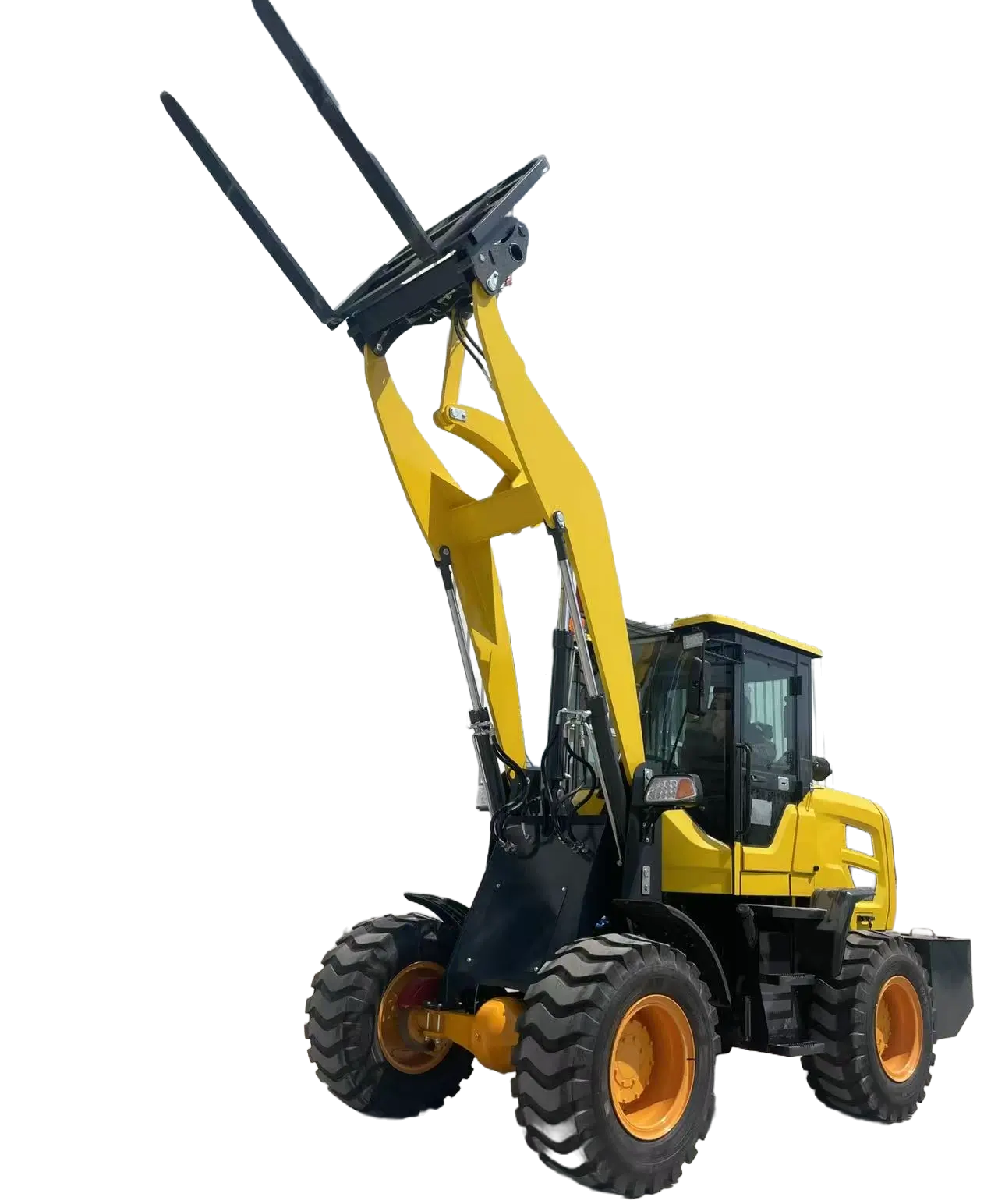
Two quotations can both say “2-ton wheel loader” while describing machines with different bucket assumptions, operating weights, axles, dump geometry and optional engines. The buyer cannot resolve that conflict by comparing the bold number at the top. Wheel loader manufacturers in China should be evaluated through one controlled specification that exposes every difference and every unconfirmed option.
Start with the work: material, density, receiver height, travel route, grade, hours and climate. Then compare the MEGA wheel loader range model by model. The MG910, MG936, MG939, MG940 and MG958 show why normalisation matters: they occupy different payload and geometry positions, and some pages publish options or revision notices that must be frozen in the order.
For a project team, the useful output is a redlined data sheet. One colour marks a confirmed value, another marks an option, a third marks a missing value, and a fourth marks a conflict that must be resolved before price approval. This method also protects a repeat buyer when a later shipment may reflect a design change.
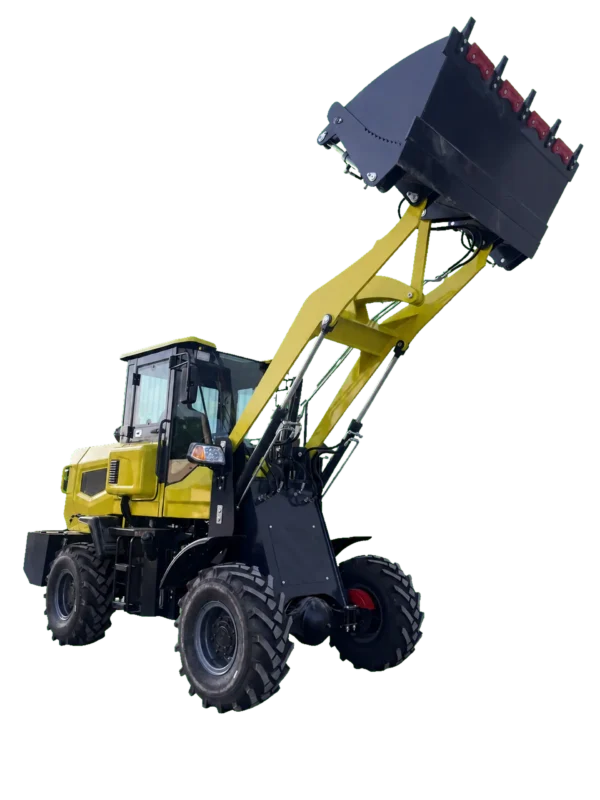
Create a comparison sheet with the same units and definitions for every candidate. Rated load should identify the attachment and load position. Bucket volume should name the bucket type and assumed material. Dump height and reach should be tied to the same bucket position. Dimensions must represent the configuration that will ship.
The MG936 publishes a 2,000 kg rated load and 5,300 kg operating weight. Its bucket is 1.2 m³ and 2,000 mm wide. Those numbers answer different questions: the rated load limits normal carried material, operating weight affects transport and ground pressure, and bucket size affects how quickly dense material reaches the load boundary.
Ask each manufacturer to state whether published operating weight includes the standard bucket, fluids, cab and any counterweight. A quotation that omits this definition cannot be compared fairly with a complete value. For transport, also request axle loads and shipping dimensions where the route or carrier requires them.
MG936 lists 3,500 mm dumping height and 1,000 mm reach. MG940 lists the same two values, while MG939 publishes 3,100 mm height and 1,060 mm reach. MG958 lists a 3,500-4,500 mm height range with 805 mm reach. These differences can decide whether the bucket clears a truck side and places material toward the centre.
Request a dimensional sketch showing the exact bucket, pivot and discharge position. Do not mix one manufacturer’s maximum height with another manufacturer’s standard configuration. If a page gives a range, identify the option that supplies each endpoint and any effect on capacity or overall height.
A buyer may receive two prices for the same model because the offered powertrain differs. The specification should carry the brand, model, rated power, emission route, transmission type, gear pattern, axle type and tire size into the commercial comparison.
The MG936 page lists a CHANGFA 4102 turbocharged engine at 78 kW in its main table and also names HF, YUNNEI, YUCHAI and CUMMINS options with different power figures. This is useful configuration choice, but it is not a single machine specification until the buyer selects one engine.
The order should identify the engine model, emission standard for the destination, cooling package and service items. Inspection photographs should show the installed engine identity. The parts list and manuals must follow that selection rather than the model family in general.
The MG939 page lists a Weichai WP6G125E22 engine at 92 kW, YJ315 torque converter, fixed-shaft powershift gearbox with 4F/2R, heavy hub-reduction axle and 17.5-25 tires. It also gives 120 kN maximum breakout force, 97 kN traction force and 18 MPa working pressure.
Those details create a different machine route from MG936 or MG940 even before payload is settled. A project buyer handling dense material should compare breakout, traction, tires, axle and braking with the actual stockpile and ground. Do not infer an unlisted value merely because another model page publishes it.
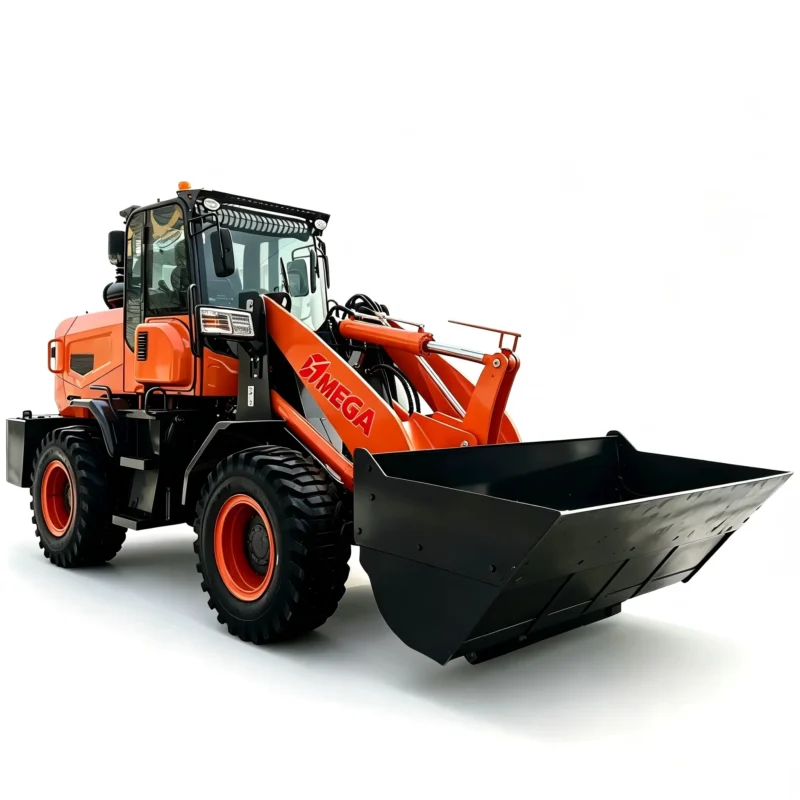
The MG910 is a 1,000 kg compact articulated loader with a 0.4 m³ bucket, 2,300 mm dumping height, 750 mm reach, 2,100 kg operating weight and 45 kW engine. The MG958 is a 2,500 kg loader with a 1.5 m³ bucket, 3,500-4,500 mm height range, 805 mm reach, 5,500 kg operating weight and 92 kW engine.
For MG910, preserve the 3,300 x 1,500 x 2,350 mm dimensions, 2.0 m listed turning radius and 350 mm ground clearance in the redline. Ask how options such as air conditioning or a different bucket affect height and width. A compact buyer often cares more about clearing a roof and turning between walls than about maximum travel speed.
If another manufacturer provides only payload and bucket volume, mark width, height, turning method and ground clearance as unanswered. Never award a comparison point to an empty cell.
For MG958, the buyer must resolve the broad dumping-height range. State the ordered height, exact boom or bucket configuration and capacity effect. Preserve its automatic 4F/4R transmission, large wheel-reducer axle, 16/70-24 tires and 4×4 drive in the comparison.
A supplier who answers this clearly may deserve preference over a lower price with ambiguous geometry. The objective is not to collect the greatest number of specifications; it is to prove that the delivered loader can perform the defined cycle.
ROPS/FOPS cabin wording appears on several MEGA wheel-loader pages. The buyer should request the applicable documentation and identify the exact cab supplied rather than treating a marketing phrase as certification evidence. The same discipline applies to brakes, steering, visibility aids, lighting and hydraulic controls.
MG910 lists oil brakes. MG936 lists air brakes, while its page describes an air-over-oil assist caliper arrangement. MG939 lists air-over-hydraulic disc brakes on four wheels. The redline should preserve these differences and ask how the parking brake works, what daily checks are required and which service parts are included.
For a sloped or trafficked yard, the receiving test should include service and parking brake checks under the supplier’s approved procedure. It should not improvise an unsafe maximum-grade demonstration.
Hydraulic joystick, air conditioning, engine and bucket options can affect operation, service and manuals. Mark every selected option in the final schedule. A decal, data plate or handover record should let the operator and technician identify what is installed without reopening the original email chain.
The China Construction Machinery Association is a useful industry reference, but its existence does not establish that a particular supplier or machine is a member, approved or certified. Company identity, production evidence and product conformity still require direct documents. General Yanmar wheel-loader material also illustrates detailed dimensional publication, but its values apply only to Yanmar machines.
A loader is not fully compared until the buyer knows what will arrive loose, installed or removed for transport. Ask each factory to provide packing dimensions, attachment list, preservation method and reassembly needs. A cabin, bucket or exhaust component removed for container loading can change the first-day work at the destination.
Use the approved MG936 or MG940 drawing and identify every item removed. Record the packed machine height and width, lifting or lashing points supplied by the manufacturer, and the weight of loose buckets or forks. The receiving contractor can then prepare suitable lifting equipment and a clean assembly area.
For MG958, confirm whether the selected higher dumping-height configuration changes the shipping envelope. For MG939, preserve the 17.5-25 tire route and 2,360 mm published width in transport planning. Do not substitute a smaller website image for an actual packing plan.
If truck loading drove the purchase, measure dump height and reach with the ordered bucket. If a gate drove the purchase, measure overall width and height. If dense material drove the choice, identify the safe test load and bucket under manufacturer procedures. One generic running video cannot close all three decisions.
Ask the inspection record to show measurement points and instruments, not only a final number. This helps the receiving team repeat the check and distinguishes a dimensional measurement from an estimate.
MEGA’s MG936 page says parameters may change due to design improvement. That warning should trigger a controlled confirmation. Put a revision number and approval date on the specification, drawing and attachment list. State that material substitutions or configuration changes require buyer review before production or shipment.
A fleet owner ordering another MG936 should provide the first unit’s model plate, engine, axle, transmission, tire and attachment record. Ask the manufacturer to list every proposed change. A compatible improvement may be acceptable, but the buyer needs to understand its effect on parts, training, performance and resale records.
Inspection should show model identity and the selected components, then demonstrate start, travel, steering, braking, boom, rollback and discharge under a defined safe procedure. Photograph the engine plate, tires, bucket, cab and loose attachments. Packing evidence should identify removed items and protect exposed interfaces.
The MEGA team and production page states a 20,000 m² base, five workshops and more than 80 staff. These are website claims that a serious buyer can ask to verify during a live or third-party audit. They do not replace the model-level evidence in the redline.
The strongest comparison is not the sheet with the most green cells. It is the one that identifies the normal material, preserves honest unknowns and closes the values that decide safe fit. A missing paint detail can wait; an unconfirmed engine, bucket, braking route or dump height cannot.
At receiving, compare the serialised loader with the approved revision before it enters production. Keep deviations open until resolved. This makes the factory-comparison method useful beyond purchasing: it becomes the service baseline, attachment reference and repeat-order control for the life of the machine.
If two wheel loader manufacturers in China remain technically acceptable, compare the quality of their answers. A factory that states an unknown, proposes a measured check and records the selected option gives the buyer a stronger handover than one that fills every blank with an unsupported promise. The redline rewards evidence rather than polished presentation.
Keep all rejected quotation revisions as well as the approved final sheet. They show which engine, bucket or dimension changed during negotiation and prevent an old attachment list from reappearing at dispatch. Give purchasing, inspection and receiving the same revision number. When any team finds a mismatch, identify the exact field and hold that item open until the factory supplies a corrected document or the buyer accepts a documented deviation.
Retain evidence permanently.
Where access is the decisive redline, apply the compact-loader measured-site guide before approval.
