

Get quote
Get Free Consultation!
We are ready to answer right now! free consultation.
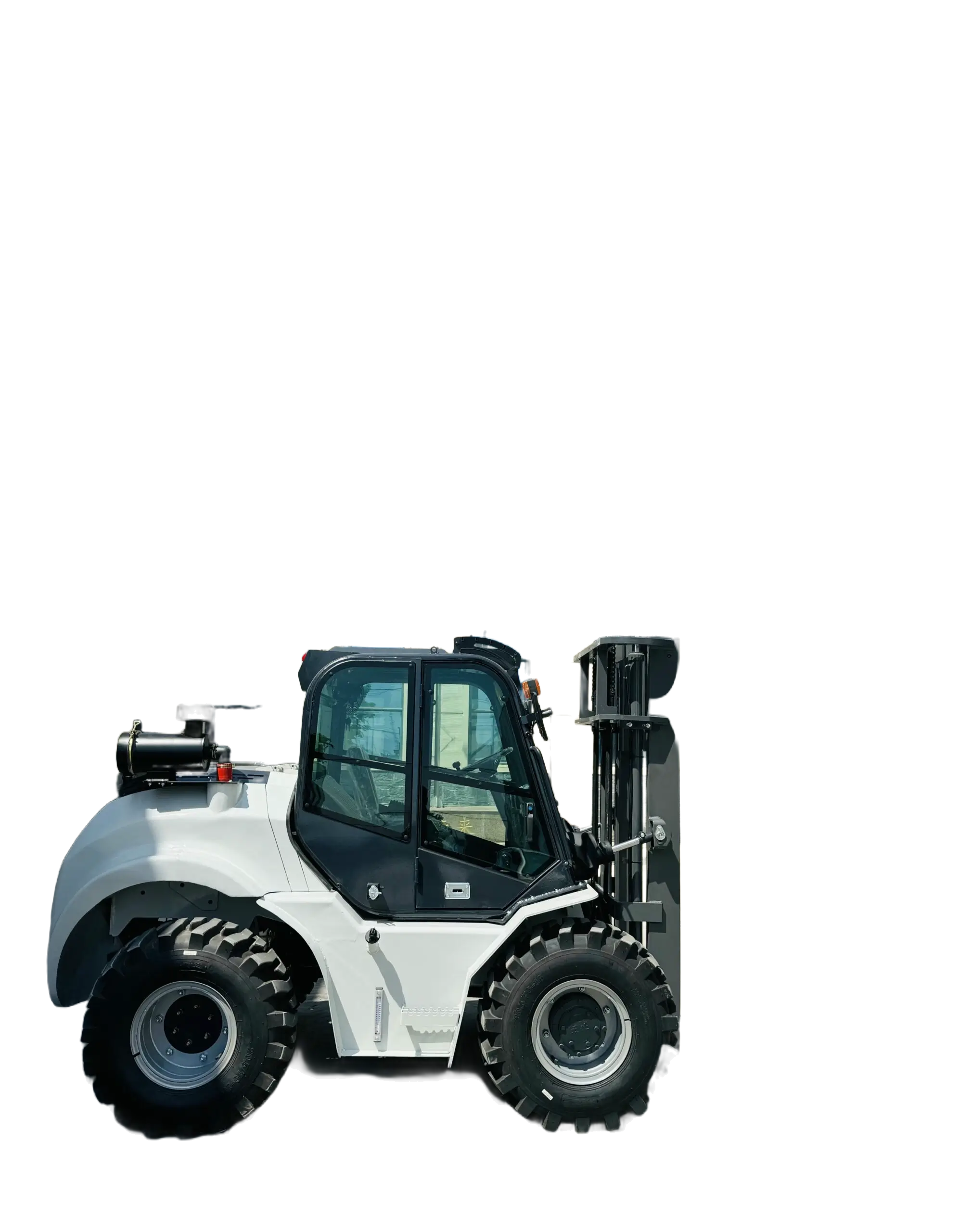
The first incoming container determines whether a forklift dealer receives sellable stock or a collection of unresolved options. A rough terrain forklift supplier in China should freeze the mast, emissions route, tires, transmission, attachments, data plates, manuals and spare parts before production. The dealer should know exactly which local customer each machine can serve before booking freight.
MEGA publishes five 3.5-ton models in its all-terrain forklift range. MG3501 offers a clearly published 500 mm load-centre distance and 3,000-6,000 mm lift range. MG3550, MG3580, MG3581 and MG3582 use custom multi-stage mast wording and share many high-level claims while listing different weights, dimensions and drivetrains. A dealer cannot order “one of each” and expect a coherent showroom.
The practical sequence is configuration freeze, packing review, pre-shipment evidence, receiving inspection, commissioning and sales handover. At every step, preserve the serialised machine identity. Do not let a generic brochure or parts kit replace the selected configuration.
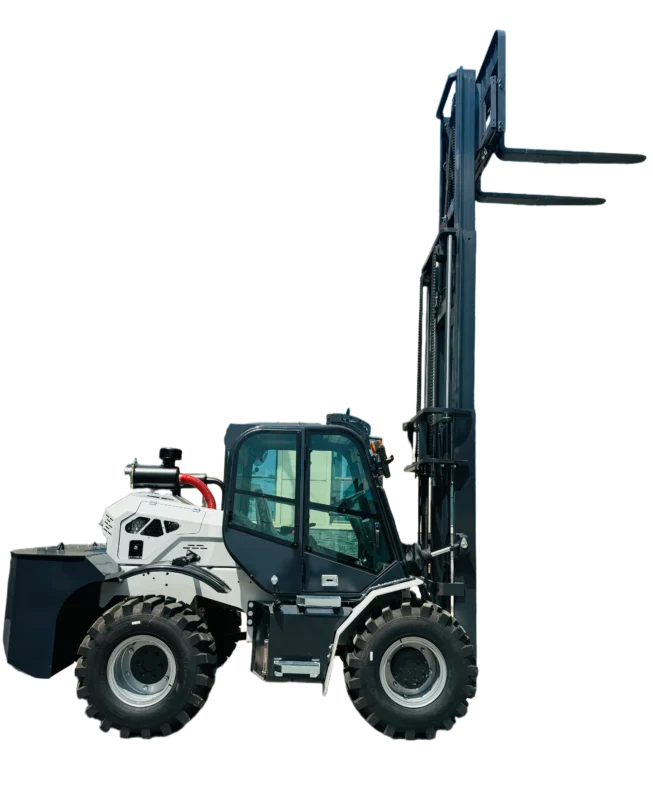
Choose one configuration that addresses the broadest qualified local demand without pretending to cover every application. Record rated capacity at the stated load centre, mast height, collapsed height, fork length, tire, engine, emission route, transmission, brakes and attachment.
The MG3501 page lists 3,500 kg rated load, 500 mm load-centre distance and 3,000-6,000 mm lifting height. It publishes 3,400 x 1,800 x 2,250 mm overall dimensions, 4,500 kg weight, 23.5/70-16 tires, 2,200 mm turning radius and 4×4 drive.
This can be a sensible first SKU if the supplier confirms one mast and the capacity at the dealer’s common load centre and placement height. The quotation should not repeat the full 3,000-6,000 mm range. It should name the selected lift and gantry height, fork and any side-shift or attachment.
The dealer’s qualification sheet should ask customers for pallet mass, depth and entry direction. A long 3,500 kg load can exceed approved capacity even when the model badge matches its weight.
The MG3550 lists full-hydraulic 4F/4R transmission, 20.5-16 front and 12-16.5 rear tires, 4,700 kg operating weight and a custom multi-stage mast. It also lists China IV / Euro III emissions wording and a 36.8 kW diesel engine.
If this becomes the dealer standard, the order should identify the exact engine brand and standard applicable to the destination, as well as the mast’s collapsed and raised dimensions. Stock filters, belts, fluids guidance and tire support should follow the delivered components.
The five pages use China IV, China III export or Euro III wording in different places. Those statements do not establish legal acceptance in every country. The dealer must identify the destination’s current engine, import, safety and labelling requirements with qualified local advice.
Request the engine brand, model, rated power, serial or identification method, emission configuration and available supporting documents before order approval. The 36.8 kW headline is not enough. Factory inspection should photograph the installed plate and compare it with the accepted schedule.
If the supplier proposes an engine change, assess parts availability and destination compliance again. An alternative brand can be commercially reasonable, but it is a new configuration, not a clerical substitution.
Ask for operator and maintenance documents in a language suitable for the dealer’s market, along with capacity information for the selected mast and attachment. Confirm labels, warning decals, data plate fields, recommended daily checks and parts identification. Do not promise a document that the supplier has not shown.
The MEGA production and team page states a 20,000 m² base, five workshops and more than 80 staff. A distributor may use a live or third-party audit to verify these website claims and the actual forklift assembly and inspection process.
A bucket, clamp, long fork or boom can expand the dealer’s customer base, but each can change capacity, load centre, hydraulic demand, visibility and machine length. The rough terrain forklift supplier in China should approve the selected combination and provide revised capacity information where applicable.
Provide pack width, depth, height, mass, centre of gravity and surface. State how the load is secured and whether it can shift. Ask for clamp mass, opening range, hydraulic requirement and capacity effect. A generic “clamp optional” line cannot support a sales demonstration.
Train staff not to remove the attachment and then assume the original fork rating automatically returns without following the manufacturer’s approved configuration and data-plate process.
MG3501 lists an optional bucket. Buyers may imagine wheel-loader performance, but a forklift with a bucket has different geometry and approved capacity. Define the material, bucket volume, mass, centre and intended cycle. If bucket loading dominates, compare the wheel loader family instead of making a forklift cover the wrong duty.
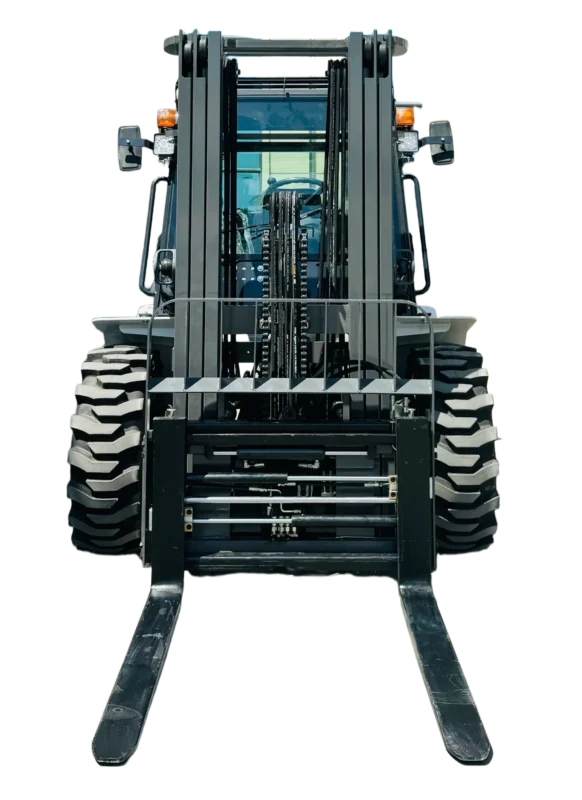
The machine’s published overall height may not represent a custom mast or transport preparation. Ask for packed dimensions and weight, items removed, lifting and lashing instructions, battery state, fluid preparation and protection against corrosion or exposed hydraulic connections.
A dealer that selects a tall multi-stage mast should obtain the exact collapsed height and transport drawing. Record whether mast, overhead guard, exhaust or forks are removed. Provide a reassembly method, torque or adjustment information where applicable, and a parts list for all loose hardware.
The receiving site should prepare suitable lifting equipment and a level assembly area. It should not improvise by lifting from an unconfirmed point or operating a partly assembled machine.
Label loose forks, clamps, hoses and fasteners to the serialised machine. Photograph their condition before closing the container. Protect machined interfaces and cap open hydraulic lines. If several machines share a container, use a packing map so attachments do not migrate between configurations.
The acceptance plan should prove the model the dealer intends to sell. If the first SKU targets construction yards with 3,500 kg-or-less pallets at a defined load centre and 3,000 mm lift, test that geometry under a safe manufacturer-approved procedure. Avoid an impressive but irrelevant maximum-height video.
Record the model, engine, mast, fork markings, attachment and capacity plate. Measure collapsed mast and overall height. Run mast raise, lower and tilt; inspect chains, rollers, forks and visible hydraulics under the supplier’s procedure. Use a known approved test load and record its centre.
MG3580, MG3581 and MG3582 list a 500 mm minimum turning radius, while MG3501 and MG3550 list 2,200 mm. The smaller value appears inconsistent with machine dimensions. If stocking one of those models, ask the supplier to measure and document the full swept path on a marked surface. Do not print the 500 mm claim until confirmed.
Ask the supplier for a recommended startup kit based on the installed engine, filters, seals, hoses, brakes, mast and attachment. Review quantities against the dealer’s service promise and lead time. A useful kit is traceable to part numbers and the serialised build, not a carton labelled “forklift spares.”
Photograph seals and transit condition, then compare the packing map with the contents. Inspect tires, forks, mast, chains, hoses, cab or overhead guard, loose attachments and labels. Verify engine and machine identity against the approved file. Record damage or shortage before assembly and commissioning.
Follow the supplier’s procedure for assembly, fluid and battery checks. Verify start, instruments, steering, service and parking brakes, transmission directions, mast functions, lights and warnings. Do not send the machine directly onto rough ground to “see what it can do.”
Staff should decline or escalate loads beyond the approved centre, unverified attachments, unstable packs, inadequate door clearance and routes with uncontrolled slope or soft edges. They should know the difference between 4×4 traction and load stability. This prevents a showroom demonstration from becoming an undocumented engineering decision.
General OSHA load-composition guidance is useful for understanding load weight, stability and centre. It does not certify a machine or replace the manufacturer’s instructions and local rules.
Before the first customer demonstration, the dealer needs one approved configuration card and one machine-specific walk-around. The card should state load centre, selected mast and collapsed height, fork or attachment, engine, tire, drive route and applications that require technical escalation.
Choose a stable load with documented mass and centre that remains within approved capacity. Mark pickup, travel and set-down. Check mast clearance and keep people separated. Do not use a customer’s unknown pallet simply because it looks lighter than the test load.
If the customer needs rough-ground evidence, show traction only on a prepared route that the supplier and dealer procedures allow. Avoid a steep or rutted spectacle that encourages buyers to confuse 4×4 movement with stability.
Do not copy MG3580, MG3581 or MG3582’s 500 mm turning-radius entry into a local brochure until measured. If the supplier provides a corrected figure, update the card and drawing. Honest configuration notes protect the dealer when online information changes.
Record requested load, load centre, lift height, doorway, surface, attachment and reason for every won or declined enquiry. This reveals whether the next shipment needs another mast, MG3580’s different length and weight route, MG3581’s drive arrangement or simply more of the initial configuration.
Keep change control strict. A second batch with a different engine, mast or tire package may require new parts, documentation and training even when the model name stays the same. Ask the supplier for a revision comparison before production.
A distributor should open the container knowing what every forklift is, who it serves and which applications it must reject. That is the difference between stocking a rough-terrain product line and importing unresolved factory options.
Keep the first unit’s approved file as the baseline for every reorder. Ask the rough terrain forklift supplier in China to list component and document changes before accepting a repeat price. A lower quotation that creates a new engine, mast or parts route may cost more to support than an unchanged machine.
For warranty or parts cases, require the dealer to send the machine identifier, operating hours, installed attachment, fault description, photographs and service history. This gives the supplier a configuration-specific question and reduces parts ordered from guesswork. Keep replaced component identities so repeat failures can be distinguished from unrelated symptoms.
Before expanding the range, confirm that trained technicians, current manuals and identified parts already support the first serialised SKU reliably in dependable local customer service operations. Stock depth is more valuable than model count when customers expect machines to return to work.
For buyers whose primary challenge is a grade and low doorway, apply the 4×4 forklift traction-and-mast route.
