

Get quote
Get Free Consultation!
We are ready to answer right now! free consultation.
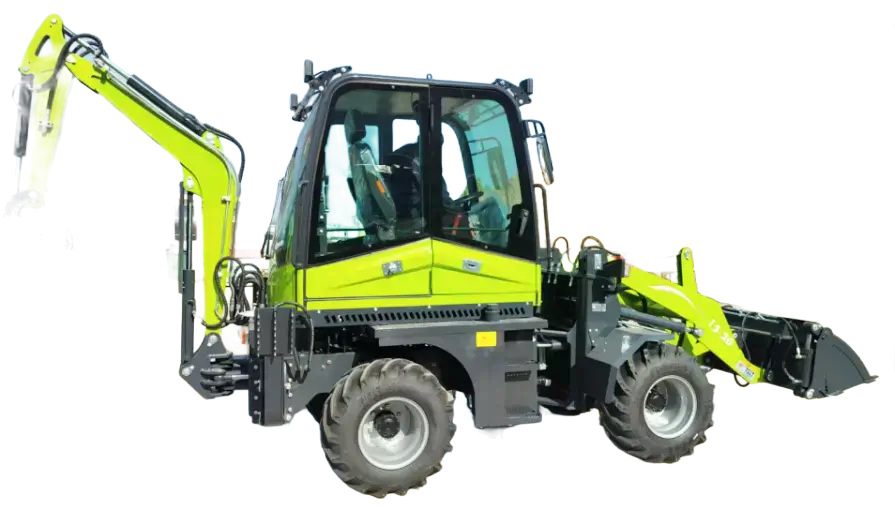
A utility repair crew may excavate a short trench, place pipe, move spoil, backfill and clean the street with one machine. The right backhoe loader manufacturer decision depends on which step controls the job. A compact unit can position more easily in a narrow street; a full-size machine can dig deeper and load more material. Neither is automatically the better multi-purpose answer.
MEGA publishes two backhoe loaders: the 2,500 kg WZ20-15 and the 7,400/8,400 kg WZ30-25. The backhoe loader range reveals a large class gap. WZ20-15 lists 2,200 mm digging depth, a 0.05 m³ backhoe bucket and a 1,000 kg loader rating. WZ30-25 lists 4,000/5,200 mm telescopic digging depth, a 0.3 m³ backhoe bucket and a 1 m³ loader bucket.
For a municipal crew opening shallow service trenches in confined streets, compact dimensions may matter before maximum excavation. A contractor cutting deeper drainage and loading trucks should not choose WZ20-15 only because transport appears easier. Write the work sequence, depth, soil, spoil destination and access before asking for a quotation.
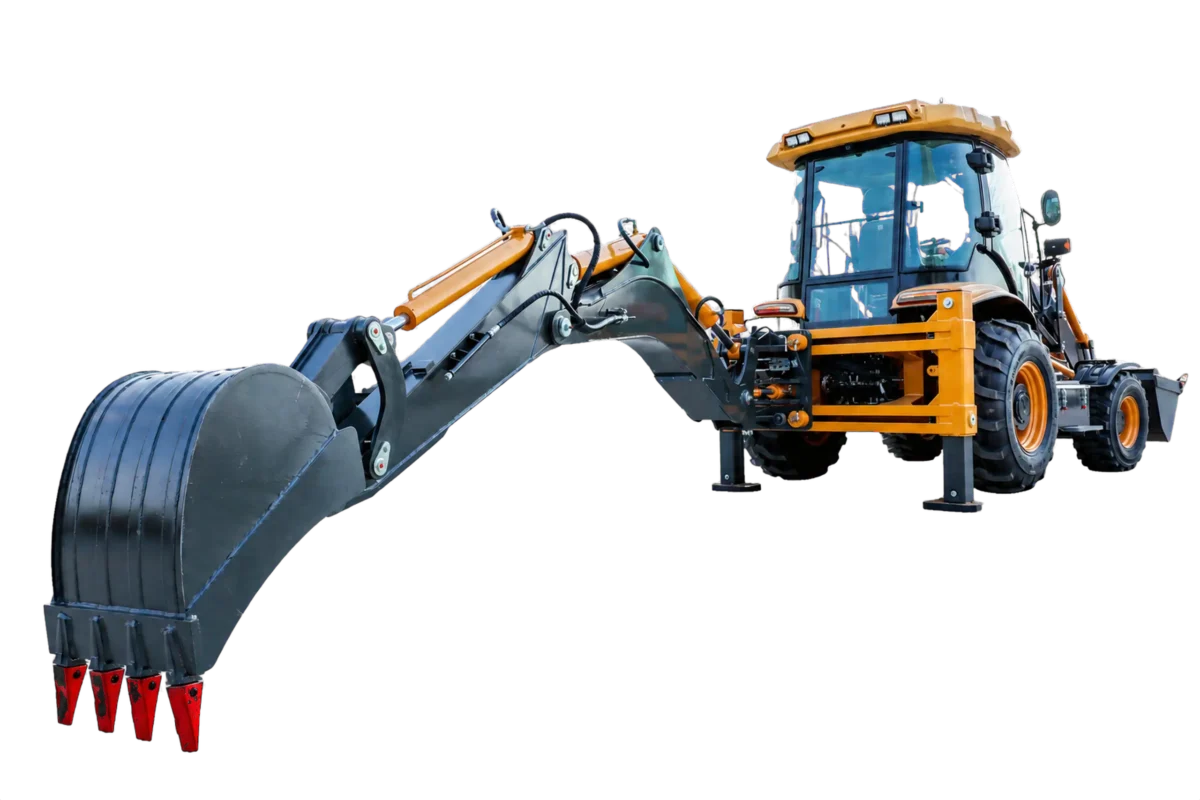
Map setup, excavation, spoil movement, pipe handling, backfill, surface preparation and departure. Mark which tasks the backhoe performs and which require other equipment or people. This prevents a multifunction machine from being credited with work it cannot safely complete.
The WZ20-15 publishes a 2,500 kg operating weight, 1,500 mm width in its main overall dimensions, 1,769 mm wheelbase and 37 kW Yunnei 490 engine. It uses an automatic 2F/2R transmission, Isuzu narrow drive axle and mechanical joystick control.
Those values can suit landscaping, short service connections and urban repair where the machine must fit between barriers. The buyer should still obtain a current dimensional drawing because the page presents the overall dimension in two combined strings for the loader and backhoe portions. Trailer capacity, legal transport width and lifting points require confirmed information.
If the job needs a trench deeper than 2,200 mm or long reaches beyond the 3,000 mm listed digging radius, WZ20-15 is not the correct route. Do not plan to excavate from an unstable edge or exceed geometry to preserve compact access.
The WZ30-25 lists 4,000/5,200 mm maximum telescopic digging depth, 4,800/6,000 mm digging radius and 0.3 m³ backhoe bucket. Its loader side has a 1 m³ bucket, 2,742 mm dumping height, 1,062 mm reach and 72 kN breakout force.
This class may suit deeper utility, drainage and general construction work with enough setup and transport space. Its published overall dimensions are 6,150 x 2,350 x 3,763 mm, far larger than WZ20-15. A narrow street that accepts the smaller machine may not allow the stabiliser and swing envelope of the larger one.
State trench depth, bottom width, length, soil or fill condition, groundwater expectation, utility congestion and spoil placement. A bucket capacity number does not establish production because digging resistance, repositioning and truck coordination dominate many repairs.
The page lists a 170-degree boom slewing angle, 2,500 mm unloading height and 3,000 mm maximum digging radius. These values can support short, confined cuts where small bucket control matters. The mechanical joystick route should be considered in operator training and service support.
A crew repairing a water connection may value less pavement disturbance and easier repositioning. It should still use proper trench support, utility location and exclusion procedures under local requirements. Machine selection does not replace excavation safety planning.
The 4,000/5,200 mm depth and paired reach or height values suggest standard and telescopic routes. The order should identify whether the extension is included, its operating limits and any effect on capacity, transport and maintenance. Ask for a current digging envelope drawing rather than combining the larger value from every pair.
WZ30-25 lists 36 kN maximum digging force and a 190-degree excavator slewing angle. These figures should be matched to the actual soil and bucket. Rock excavation, lifting or demolition attachments require separate manufacturer approval and may not suit the published standard machine.
After the pipe work, the machine may move bedding, backfill and spoil. The buyer should compare load, bucket volume, dump height, reach and receiving vehicle. A backhoe with sufficient digging depth can still be inefficient if its loader side cannot clear the truck used on the project.
Its loader bucket is 0.3 m³, with 2.4 m dumping height and 802 mm reach. That may suit small stockpiles, compact trucks or moving material within the repair zone. Estimate bucket mass from the bedding or spoil density; do not assume 0.3 m³ remains below 1,000 kg for every material and fill condition.
The page does not publish a loader breakout value. Leave that field open rather than borrowing MG910C or another loader’s data. If penetration into compacted spoil matters, request evidence for the offered machine.
The larger 1 m³ bucket and 72 kN breakout force make it the stronger loading route on published data. Its 2,350 mm width, 6,580 mm minimum turning radius and 300 mm ground clearance must fit the traffic plan. The 7,400/8,400 kg weight also changes transport, surface and recovery planning.
If the repair crew mainly loads and only occasionally digs, compare the MG936 wheel loader, which publishes a 2,000 kg load and 1.2 m³ bucket. If excavation remains essential, a separate loader plus excavator may still outperform a backhoe on larger sites. Multi-purpose value depends on task balance.
A utility street has workers, open excavation, delivery vehicles and residents. Separate the backhoe setup area from the loader travel path. Define when the seat or control position changes and ensure the machine is stabilised according to its instructions before excavating.
WZ20-15 may fit close to the repair, but edge distance and trench support should be set by competent site planning. Do not use its 1,500 mm width to squeeze between traffic and an unsafe trench. Barriers and a spotter or other controls should follow local requirements.
WZ30-25’s 190-degree excavator slew requires a controlled rear work zone. Mark stabiliser positions, counterweight or boom sweep, spoil pile and vehicle loading point. If the street cannot provide that space, rethink the machine or traffic arrangement before delivery.
The general JCB backhoe loader overview illustrates how this machine class combines loader and excavator functions. Its models and performance data are not MEGA facts. The useful external lesson is to compare both ends of the machine as one project system.
Machine price alone can favour the compact route while the project later pays for a second excavator, extra truck or repeated repositioning. Estimate hours for opening, spoil movement, material delivery, backfill and surface work. Include transport, operator, fuel, attachments and the space needed to use them.
WZ20-15 may unload, set up and complete shallow digging plus modest material handling within one small closure. Its 0.05 m³ excavator bucket means more cycles than WZ30-25’s 0.3 m³ route, but the larger machine may take longer to position or require a broader traffic plan. Count the actual sequence rather than cubic metres alone.
If spoil goes into a small nearby truck, compare the WZ20-15’s 2.4 m loader dumping height and 802 mm reach with that vehicle. A mismatch can erase the benefit of compact access. Use the real truck drawing.
Where excavation reaches beyond 2,200 mm, WZ20-15 cannot meet the published geometry. Repositioning, benching or unsafe edge approaches should not be used to stretch it. WZ30-25’s selected 4,000 or 5,200 mm depth route may reduce equipment changes, subject to site space and support.
The contractor should confirm which telescopic configuration is quoted and whether the 0.3 m³ backhoe bucket suits the soil. Hard, wet or obstructed ground can reduce progress even when depth is adequate.
Granular bedding, excavated wet soil and asphalt-related material have different densities and handling behavior. Calculate likely bucket mass for the 0.3 or 1 m³ bucket. Keep the machine within approved capacity and avoid mixing contaminated spoil with imported backfill.
For WZ20-15, identify bucket widths, tire route, engine, transmission, axle, controls and any attachments. For WZ30-25, select the standard or telescopic digging configuration, loader and backhoe buckets, engine, hydraulic transmission, pilot controls, tires and brakes.
Record the model and engine identity, then check start, travel, steering, service and parking brakes. Under the manufacturer’s safe procedure, operate stabilisers, boom, dipper, bucket and slew; then change to loader lift, rollback and dump. Inspect visible hydraulics and attachment locking.
Where a safe approved test is agreed, use known material and geometry. Do not accept a video that checks only travel and lights, because half the backhoe loader’s function remains untested.
Inspect transport condition, tires, buckets, pins, hoses, stabilisers and loose items. Confirm manuals and configuration. Measure the machine before routing it through the street. Train operators and the site crew on exclusion zones and the exact controls delivered.
The best choice becomes clear when the repair sequence is costed honestly. WZ20-15 earns its place where shallow digging, compact access and modest loader work dominate. WZ30-25 earns its place where deeper reach, a 0.3 m³ backhoe bucket and 1 m³ loader side justify its larger footprint. The crew should not buy capacity it cannot position or compactness that cannot complete the trench.
After the first repairs, compare actual setup time, digging depth, truck interface and loader cycles with the estimate. Preserve useful observations under the serialised machine, but do not turn one favourable soil condition into a general production claim. Future projects should start from their own depth, access and material.
Attachments should be selected from the repair scope, not added as a generic package. A narrow trench bucket, wider cleanup bucket or loader fork changes mass, geometry and handling. Ask the manufacturer for compatibility and relevant limits, then identify every loose pin, hose and bucket in packing evidence.
When the machine returns to the depot, inspect both work ends. Digging pins and hoses may have experienced a different duty from the loader bucket and brakes. Record wear against the actual hours spent excavating and loading; total engine hours alone cannot explain which part of the utility cycle drove maintenance.
If a future project adds lifting of pipe or covers, treat it as a new application. Obtain approved lifting information and suitable equipment rather than assuming the backhoe bucket or linkage is a crane point.
Importers can translate this project choice into a factory test with the Chinese backhoe evidence plan.
