

Get quote
Get Free Consultation!
We are ready to answer right now! free consultation.
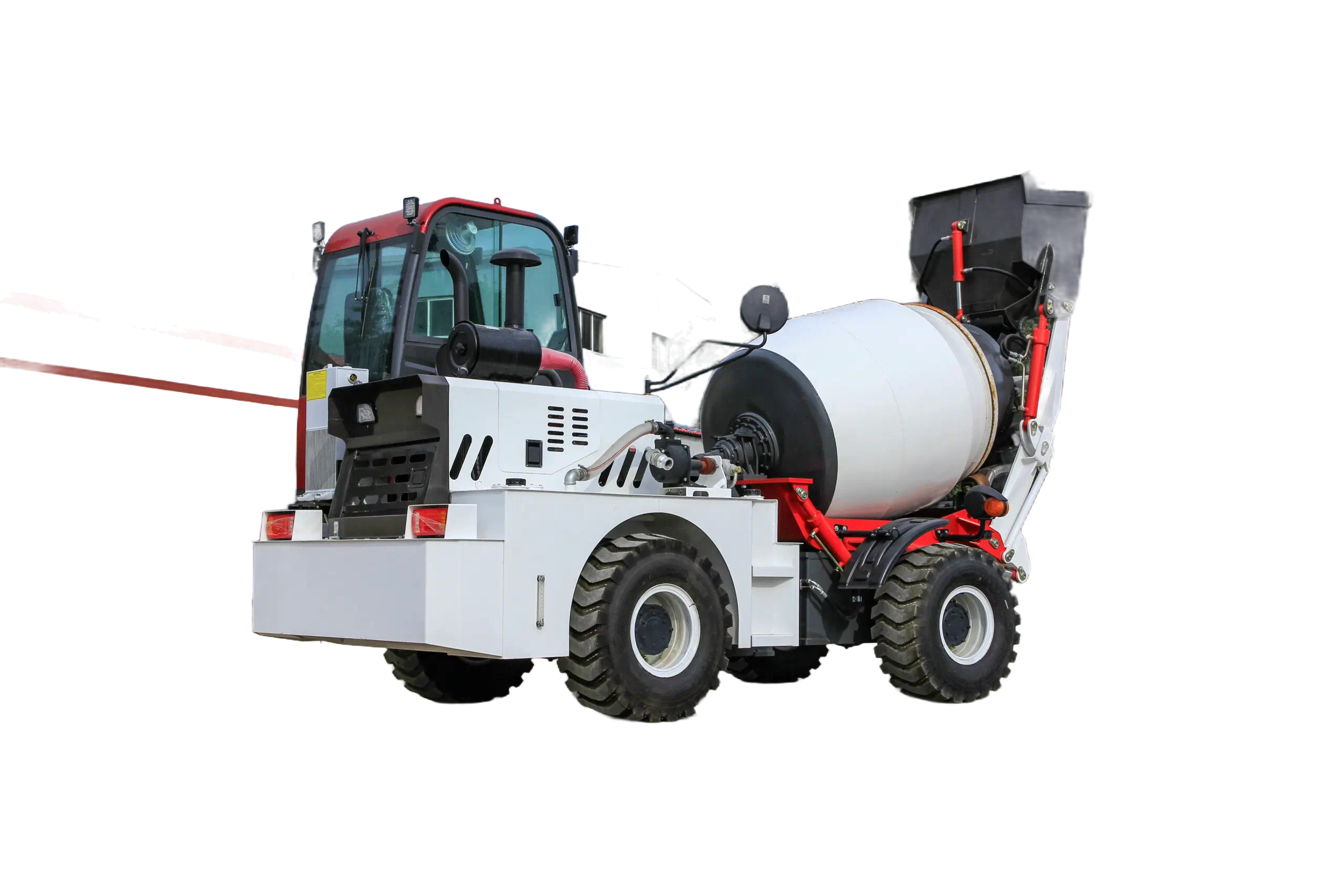
Picture the first dispatch on a remote road project. The operator starts the mixer, but the water hose uses the wrong connection. The loading area is soft after rain. A filter supplied as a spare cannot be matched to the installed engine. None of these problems is solved by knowing the drum capacity. A self loading concrete mixer supplier should help the buyer prepare the whole first operating day before the machine leaves the factory.
This is particularly important for contractors working far from a ready-mix plant and for dealers handing a mobile mixer to a first-time customer. Confirm five things first: the sustainable batch size, the route from materials to placement, the water source and cleaning area, the exact supplied configuration, and the parts and instructions that travel with it. MEGA’s self-loading mixer range provides real models for that discussion, from compact units to 7.5 m³ machines.
The supplier should not promise that any mixer will overcome missing site preparation. Four-wheel drive does not define a safe gradient, a water tank does not create a refill source, and a large drum does not create a placement crew. The buyer’s remote-work plan and the supplier’s technical file must meet in the middle.

Start at the moment concrete reaches the work front. How much can the crew place before repositioning? Can the mixer discharge directly, or does it feed another placement method? Is the ground level, and can the machine leave without reversing through people? Then trace the route back through mixing, water, cement and aggregate.
A road contractor moving along drainage structures may use several small staging areas. Water and aggregate cannot be assumed to follow automatically. A dealer serving a rural customer may have good workshop support but limited field delivery. Both buyers need a plan that assigns site preparation to the customer and configuration evidence to the supplier.
“Road construction” is too broad. A useful line says that the machine will produce concrete for culvert headwalls in batches the crew can place within a defined window, with aggregate loaded at one pad and water refilled from an identified tank. Add the expected travel distance, ground condition, narrowest access and maximum overhead clearance.
For the MG1500, the published baseline includes a 1.0 m³ mixing capacity, 0.35 m³ bucket, 300 L water tank, 55 kW engine, 4×4 traction and 35 km/h running speed. The page lists a 2,350 mm width and two height/drive arrangements. The order should identify which arrangement is supplied and why it fits that first batch route.
The loading bucket needs material presented in a way the machine can approach. Mark aggregate bays, cement handling, turning space and the clearance needed with the arm moving. A mixer that fits through the gate with the arm down may still lack working room at the pile.
The pad should also support the loaded machine and keep people away from the operating envelope. The supplier can provide current dimensions and controls; the project controls ground preparation, traffic and competent operation. If material must be brought to the machine by another loader, put that interface in the cycle calculation.
Remote work is often limited by water before engine power. Ask how the ordered water system fills, what fittings are supplied, which pump or suction arrangement is included, how the operator reads or controls water addition, and what remains the buyer’s responsibility. Do not infer a flow meter, electronic weighing or dosing accuracy unless the configuration names it.
| Remote-site question | Supplier evidence | Buyer preparation |
|---|---|---|
| How is the tank filled? | Current inlet, hose and pump arrangement | Source, hose route, water quality and refill access |
| How is mix water controlled? | Supplied controls and instructions | Mix design and competent batching procedure |
| Where is the machine washed? | Cleaning points and manufacturer procedure | Permitted wash area and runoff control |
| How long does refill take? | Tank capacity and system information | Source flow and queue allowance |
| What happens if a component fails? | Component identity and recommended spares | Local stock, transport and escalation contact |
The MG1500 publishes 300 L, while the MG3200C belongs to the 3.2 m³ mixer family and should be confirmed for its current water and chassis configuration. Larger MEGA models publish larger or alternative water routes. The buyer should reserve water for the mix as designed and separately plan cleaning and site use.
A mobile project may carry support water or establish refill points along the alignment. A fixed remote site may use a raised tank or pump. In either case, measure actual refill time. If the machine waits fifteen minutes for water each cycle, a capacity comparison that ignores refill time is incomplete.
Concrete residue can harden, but cleaning must follow the manufacturer’s instructions and site environmental controls. Ask the supplier to identify the wash points, supplied hose or tools and areas that require careful inspection. The buyer should provide a safe wash location with controlled runoff and enough time at the end of the cycle.
The AJAX self-loading mixer product information shows how industry manufacturers publish water and batch information together. Those specifications belong to AJAX, not MEGA. They are useful only as a reminder that the water system is part of machine selection, never as a source for MEGA facts.
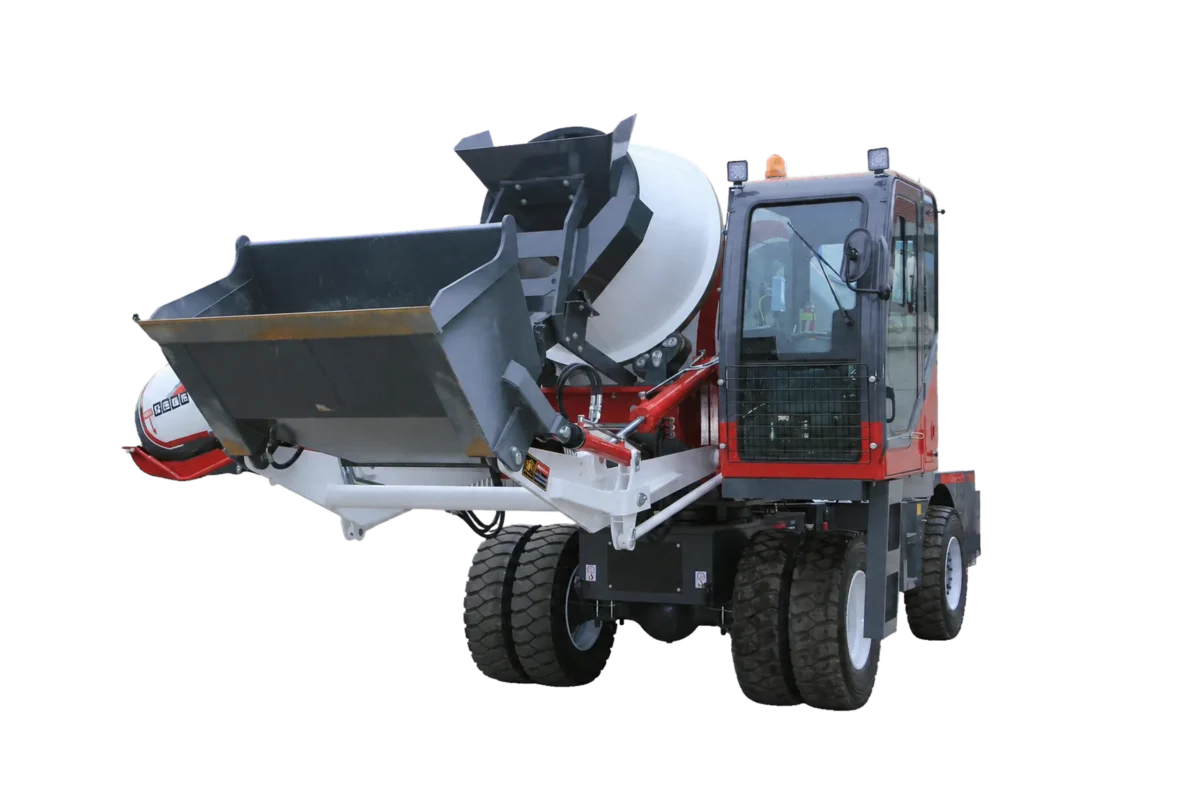
MEGA states that it supports spare-parts planning and after-sales technical response. A remote buyer should turn that promise into an initial list connected to the exact engine, filters, seals, hoses, wear points and supplied controls. Ask which items support scheduled maintenance, which address predictable wear and which are contingency parts.
Do not buy a large generic box simply to feel protected. A part with no model or component reference can be difficult to use when the site is far away. Record part description, quantity, machine application and storage needs. Photograph loose items before packing and reconcile them on arrival.
The MG1500 page lists a YN26GBZ engine and a 1.8T wheel-side reduction axle. The MG6500C page lists YCD4J22T-125 or YC6J125Z-T20 engine routes, 91/92 kW and a 3.0T wheel-side reduction axle. A buyer should obtain the installed engine and component identity before ordering filters or planning service.
Local availability matters. If a component is unfamiliar in the destination, ask what technical and parts information will be supplied. Do not claim local service coverage unless a named, verified channel exists. A clear remote support path may combine the buyer’s local mechanic with supplier documents and communication.
The machine should arrive with the current instructions for the supplied configuration. Provide digital copies to the project before shipment so site management can plan training and commissioning. If documents are only in one office or language the operator cannot use, their practical value is limited.
A distributor should keep the final specification, parts list, inspection evidence and manuals under the customer’s machine record. Later support then begins with identity rather than reconstructing the order from messages.
MEGA’s mixer pages publish working and transport-like dimensions with the loading arm raised or lowered. Use both conditions. A machine may enter the site with the arm down but need greater height and turning room to load. Measure gate width, bridge or surface limits, overhead lines, sharp turns and the space beside the aggregate pile.
The MG1500 is 2,350 mm wide. The MG3200 family is approximately 2,400 mm wide on the cited A model, while larger models approach or exceed 2,800–3,000 mm. A few hundred millimetres can decide whether a machine works in a compound without repeated obstruction.
A dealer may want one smaller and one larger self-loading mixer. Define the customer route for each: village access and small concrete works; general building and road projects; or open, high-volume sites. Keep a simple form that asks gate width, overhead clearance, ground, water, batch need and discharge method before offering a stock unit.
If a customer cannot answer those questions, arrange a site survey or provide measurement instructions. Selling from drum capacity alone transfers the uncertainty to the first operating day.
The mixer has to leave the discharge point, sometimes with limited visibility and people working nearby. Plan a circulation route where possible. If reversing is unavoidable, the project must use appropriate site traffic controls and competent personnel. These are site responsibilities, while the supplier should provide current machine visibility, control and dimension information.
On soft ground, vehicle mass and tire arrangement matter. The MG6500C page lists a 9,500 kg overall weight and double 16/70 R22.5 tires. The MG7500B family is larger again. Confirm ground support and transport rather than assuming more wheels automatically solve weak conditions.
Before dispatch, ask for model-linked evidence of start, travel, steering, braking, loading-arm movement, bucket action, drum rotation, water operation and discharge controls. Record leaks or corrections and repeat affected checks. A short video should show the machine identification, not just a close view of moving parts.
MEGA describes final debugging, running and load simulation. The buyer should agree on what safe test method applies to the ordered mixer. An inspection performed under manufacturer procedures is valuable; an improvised demonstration is not a substitute for controlled testing.
On arrival, inspect transit condition, model identity, loose items, fluid levels and visible connections according to the supplied instructions. The first batch should be conservative and observed by competent staff. Confirm loading, water addition, mixing, travel and discharge before expecting full site rhythm.
Document actual cycle time and the reasons for waiting. If water refill, aggregate layout or placement controls the cycle, improve that stage before blaming mixer capacity. The first batch is a learning point for the project and the supplier’s support team.
Ask the supplier to narrate the supplied configuration from loading to wash-down, and ask the site manager to narrate the route, materials, people, water and placement. Differences between those stories reveal open issues. Resolve them in the order file.
The right self loading concrete mixer supplier will not eliminate every remote-site risk, but it can make the machine and support scope identifiable. The buyer must prepare the work zone, competent operation, materials, water and local compliance. When responsibilities are written, the MG1500, MG3200C, MG4000A, MG6500C or MG7500B can be compared for a real job instead of an imagined one.
Buyers can also review MEGA’s factory and team information when planning who will answer configuration, inspection, parts and after-sales questions. The company presentation is context; the remote-order file still needs named contacts or escalation routes appropriate to the actual purchase.
Before approving dispatch, make sure the site has the exact specification, inspection record, packing list, spare-parts map, manuals and first-batch plan. If any of those depends on “we will work it out after arrival,” the order is not remote-ready yet.
For competing factory offers, apply the normalized mixer-manufacturer comparison before the dispatch sheet is approved.
