

Get quote
Get Free Consultation!
We are ready to answer right now! free consultation.
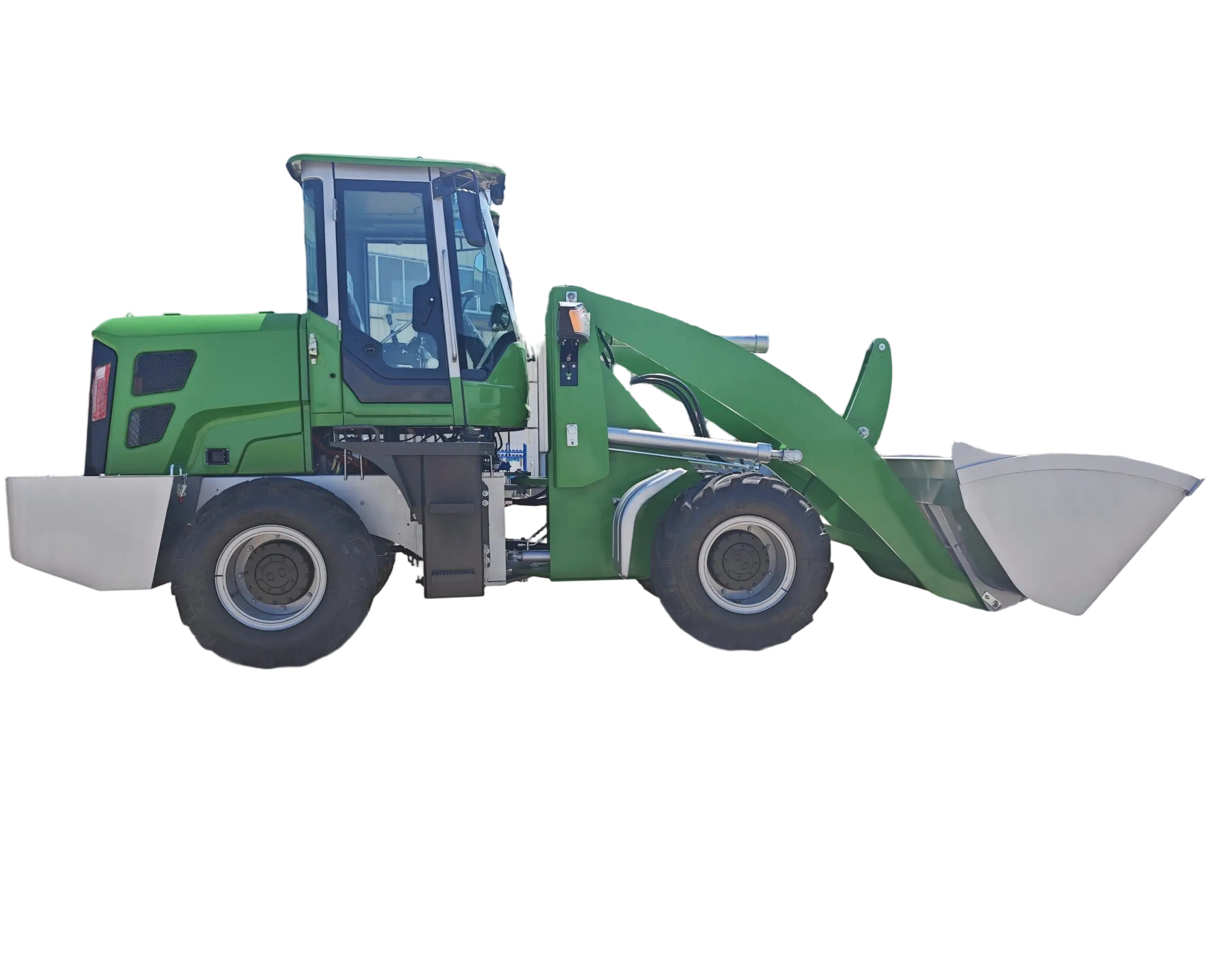
An electric loader is not selected by battery size alone. Map the entire 24-hour shift: startup state of charge, loaded travel, hydraulic work, idle periods, breaks, charging windows, ambient temperature and the energy reserve needed to park safely. An electric wheel loader manufacturer should match that schedule to payload and charging infrastructure before discussing the headline working time.
MEGA publishes the 400 kg EV910 and 2,000 kg EV940, plus an EV10D page whose own specification calls the machine a “mini site dumper.” These are three different routes, not one smooth loader ladder. Compare them through the electric equipment range while keeping the conventional wheel loader family available when the duty or charging plan does not support electric operation.
An indoor material yard may value low local exhaust and quieter movement but have only a short lunch break for charging. A municipal depot may charge overnight, yet its 2-ton bucket work consumes energy very differently from a compact 400 kg route. In both cases, the buyer should treat published runtime as a starting point for confirmation, not a shift guarantee.
For one representative week, record what the current machine moves, average and heaviest loads, travel distance, number of lift cycles, idling time, receiver height and breaks. Separate travel energy from hydraulic work. A loader driving short distances but constantly raising a heavy bucket may have a different energy profile from one carrying light material over a long route.
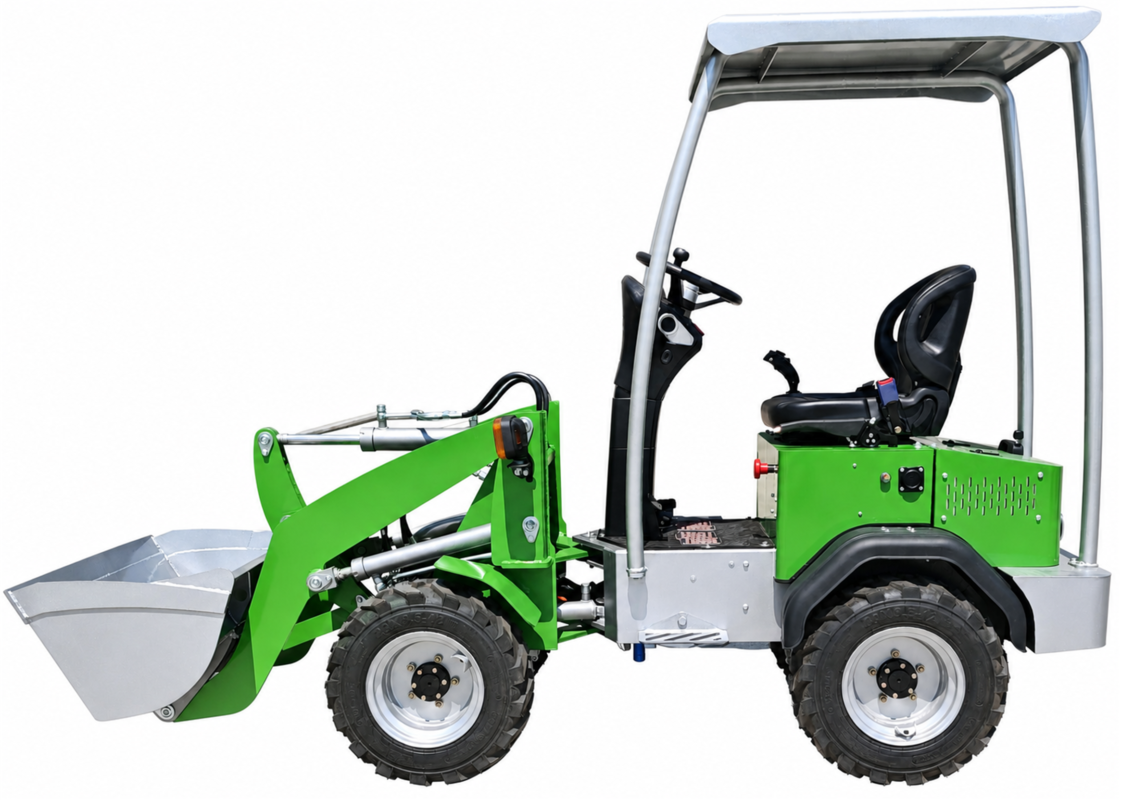
The EV910 lists a 400 kg maximum load, 0.25 m³ bucket, 1,000 kg total weight and 1,800 mm dumping height. Its overall dimensions are 2,100 x 1,100 x 2,090 mm. The electrical system uses a 60 V, 200 Ah lithium iron phosphate battery published as 12.0 kWh.
The page states a 10-hour working time and 6.5-hour charge time, with low and high speeds of 10 and 19 km/h. These figures make EV910 worth assessing for small indoor yards, farms or municipal stores where loads remain modest and charging can occupy a long off-shift window. The buyer should ask how the stated time was measured and what duty, temperature and battery condition it assumes.
EV910 is not suitable where the normal load exceeds 400 kg or the 1,800 mm dumping height cannot clear the receiver. A quiet electric machine that needs a ramp or repeated partial buckets may be less useful than a correctly sized alternative.
The EV940 publishes a 2,000 kg rated maximum load, 2-2.5 m³ optional bucket range and 6,300 kg total weight. It lists a 4,500 mm dumping height for hopper unloading, 7,350 x 2,200 x 2,950 mm dimensions and 16/70-20 tires.
Its standard lithium iron phosphate battery is 153.6 V / 460 Ah and 70.656 kWh; a 95 kWh option is listed. The page states 6 hours of working time, an optional 8-hour route and 2.5 hours charging. Those claims need connection to the specified bucket, material, travel and hydraulic demand. The standard and optional schedules should not be blended in a quotation.
The compact machine’s long published charging time may fit an overnight window but not a rapid midday turnaround. The larger machine’s 2.5-hour figure may support a planned break or split shift if the electrical supply and charger allow it. Confirm whether the stated charge duration begins from a defined state of charge and which charger produces it.
Suppose EV910 works intermittent 400 kg-or-less cycles between 08:00 and 17:00. Record the actual active hours, breaks and state of charge at shift end. Schedule charging after cleaning and inspection, leaving enough time for the published 6.5-hour period plus operational margin. Place the charger where the parked machine, cable and ventilation arrangements follow supplier and local electrical requirements.
The duty owner should decide the minimum state of charge for the final task and safe return to the charger. Operators should not extend a shift until the machine stops. Battery warnings and the approved shutdown procedure belong in the handover.
For EV940, choose the hour with dense material, frequent boom work or longest travel. Record load and cycles rather than extrapolating from light demonstrations. If the 70.656 kWh standard battery cannot cover the planned schedule with reserve, examine the 95 kWh option, a charging break, duty redistribution or a conventional loader. The manufacturer should confirm how each choice affects weight, charging and machine configuration.
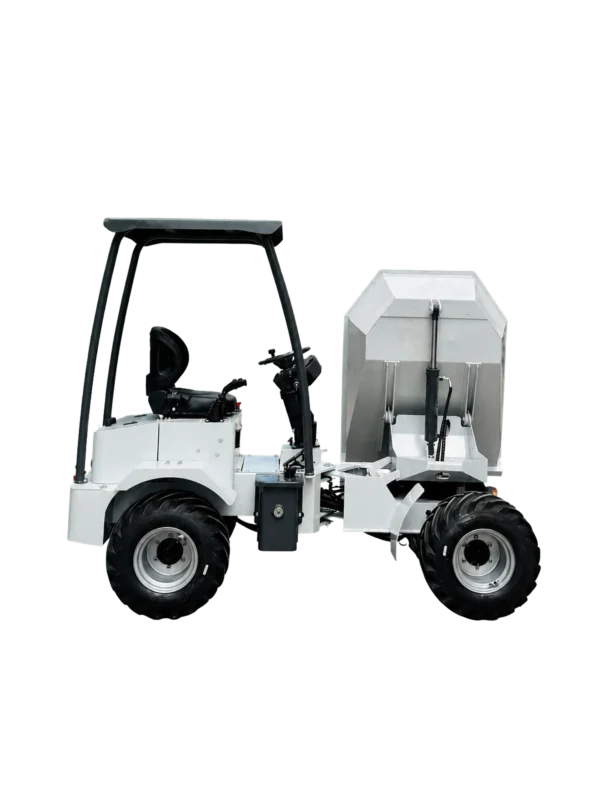
The EV10D page sits under Electric Loaders, yet its specification says “Vehicle Type: Mini site dumper.” It lists a 1,000 kg rated load, 0.5 m³ bucket, 9 kWh lead-acid or lithium battery route, 4×4 drive and optional ±90-degree tipping-bucket rotation. Overall dimensions are 3,330 x 1,310 x 2,170 mm.
The buyer must ask for a current drawing, photos and operating description that show how EV10D loads, carries and discharges. If it is a dumper with a tipping skip, it does not replace a wheel loader that digs into a pile and raises a front bucket to a receiver. Its optional swivel tipping may be useful for confined discharge, but that is a separate workflow.
Until the product classification and loading method are confirmed, keep EV10D out of an EV910-versus-EV940 loader table. This protects the customer from buying a machine that carries the correct mass but cannot perform the required pickup cycle.
The page offers lead-acid or lithium. The quotation should specify chemistry, battery model, voltage, capacity, charger, expected charge time, maintenance requirements and applicable shipping documentation. Do not assume the behavior or care instructions of EV910’s lithium iron phosphate system apply to EV10D.
Battery capacity alone does not define the electrical system. The order should list chemistry, nominal voltage, ampere-hours, usable operating limits provided by the manufacturer, charger model, connector, input requirement and cable. Record the drive and hydraulic motor routes where published.
EV910 lists two 2.5 kW travel motors, 3,000 W hydraulic power and 16 MPa hydraulic pressure. Preserve those entries with the 60 V / 200 Ah battery identity. Ask for the controller, motor and charger documentation that matches the delivered serialised machine.
If the battery or charger changes before shipment, the supplier should disclose the new specification and any effect on charge time or maintenance. A visually similar charger should not be accepted from a packing list alone; verify its label and connector.
EV940 lists an 18 kW travel motor, 20 kW hydraulic motor, 17 MPa hydraulic pressure and 153.6 V electrical route. Build one schedule for 70.656 kWh and another for the optional 95 kWh configuration. The supplier should state which battery and charger appear in the quoted 6-, 8- and 2.5-hour figures.
The larger battery may affect weight, cost, transport and charging demand. Those effects should be confirmed rather than inferred. If the facility cannot supply the required input, selecting more capacity does not solve the operational problem.
Before ordering, the facility owner should confirm input voltage, frequency, phase, available power, connector, cable route, protective devices, grounding, ventilation and emergency procedures with qualified electrical personnel. The manufacturer should provide the charger specification and installation requirements for the exact battery.
A remote yard with unreliable power may be unable to restore enough energy between shifts. A depot with managed overnight charging can be a strong fit. If production cannot tolerate a missed charge, define a backup plan: spare machine, rescheduled duty, approved opportunity charging or conventional loader support.
The Yanmar technical review of compact electric equipment and Volvo L120 Electric information illustrate how manufacturers discuss energy systems, charging and duty. Their machines and figures are not MEGA specifications. Use the engineering questions, not their data, when reviewing this order.
Ask for approved operating and charging temperature ranges, any battery thermal management, cold-start procedure and storage instructions. Heat, cold and sustained hydraulic work can affect available energy and charging behavior. Where the site reaches extreme temperatures, the buyer needs manufacturer guidance rather than a generic runtime assumption.
Factory evidence should identify the machine, battery, charger, bucket and software or controller version where supplied. Check charging initiation, displayed state of charge, travel, steering, service and parking brakes, boom, rollback, discharge, warning devices and emergency shutdown under the manufacturer’s procedure.
Agree on a safe test with known load, route and number of cycles. Record starting and ending state of charge, elapsed time and any warning. This is not a universal production promise; it is evidence for the configuration. Preserve the material and test conditions so the receiving team understands what was demonstrated.
Inspect transit condition, labels, connector, cable, charger and documentation before charging. Train operators on daily inspection, parking, charging and fault response. Train service staff on isolation and hazards for the actual voltage system. The 60 V EV910 and 153.6 V EV940 require configuration-specific documentation.
An electric wheel loader earns its place when the heaviest normal hour fits the load and geometry, the full shift fits the usable energy plan, and the charger fits the facility. If one of those three remains unproven, adjust the schedule or machine before shipment rather than asking the operator to solve an energy deficit on the first working day.
For the first month, record daily start and finish state of charge, active hours, material, cycles, charge duration and unusual temperature or alarms. Compare the record with the planning assumptions. The purpose is to improve scheduling and maintenance, not to stretch the machine beyond manufacturer limits. If the shift repeatedly ends without reserve, change the duty or charging plan before battery condition and production both suffer.
Assign responsibility for plugging in, verifying that charging has started and releasing the machine for the next shift. A missed connection can look like inadequate battery capacity even though the planning error is procedural. The shift record should distinguish charger faults, facility interruptions, operator delays and unusually heavy work.
If EV940 supports two departments, avoid both assuming the same energy reserve is available. Give each department a booked time window and material limit. If EV910 is moved from light indoor work to outdoor travel, repeat the energy observation and access check. A changed duty is a new selection question, even when the machine and charger have not changed.
Store charging and fault records with the battery identity. When capacity appears to decline, compare like-for-like duty and temperature before deciding the cause. Escalate alarms to trained service personnel; operators should not open or bypass the traction-battery system. Replacement decisions must follow the manufacturer’s approved specification.
Document every change carefully.
If the shift also needs extended discharge, compare the energy plan with the telescopic-loader reach and residual-load guide.
