

Get quote
Get Free Consultation!
We are ready to answer right now! free consultation.
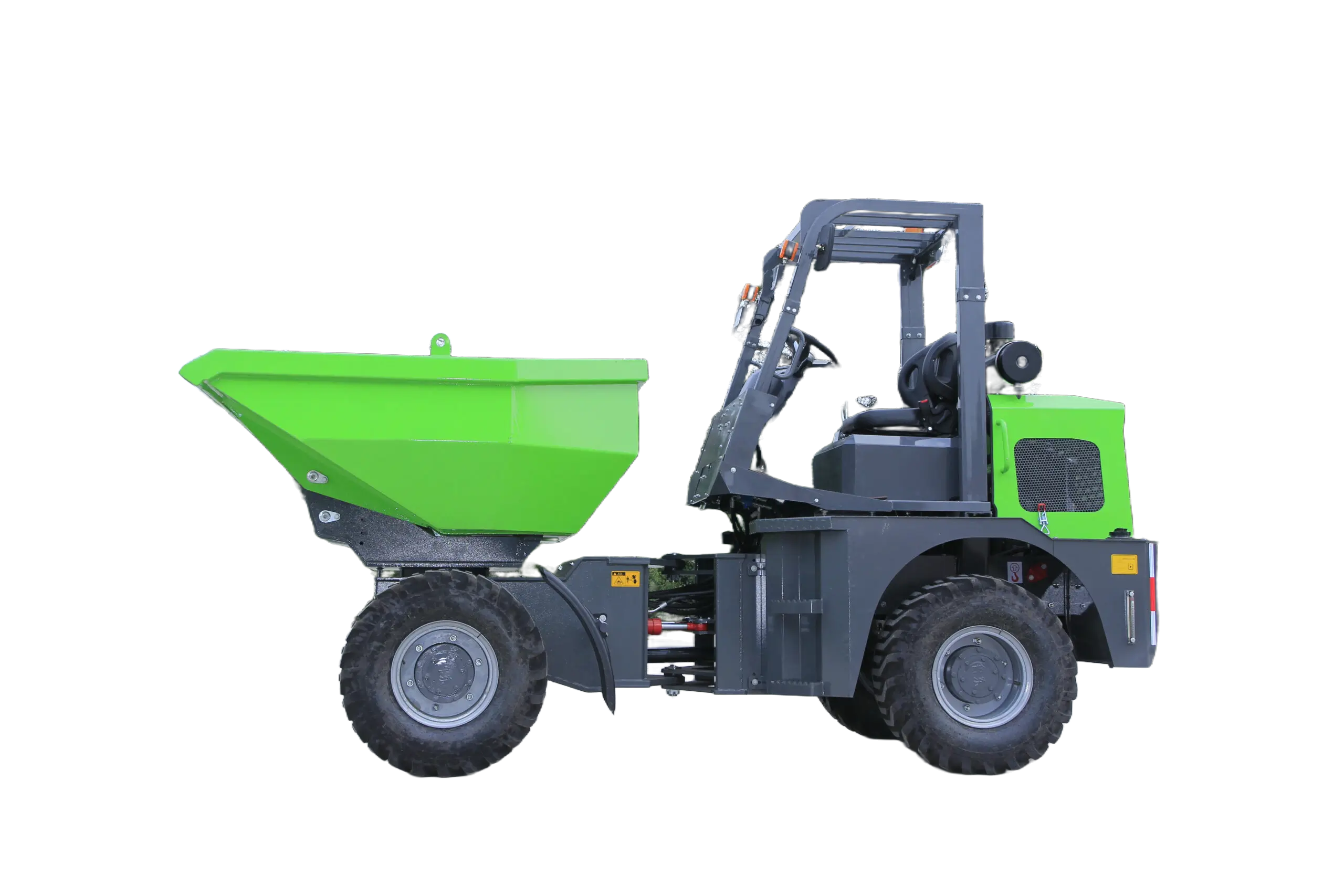
A specification sheet should make a dumper easier to select. When a field is incomplete, two load figures appear without explanation, or an optional skip is shown as if standard, the buyer needs a discrepancy log—not a guess. Comparing site dumper manufacturers in China is most reliable when every claim is assigned a source, a definition and a confirmation status before price is scored.
MEGA’s current site-dumper pages provide useful data across eight models, but they also show why buyers must read carefully. The MG10D distinguishes rated and maximum load. Several larger models publish four-wheel drive, bucket capacity and dimensions while the gradeability row is incomplete. Optional plus-or-minus 90-degree tipping appears on multiple pages. A careful buyer should preserve these gaps and ask for current answers.
Start with the site dumper range. Select the models that fit material and route, then create one comparison row for every decision-critical field. Mark it confirmed, configurable, missing or conflicting. The first unresolved critical value should pause approval.
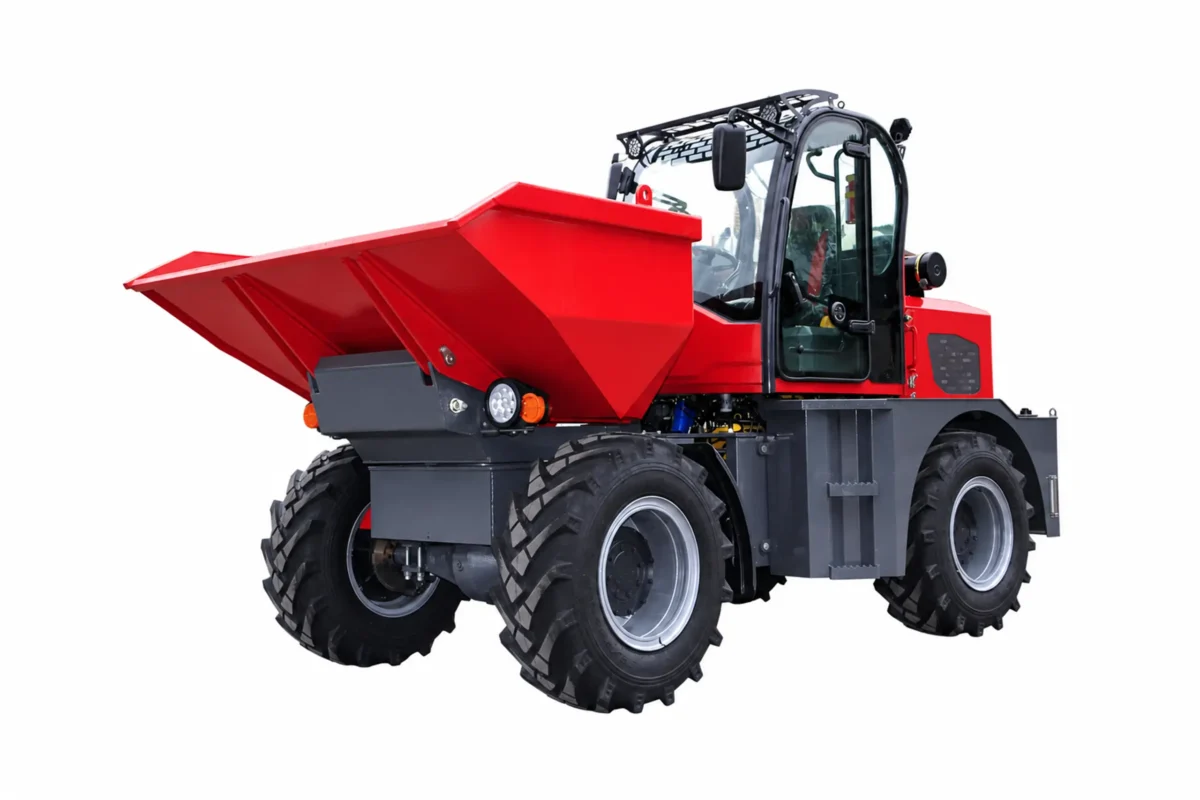
A discrepancy log has five columns: field, current value, source, problem and required resolution. It should include rated load, maximum or gross definitions, skip capacity, tipping direction, steering, safe gradient, brakes, tires, dimensions, turning, protection, engine, emissions information and supplied documents.
Do not hide a problem by changing wording. If one page says “maximum gradeability” but gives no value, record “value missing.” If the quote later supplies a number, add its date and source. If a drawing disagrees, keep both until the manufacturer resolves them.
The MG10D lists 1,300 kg rated load and 1,500 kg maximum load. It also distinguishes 0.5 m³ struck and 0.65 m³ heaped capacity. Ask which figure governs normal loading and how the maximum is intended to be understood. The operator’s instructions and data plate should align with the final order file.
Do not use the larger figure in sales or cycle calculations simply because it exists. A manufacturer comparison should reward clear operating limits, not the largest isolated number.
The MG20D, MG30D, MG40D, MG50D, MG60DA and MG100D product text reviewed for this project places “Maximum Gradeability” next to “Minimum Turning Radius” without a visible gradeability value. It would be wrong to copy the MG10D’s 30-percent figure into those models or infer a value from 4×4 drive.
Record the gap and request a model-specific safe gradient under defined conditions, plus the relevant manufacturer instructions. If slope is critical and the supplier cannot provide a reliable answer, do not approve the machine for that route.
The manufacturer does not need to create marketing prose. It should return evidence that connects the current model, configuration and order.
| Data group | Example issue | Acceptable resolution | Weak response |
|---|---|---|---|
| Load and skip | Rated versus maximum; struck versus heaped | Definitions tied to data plate and current manual | “Use the bigger number” |
| Mobility | 4×4 stated, gradeability missing | Model-specific limit and conditions | Copying another model’s value |
| Tipping | Rotation listed as optional | Order states included mechanism and envelope | Gallery image without confirmation |
| Dimensions | Page size may vary by configuration | Current drawing or completed-unit measurement | Approximate size from a similar model |
| Inspection | Generic testing claim | Dated, order-linked travel, brake and skip checks | Unidentified factory video |
Ask for a readable model plate or other machine identity, whole-unit views, engine and tire markings, skip mechanism and current dimensions. The evidence should refer to the purchase order or unit. A photograph of an MG30D cannot confirm an MG50D’s option.
If serial identity is assigned later, use the order number initially and update the record before dispatch. Keep the same reference on the packing list and receiving file.
Agree on a manufacturer-approved inspection covering start, travel, steering, service and parking brake, lights or alarms where supplied, skip lift, skip rotation where included, visible leaks and shutdown. Record result and correction. A check marked only “OK” is less useful than one that names the observed function.
The U.K. Health and Safety Executive’s dumper guidance emphasizes selection, roll-over protection, seat-belt use, loading, visibility, gradients, edge control, competence and inspection. Local requirements govern the destination, but these categories are a strong prompt for buyer questions.
A mature inspection trail does not pretend every first check passes. If a brake, hose, alarm or skip function needs correction, the record should identify the finding, action, person or stage responsible and retest result. Ask for a redacted example before ordering. The quality of the closure can be more informative than a clean checklist with no observations.
Set evidence acceptance before the test. Define which photographs, measurements or videos the buyer needs, who can approve deviations and what prevents dispatch. This avoids an argument after the machine is packed. For critical dimensions, ask for the measuring tool and reference points to be visible.
For multiple units, sample identity is not enough. The buyer may inspect every model plate and critical option while applying a rational sampling plan to repeated noncritical details. The method should match contract, risk and local requirements rather than copying a universal percentage.
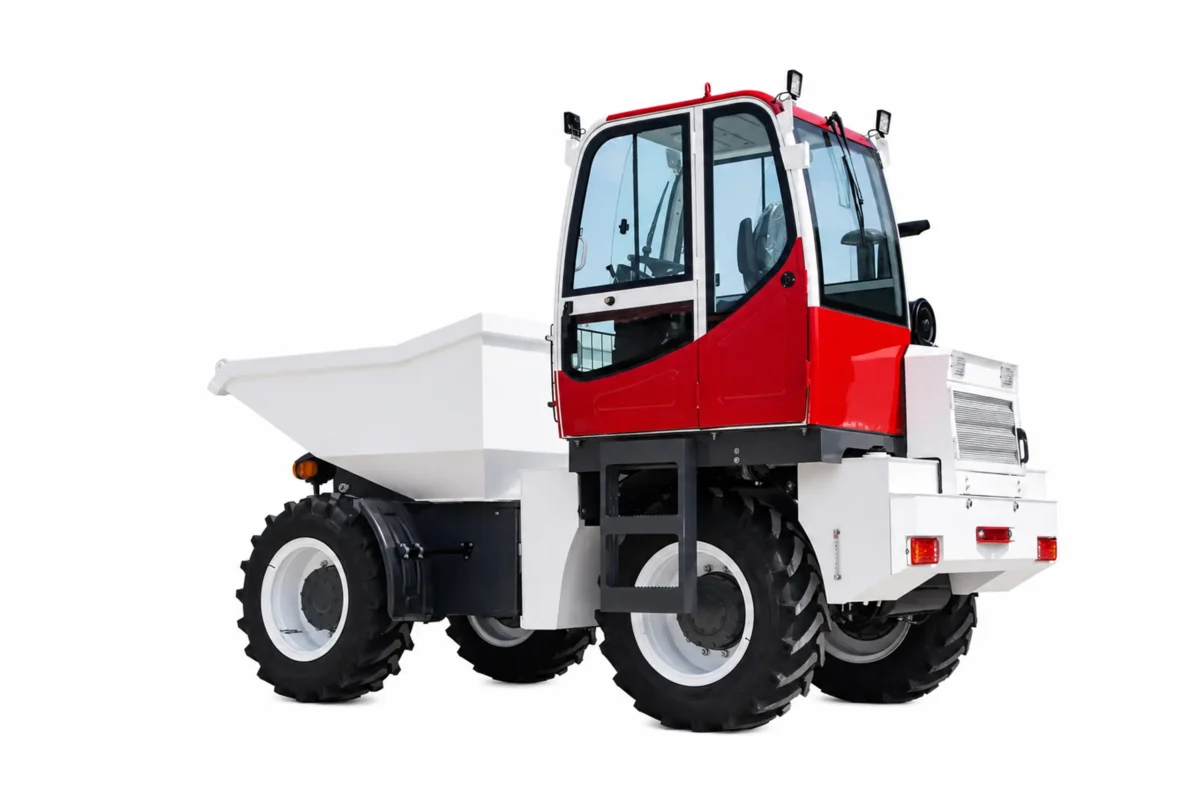
A buyer does not need to audit every model first. Choose a compact swivel-skip machine, two middle payloads, an upper-midrange model and the highest published route. For MEGA, MG10D, MG30D, MG50D, MG60DA and MG100D create a demanding sample.
The MG30D publishes a 3,000 kg rated load, 1.6 m³ bucket, 3,300 kg total weight, 1,850 mm width, four-wheel drive and 20.5/70-16 tires. The MG50D publishes 5,000 kg rated load, 2.5 m³ bucket, 3,500 kg total weight, 1,900 mm width, four-wheel drive and 16/70-20 tires.
Ask why machine weight changes little while rated load rises, and request the current technical basis and configuration. The answer may be valid, configurable or need correction. The point is to surface the question before the buyer uses the figures in route and transport planning.
The MG60DA lists 6,000 kg rated load, 4,200 kg total weight, 2,361 mm width and 320 mm clearance. The MG100D lists 10,000 kg rated load, 6,500 kg total weight, 2,350 mm width, 390 mm clearance and a six-tire configuration.
For these upper routes, ask for current packaged dimensions and weight, securing or lifting information, installed brake and axle details, and the exact skip option. A distributor also needs storage and transport planning before adding the model.
MEGA states that it operates a 20,000 square metre production base with five standardized workshops and more than 80 staff across research, production and service. It describes pre-shipment checks and final debugging. These statements are appropriate audit subjects but do not complete a dumper specification.
Ask to see how the model is identified at assembly, where the selected engine and tires are recorded, how the skip option is checked, and how corrections are closed. A broad factory tour can establish context, while the order trail demonstrates control.
If the buyer cannot visit, use a scheduled live call that moves from model plate to whole machine, components and functions. Preserve screenshots or recordings according to agreement and local law. Do not rely on a pre-edited montage alone for critical identity.
The China Construction Machinery Association provides a view of the wider industry. Unless separately proven, do not state that MEGA or another supplier has a particular membership, award or endorsement. Keep industry background outside the manufacturer score.
The evidence hierarchy should remain clear: destination requirement, current order documents, manufacturer technical confirmation, current product information, and external general guidance. No lower layer fills a missing higher-layer fact automatically.
Once values are confirmed, apply them to the material and route. Calculate payload from density and skip volume. Measure width, turns, overhead and tipping zone. Use the manufacturer-confirmed gradient and follow site traffic controls. The comparison is complete only when the chosen model works on paper and at the site.
A lower-priced dumper may remain unresolved on gradeability or braking. A higher-priced offer may include a rotating skip and identified parts. Do not award the contract while critical cells differ in evidence status. First normalize scope; then compare commercial terms.
If the missing value is not needed for the intended flat route, document that reasoning, but still request accurate product information for future use. A distributor cannot assume every customer will share the first site’s conditions.
When a manufacturer corrects a value, save the dated revision and update the order. Do not silently overwrite the earlier sheet. On a repeat purchase, compare the new configuration with the prior delivered machine and identify component changes.
This protects parts planning and prevents a buyer from calling two different configurations the same model without noticing.
The receiving team should feed new discrepancies back into the same log. Transit damage, missing loose parts, a different tire marking or a document mismatch belongs beside factory findings. Record it before commissioning, resolve responsibility and keep the final disposition. Over several shipments, the log shows recurring weak points that a buyer can address in packing or inspection.
Do not publish unresolved internal findings as accusations. Give the supplier a chance to provide current evidence and distinguish a documentation gap from a machine defect. The purpose is a correct order and safer receiving process, not a dramatic scorecard.
Critical cells include normal rated load, skip volume, machine dimensions, safe gradient where relevant, steering and braking configuration, tire and axle route, tipping mechanism, protection, destination requirements and current manuals. A missing cosmetic description may not block an order; a missing route or safety limit should.
The final packet should contain the resolved discrepancy log, frozen specification, option list, inspection evidence, packing list and receiving checks. On arrival, compare the machine with the packet before operation. Keep the unresolved items visible if any were accepted with a reason.
Comparing site dumper manufacturers in China becomes easier when the buyer stops trying to make every sheet look complete. Missing information is useful when it is identified early. For MEGA’s MG10D, MG30D, MG50D, MG60DA and MG100D, a disciplined log turns published data and visible gaps into precise questions—and precise questions are the basis of a safer purchase.
Assign one person to own the log through quotation, inspection and receiving. Without ownership, answers remain in separate messages and the final file quietly returns to incomplete. The owner does not need to be the technical expert for every system; the role is to obtain the right expert’s answer, identify its source and prevent dispatch while critical fields remain unresolved.
After commissioning, close the final entries with confirmed machine identity and received documents. Keep any accepted limitation visible for operators and the next purchase. A complete record is not one with no questions—it is one where every important question has a traceable disposition.
Route planners can test those verified fields against the 4×4 dumper ground-and-grade workflow.
